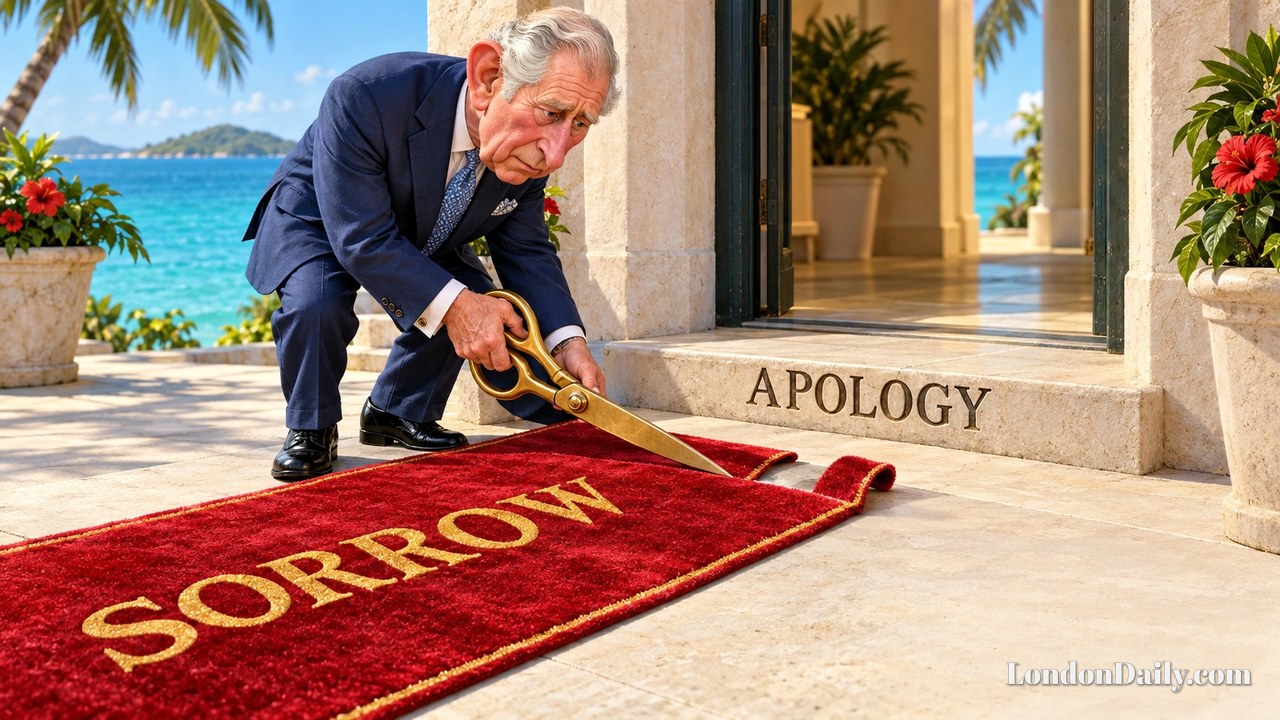
King Charles has expressed profound personal sorrow over the transatlantic slave trade but stopped short of a formal apology as he opened the Commonwealth leaders’ summit in Antigua and Barbuda, amid calls for Britain to apologise for its historic role.
The King described the trade as a continuing burden on the association’s members, rather than simply a matter of distant history. He said: “The transatlantic trade in enslaved persons still casts a shadow over these islands and other members of our Commonwealth.”
He added: “As I have said before, that shameful chapter of history is one that fills my heart with horror and my soul with the most profound personal sorrow.”
The distinction between expressing sorrow, issuing an apology and paying reparations remains central to the debate. Prime Minister Andy Burnham, who is attending the summit, has previously said he is open to Britain making a formal apology, while describing financial reparations as “not the right answer”. Those positions leave an apology and financial compensation as separate questions, rather than interchangeable responses to the past.
Charles said his own understanding had developed through listening and learning, strengthening his commitment to modern partnerships that would address historic wrongs through future action. He also argued that history was an inheritance containing both the achievements and failures of earlier generations, not something the present could choose or change.
The King and Queen’s Caribbean tour has renewed debate about Britain’s colonial legacy. In the Bahamas, their first stop, Charles spoke of the “suffering of the past”. In Guyana, he visited the site of a slave rebellion where hundreds of enslaved people were killed.
The Commonwealth Heads of Government Meeting brings together leaders from 56 states every two years, moving between different parts of the voluntary association, whose membership consists primarily of former British Empire territories. This year’s official theme is Accelerating Partnerships and Investment for a Prosperous Commonwealth.
The King also addressed brutal conflicts, the catastrophic reality of climate change and rapid technological development. His emphasis on future partnership set out a direction for co-operation, but left the demand for a formal British apology unanswered in his address.








Join the conversation