Lord Sadiq Khan has hailed the Democrats’ capture of both chambers of Congress as a rejection of Donald Trump’s politics, while the UK Government has insisted its relationship with the president’s administration will remain unchanged.
The 3 November midterm elections delivered Democratic Senate victories in Texas, Kansas, South Carolina, Ohio, Maine and Iowa, alongside gains that restored the party’s control of the House of Representatives. Trump was not on the ballot, but had led the Republican campaign and urged voters to act as though he were standing.
Khan congratulated the Democrats on X, praising their emphasis on hope, unity and helping families with living costs. Their campaign, he wrote, was a “true rejection of the damaging and divisive politics of Donald Trump”.
Health minister James Frith also described the emerging results as a “seismic shift in domestic politics for the Americans”, while cautioning that final numbers were still awaited. Asked how Andy Burnham’s Government would work with Trump, he said it would maintain its “excellent relationship” with the administration. Britain’s position as America’s closest ally, he said, was “unwavering and unchanging”.
The results give Democrats the means to obstruct Trump’s domestic programme and pursue investigations into his administration. They needed a net gain of four seats to secure a majority in the 100-member Senate and three in the 435-member House, which they last controlled in 2023.
James Talarico won the Texas Senate race. In Georgia, projected winner Jon Ossoff characterised his victory as a rejection of Trump, describing him as a failed, lame-duck president. Democratic House gains included seats in Kentucky, New Jersey, Indiana and North Carolina.
Trump acknowledged his surprise at the Republican performance. “I thought they’d do better, we had tremendous rallies,” he said. He also congratulated his opponents: “They did a good job. They worked very hard.”
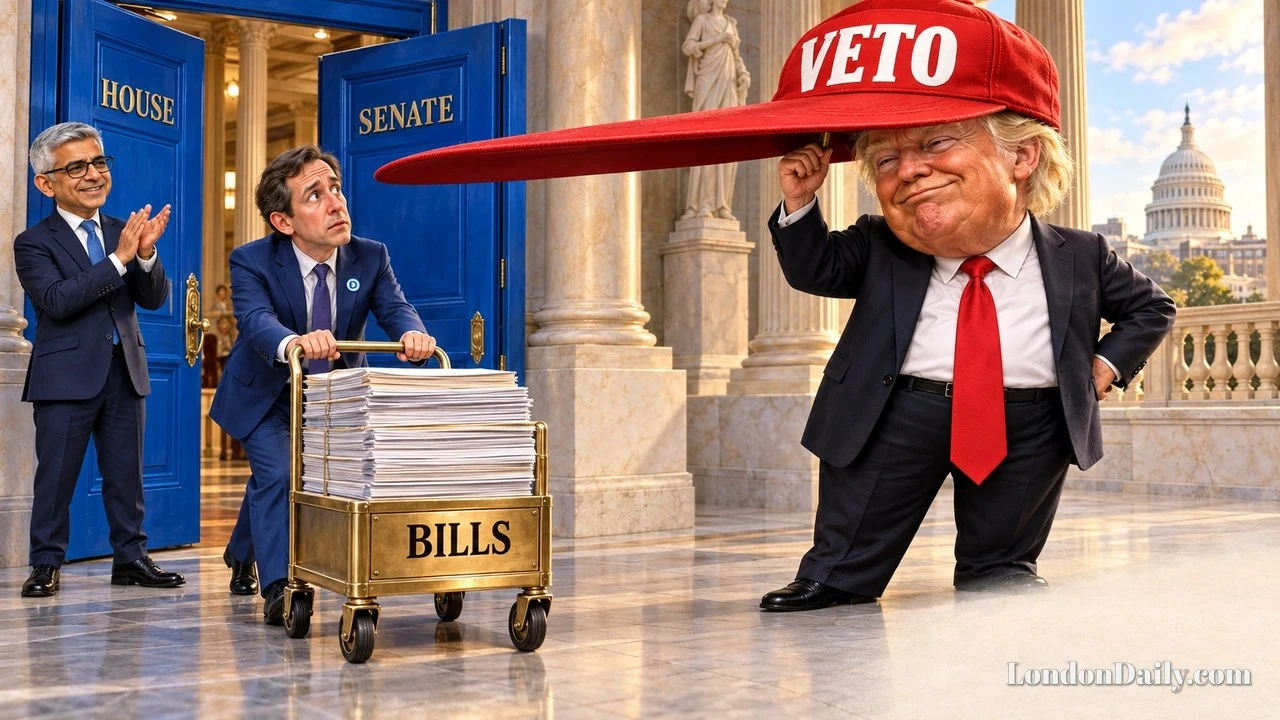
His response combined an offer to co-operate with a signal of resistance: he posted a photograph of a red baseball cap bearing the word “Veto”, suggesting he could block Democratic legislation.
That leaves a distinction between the Democrats’ electoral success and their ability to deliver their programme. Control of Congress can constrain the president, but it does not remove his veto or his executive authority in key areas, including foreign policy. The results change the balance of power in Washington; how far either side will compromise remains unresolved.








Join the conversation