

Italian scientists find Wuhan coronavirus strain match in sample
Scientists in Italy have identified a sample of the novel coronavirus collected from a young boy late last year that they say is genetically identical to the earliest strain isolated in the Chinese city of Wuhan almost a year ago.
The sample was collected on December 5, 2019 in Milan from a boy who was first thought to have contracted measles, according to the researchers from the University of Milan.
It was a “100 per cent match” of a genome segment of the first Sars-CoV-2 viral strain collected from a seafood market worker in Wuhan on December 26, they said.
“These findings, in agreement with other evidence of early Covid-19 spread in Europe, advance the beginning of the outbreak to late autumn 2019,” said the team led by Professor Elisabetta Tanzi.
The study was published on Wednesday in Emerging Infectious Diseases, a peer-reviewed journal produced by the United States Centres for Disease Control and Prevention (CDC).
The report adds to the argument that the deadly virus might not have originated in China.
Sewage samples collected in Europe and South America before the start of the outbreak have tested positive for the pathogen, while antibodies that bind specifically to the coronavirus were found in blood samples taken from Italian lung cancer patients as early as September last year.
Also, according to the CDC, the start of the 2019 winter flu season was the earliest for more than 15 years.
But much of this evidence has been questioned. The virus found in the sewage, for instance, could not be properly sequenced because it was too badly damaged, while the positive results of the antibody tests provided only indirect proof of the virus’ existence.
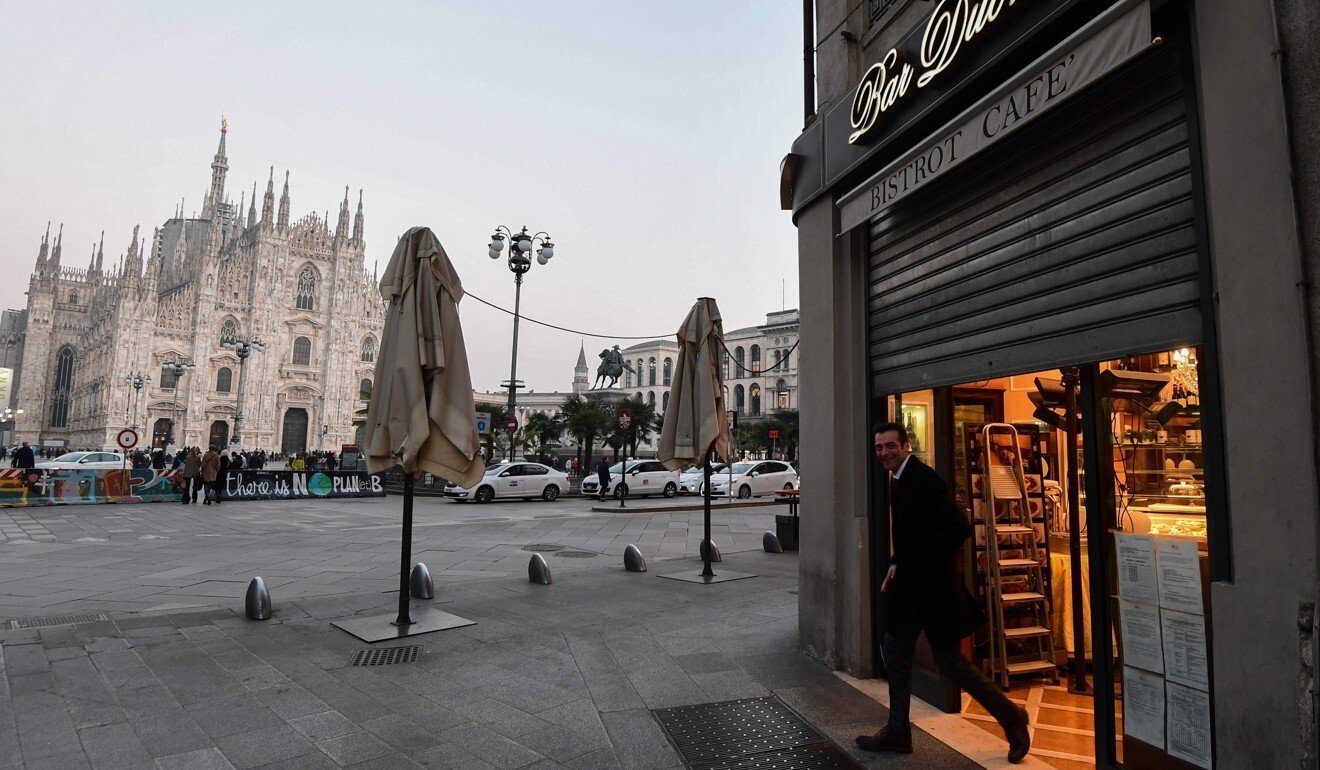
In Milan, Tanzi and her team noticed an increase in patients experiencing symptoms such as fever, cough and skin rashes from September last year onwards. They thought it was a measles outbreak, but tests for that virus all came back negative.
Similar symptoms were later found in children with Covid-19, the first confirmed case of which in Italy was reported on February 21.
When Tanzi retested their samples, all of them came back negative except for one taken from a four-year-old boy who had no history of travelling overseas but was so ill he needed emergency treatment.
The sample not only tested positive, but contained a distinct segment of the Sars-CoV-2 virus gene that matched perfectly with the strain isolated in Wuhan and some other strains that have circulated around the world, Tanzi said.
Unfortunately, the sample did not contain complete viral particles that could be isolated, so its origin could not be determined, the study said.
A research team in Shanghai, meanwhile, has proposed the theory that the first human-to-human transmission of the coronavirus might have happened in the Indian subcontinent last summer. The study, which was submitted to The Lancet last month, was removed recently from the journal’s preprint platform for updating with new data, according to the researchers.
India and Bangladesh had the oldest viral strain with the smallest number of mutations, and the overall genetic diversity of samples collected in the two countries was higher than anywhere else in the world, suggesting the region as the source of outbreak, according to their analysis.
“Our method and conclusions remain sound and solid,” said Dr Shen Libing, lead author of the study with the Chinese Academy of Sciences.
“Don’t take our words for granted, but take a look at the data. We will release the updated version [of the paper] soon.”
Benjamin Neuman, professor and chair of biological sciences at the University of Texas-Texarkana, said the method used by Tanzi to detect viral genes was “very sensitive”, but that could also lead to false results if the experiment was not well performed.
For instance, although Tanzi was careful to choose a laboratory that had not handled the Sars-CoV-2 virus before, it was unclear if any of her staff had been infected, which could have contaminated the sample.
“I will continue to watch and wait for more compelling evidence,” Neuman said.
Gavin Smith, a professor in the emerging infectious diseases programme at Duke-NUS Medical School Singapore, said the findings might not have an impact on the virus’ origin story, but instead could indicate spread of the virus before it was picked up by disease surveillance, a typical phenomenon in outbreaks of new diseases.
“Assuming that the origin was around Wuhan, then it’s not unreasonable to imagine that there might have been sporadic introductions into northern Italy [as a result of people travelling],” he said.
An epidemiologist in Beijing said that the search for the virus’ origin could face political pressure and even spark racial prejudice in some countries.
But the continuous discoveries by scientists in different countries in recent months showed that “the spirit of seeking the truth has not died”, said the researcher who requested not to be named because of the Chinese government’s media policy.
Additional reporting by Simone McCarthy