London Daily

Focus on the big picture.
Saturday, Mar 28, 2026

International Space Station to crash down to Earth in 2031

International Space Station to crash down to Earth in 2031

The International Space Station (ISS) will continue working until 2030, before plunging into the Pacific Ocean in early 2031, according to Nasa.

In a report this week, the US space agency said the ISS would crash into a part of the ocean known as Point Nemo.

This is the point furthest from land on planet Earth, also known as the spacecraft cemetery.

Many old satellites and other space debris have crashed there, including the Russian space station Mir in 2001.

Nasa said that in the future space activities close to Earth would be led by the commercial sector.

The ISS - a joint project involving five space agencies - has been in orbit since 1998 and has been continuously crewed since 2000. More than 3,000 research investigations have taken place in its microgravity laboratory.

However, it is only approved to operate until 2024 and any extension must be agreed by all partners.

Nasa said the plan to retire the ISS marked a transition to the commercial sector for activities in low-Earth orbit - the area of space close to Earth.

"The private sector is technically and financially capable of developing and operating commercial low-Earth orbit destinations, with Nasa's assistance," said Phil McAlister, director of commercial space at Nasa Headquarters.

In 2020, Nasa awarded a contract to Texas-based company Axiom Space to build at least one habitable module to be attached to the ISS. It has also provided funding to to three companies to develop designs for space stations and other commercial destinations in orbit.

It is hoped that these new projects will be in at least partial operation before the ISS is retired.

Nasa said it wanted to create a "robust, American-led commercial economy in low-Earth orbit".
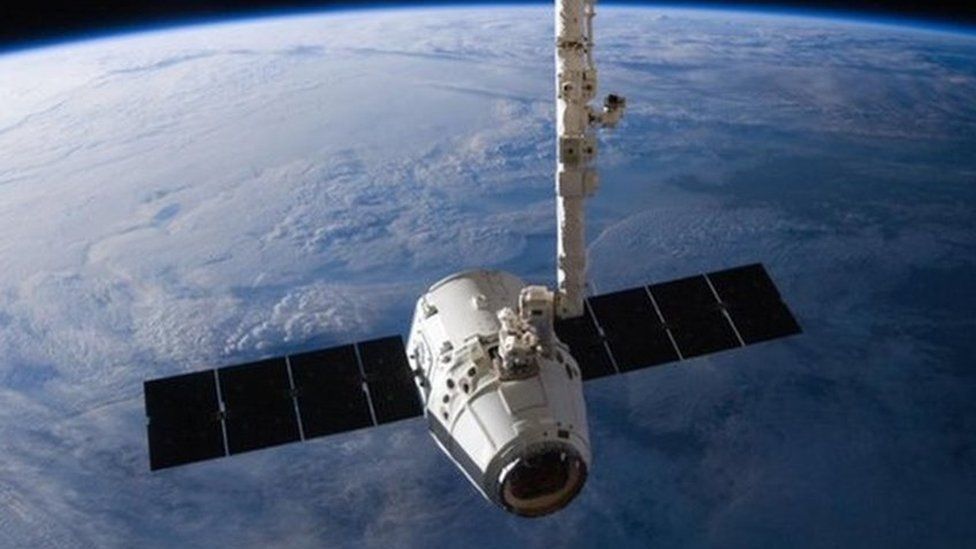
Elon Musk's SpaceX spacecraft carry crew and cargo to the ISS


The commercial sector is already an important part of the US space programme, with private companies responsible for delivering crew and cargo. Russia's Soyuz and Progress spacecraft are also used.

According to Nasa, it will save $1.3bn (£956m) by transitioning to the private sector for activities in low-Earth orbit, money which instead can be spent on deep-space exploration.

The savings are anticipated because Nasa will only be paying for the services it needs, rather than for the maintenance and operations of the ISS. Nasa also points out that the private sector space stations will be newer and should require fewer spare parts.

Nasa said it had analysed its ISS budget on an annual basis and that it would continue to refine its savings estimates.

The transition report published by Nasa this week comes after the administration of US President Joe Biden said it had committed to extend the space station's activities until 2030.

However, the extension still requires the support of international partners, including Russia, and funding for the ISS is currently only approved by US Congress until 2024.

In an interview with the Russian news agency Interfax in December 2021, the head of Russia's space programme, Dmitry Rogozin, indicated a willingness to work with Nasa beyond 2024.

"Actions speak louder than words," he said. "This year we sent a new Nauka module to the ISS, which is expected to last at least 10 years."

The head of Roscosmos also complained that US sanctions on Russia were hurting the Russian space industry, and he has previously said Russia could end its participation in the ISS programme if the sanctions are not lifted.

The US and its Western partners have threatened further sanctions on Russia if it invades Ukraine, although the exact nature of those sanctions is not yet known.

Russia has previously said that structural fatigue meant the ISS would not be capable of working beyond 2030, and warned that outdated equipment could lead to "irreparable" failures.

Newsletter

Related Articles

0:00
0:00
Close
Thousands Rally in London to Oppose Rise of Far-Right Movements
Hong Kong Official Rejects Allegations of Surveillance Orders Targeting UK-Based Dissidents
PayPal Expands Cryptocurrency Services to Allow UK Users to Buy and Sell Bitcoin
UK Minister Challenges Reform Party’s ‘Pro-Family’ Agenda as Debate Intensifies
Concerns Grow Over Meningitis Risk Among UK Students Amid Warning Signs of New Outbreaks
Japanese Grand Prix 2026: Schedule, UK Start Times and Full Broadcast Details
Electric Vehicles Seen as Strategic Solution to UK Fuel Reserve Concerns
Rise of Lone-Actor Threats and Online Radicalisation Drives New Wave of Antisemitic Attacks in the UK
Canada Advances Plan to Ban Cryptocurrency Donations in Election Campaigns
UK Faces Looming Medicine Shortages as Iran Conflict Threatens Supply Chains
Deadly Meningitis Outbreak in the U.K. Highlights Urgent Need for Vaccination
Fresh Claims Emerge Over Harry and Meghan’s Australia Visit as Insider Speaks Out
NATO Assessment Indicates UK Defence Spending Has Fallen Below Alliance Average
FTSE 100 Slips as Middle East Tensions Weigh on Investor Sentiment
UK Economy Begins to Feel Early Impact of Iran Conflict as Policy Challenges Intensify
Russian National Jailed in UK After Assault Case Linked to Barron Trump’s Alert
Energy Price Surge Accelerates Shift Away from Fossil Fuels in UK Homes
UK Museums House More Than 260,000 Human Remains, New Report Reveals
Surging UK Gilt Yields Reflect Inflation Pressures and Fiscal Uncertainty
UK Issues Updated Guidance on Children’s Screen Time with Focus on Balance and Wellbeing
UK Migration Figures Show Shifting Trends Across Asylum, Visas and Channel Crossings
UK Watchdog Launches Probe into Five Firms Over Alleged Fake Reviews and Ratings
Jaguar Land Rover Halts Production at UK Plant Amid Supplier Disruption
UK Police Reverse Position, Confirm Arrests Will Resume for Palestine Action Protests
UK Small Businesses Face Europe’s Steepest Cost Pressures, New Survey Reveals
US Envoy Urges UK to Proceed with King’s Visit Amid Diplomatic Sensitivities
FTSE 100 Drops Over One Percent as Middle East Tensions Weigh on Markets
UK CO2 Plant Set to Reopen as Authorities Move to Safeguard Supplies Amid Middle East Tensions
Trump Urges Stronger Defence Investment as He Questions Allied Naval Capabilities
New COVID Variant Detected in UK Raises Concerns Over Vaccine Effectiveness
FTSE Russell Moves to Standardise Free-Float Rules for UK and International Listings
HBO Max Launches in UK and Ireland, Marking Major Step in Global Streaming Expansion
UK Signals Readiness to Seize Russian ‘Shadow Fleet’ Vessels in Escalation of Sanctions Enforcement
Escalating Middle East Conflict Seen as Major Threat to UK Economic Stability
Early Challenges Mark Prince Harry and Meghan’s Australia Visit
UK Government Rejects Cover-Up Claims After Theft of Former PM Aide’s Phone
Cyprus Opens Strategic Talks with UK Over Sovereign Base Areas
UK Faces Risk of Sharp Inflation Surge Despite Stable Pre-Crisis Figures
UK Police Arrest Two Over Suspected Antisemitic Arson as Iran Link Investigated
UK Inflation Holds at Three Percent Ahead of Oil Price Shock from Iran Conflict
UK Fuel Prices Face Upward Pressure as Global Oil Trends Raise Cost Outlook
Girlguiding UK Sets September Deadline for Membership Policy Change Affecting Trans Participants
Germany and UK Accelerate Wind Power Expansion to Strengthen Energy Security
UK Moves to Ban Cryptocurrency Donations to Political Parties Over Foreign Influence Concerns
UK and Turkey Finalise Major Air Defence Agreement Worth Billions
Apple Introduces Mandatory Age Verification for iPhone Users in the UK
Diverging Views Emerge Over Meghan Markle’s Planned Australia Appearance
Trump Signals Frustration with UK Leadership Amid Diverging Approaches to Iran Conflict
UK Government Takes Control of Hunterston B as Landmark Nuclear Decommissioning Begins
UK Public Inflation Expectations Jump Sharply in March, Raising Pressure on Bank of England
×