London Daily

Focus on the big picture.
Friday, Apr 03, 2026

How do I spot the symptoms of coronavirus?

How do I spot the symptoms of coronavirus?

A new continuous cough and fever are also symptoms but how do you know what to look for?
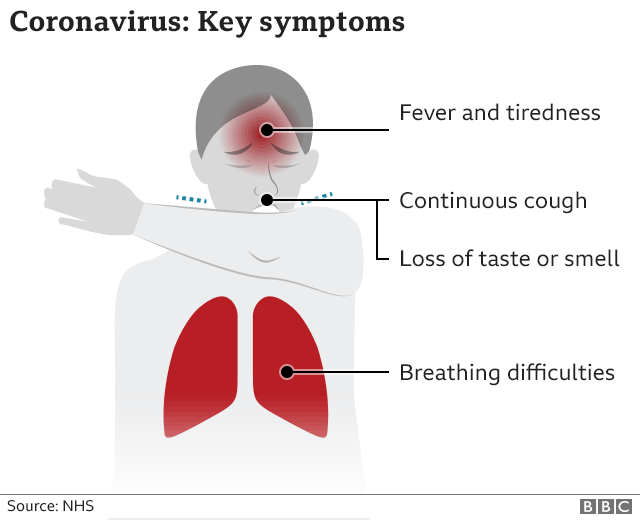
The NHS lists three main symptoms of coronavirus, that people should be aware of and ready to act upon.

What are the symptoms?


* A new, continuous cough, where you cough a lot for more than an hour, or have three or more coughing episodes in 24 hours

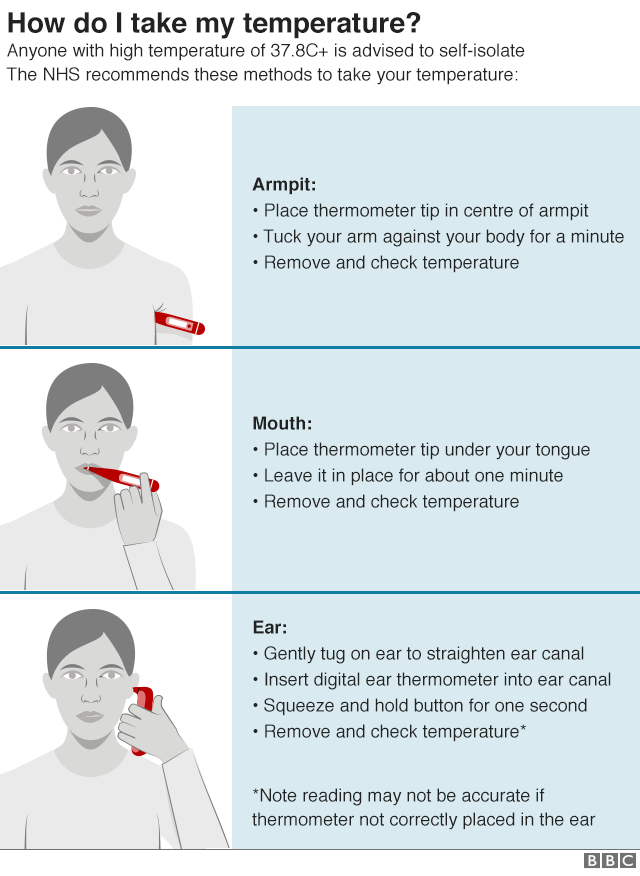
* Fever - where your temperature is above 37.8C

* Loss of smell or taste

If you, or someone you live with, has any of these symptoms the advice is stay at home to stop the risk of giving coronavirus to others.

The US Centers for Disease Control and Prevention's list of symptoms also includes chills, repeated shaking, muscle pain, sore throat, nausea or vomiting and diarrhoea.

And UK researchers think that vomiting, diarrhoea and abdominal cramps could be a sign of coronavirus infection in children.

It takes five days on average to start showing the symptoms, but some people will get them much later. The World Health Organization says it can take up to 14 days.


When do people need to go to hospital?


The majority of people with coronavirus will recover after rest and pain relief (such as paracetamol).

The main reason people need hospital treatment is difficulty breathing.

Doctors may scan the lungs to see how badly they are affected and give support, such as oxygen or ventilation, if needed.

However, people should not go to A&E if they are concerned. In the UK, the NHS 111 website will guide you through what to do.

If you are so breathless that you are unable to speak more than a few words you will be told to call 999, as this is a medical emergency.

If you become so ill that you've stopped doing all of your usual daily activities then it will advise speaking to a nurse by dialling NHS 111.

What happens in intensive care?


Intensive care units are specialist wards for people who are very ill.

Coronavirus patients will get oxygen support, which can involve using a facemask or a tube in the nose.

The most invasive way - for the most seriously ill patients - is ventilation where air, with increased levels of oxygen, is pushed into the lungs via a tube in the mouth, nose or through a small cut in the throat.

What should I do if I have mild symptoms?


Patients with mild symptoms should self-isolate at home for at least 10 days.

People are advised not to ring NHS 111 to report their symptoms unless they are worried. They should also not go to their GP, or A&E.



Details for Scotland are to check NHS inform, then ring your GP in office hours, or 111 out-of-hours. In Wales call NHS 111, and in Northern Ireland, call your GP.

If you have come into contact with somebody who may be infected, you may be told to self-isolate.

The World Health Organization has also issued advice for the public.


Older people, and those with pre-existing medical conditions (such as asthma, diabetes, heart disease, high blood pressure), are more likely to become severely ill. Men are at slightly higher risk of dying from the virus than women.

How do I protect myself?


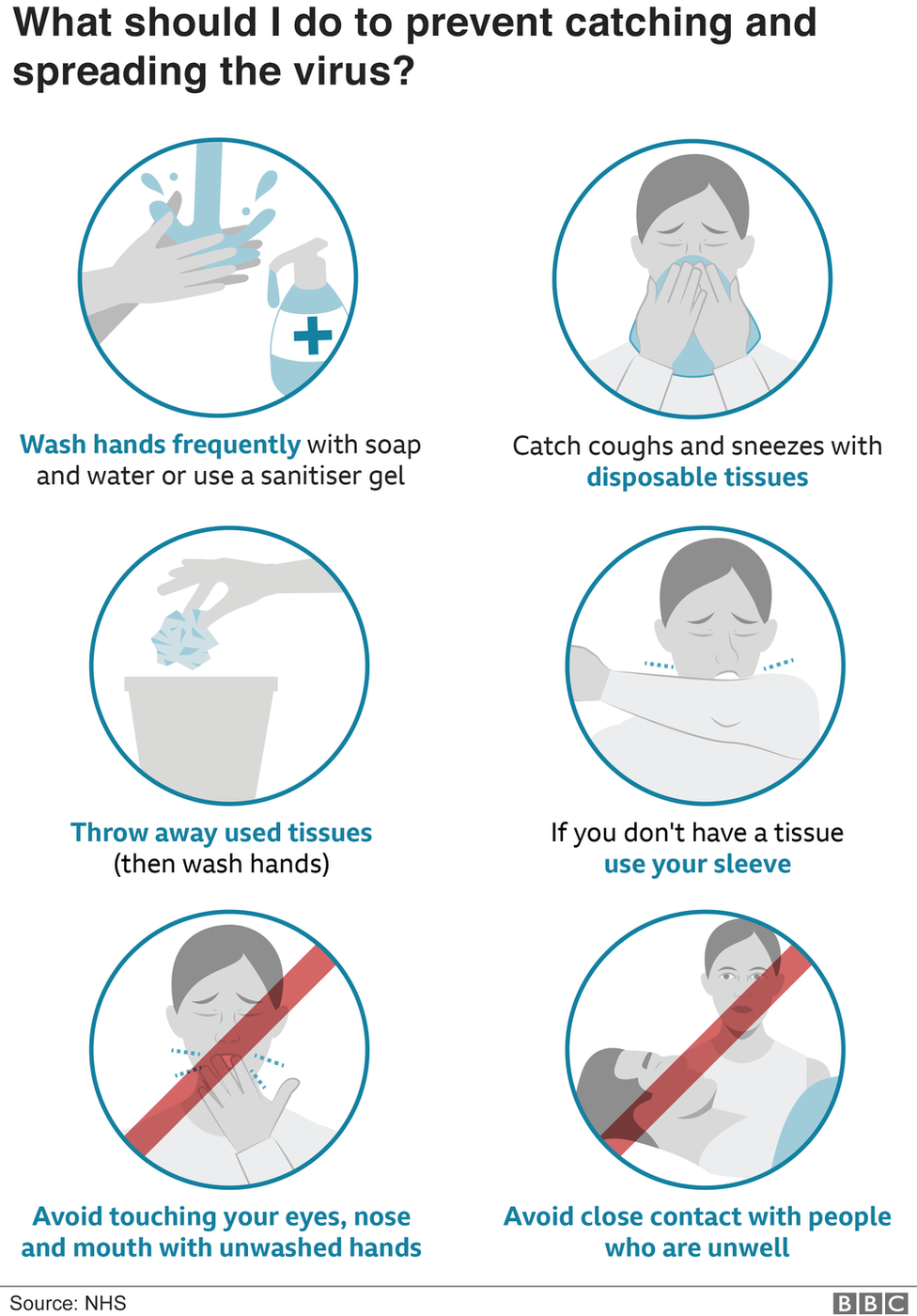
The best thing is regular and thorough hand washing, preferably with soap and water.

Coronavirus spreads when an infected person coughs or sneezes small droplets - packed with the virus - into the air. These can be breathed in, or cause an infection if you touch a surface they have landed on, then your eyes, nose or mouth.

So, coughing and sneezing into tissues, not touching your face with unwashed hands, and avoiding close contact with infected people are important.

People will be most infectious when they have symptoms, but some may spread the virus even before they are sick.

Face coverings are also becoming compulsory in many indoor settings across the UK.


Newsletter

Related Articles

0:00
0:00
Close
Trump’s Strategic Pressure on UK Seen as Push for Stronger Alignment and Fairer Terms
UK Focuses on Trade Finance to Secure Critical Materials for Defence and Energy Sectors
Majority of UK Businesses Hit by Middle East Conflict While Confidence Holds Firm
UK Royal Navy Faces Renewed Scrutiny as Debate Intensifies Over Capability and Readiness
Reform UK Faces Mounting Distractions as Policy Agenda Struggles to Gain Traction
Investigation Launched Into Northern Cyprus IVF Clinics After UK Families Receive Incorrect Sperm
International Meeting Issues Unified Call to Safeguard Navigation Through Strait of Hormuz
Potential Strait of Hormuz Closure Raises Concerns Over UK Food and Medicine Supply Chains
UK Leads Coalition of Over Forty Nations Urging Iran to Reopen Strait of Hormuz
UK Secures Tariff-Free Access for Medicines in Landmark US Pharma Trade Agreement
King Charles III Invited to Address Joint Session of U.S. Congress in Rare Diplomatic Honor
Debate Grows Over Whether Expanded North Sea Drilling Can Reduce UK Energy Bills
UK Faces Heightened Risk of Jet Fuel Shortages, Airline Chief Warns
UK Ends Police Investigations into Lawful Social Media Posts After Review Finds Overreach
Abramovich Moves to Establish Charity for Frozen Chelsea Sale Proceeds Amid UK Dispute
Starmer Reaffirms NATO Commitment While Responding to Trump’s Strategic Critique
UK Aid Reductions Raise Fears of Severe Human Impact Across Parts of Africa
UK Signals Renewed Push for EU Cooperation as Iran Conflict Reshapes Security Landscape
Bank of England Signals Caution as Bailey Advises Markets Against Expecting Rate Hikes
UK to Convene Global Coalition to Restore Shipping Through Strait of Hormuz
Trump Signals Possible NATO Reassessment, Emphasizes Stronger U.S. Strategic Autonomy
Australia Joins British-Led Efforts to Reopen Strait of Hormuz Amid Escalating Tensions
King Charles Plans US State Visit as UK Strengthens Ties with Trump Leadership
UK Regulator Launches Investigation Into Microsoft’s Business Software Practices
Kanye West Set for High-Profile Return to UK Stage at Wireless Festival
Trump Presses Europe to Strengthen Commitment as Iran Conflict Escalates
UK to Deploy Additional Troops to Middle East Amid Rising Regional Tensions
UK Authorities Face Claims of Heavy-Handed Measures in Monitoring Released Pro-Palestine Activists
Trump Calls on UK to Secure Its Own Energy as Iran Conflict Intensifies
Nigel Farage Declines Invitation to UK Conservative Conference Led by Liz Truss
Trump Warns Allies to Take Responsibility as Rift Deepens with UK and France Over Iran Conflict
How Britain’s Prime Minister Controls U.S. Bomber Access in Escalating Iran Conflict
Trump Urges Allies to Secure Their Own Oil Supplies as Hormuz Crisis Disrupts Global Energy
Russia Expels British Diplomat as UK Pushes Back Against Pressure
White House App Faces Scrutiny After Claims of Continuous User Location Tracking
BBC Faces Scrutiny Over Allegations of Paid Content Linked to Saudi Arabia
UK-France Coastal Patrol Agreement Nears Breakdown Amid Migration Pressures
UK Police Detain Pro-Palestine Activist Again Weeks After Bail Release
FTSE 100 Advances as Energy and Mining Shares Gain Amid Middle East Tensions
Eli Lilly Seeks UK Pricing Deal to Unlock Renewed Pharmaceutical Investment
Three Arrested in UK After Massive Cocaine Haul Discovered Hidden in Banana Shipment
UK Fuel Prices Poised for Further Surge Amid Global Energy Pressures
Apple Subsidiary Penalized by UK Authorities for Breach of Moscow Sanctions
Western Allies Intensify Coordinated Sanctions Strategy Against Russia
UK Lawmakers Face Criticism Over Renewed Push for Social Media Restrictions
Starmer Signals UK Crackdown on Addictive Social Media Features
Rising Costs Push One in Five UK Hospitality Businesses to the Brink of Closure
Man Arrested on Suspicion of Attempted Murder After Car Strikes Pedestrians in UK, Injuring Seven
Escalating Conflict Involving Iran Tightens Fiscal Pressures and Highlights UK Economic Vulnerabilities
UK Moves to Confront Russian ‘Shadow Fleet’ Operating in Its Waters
×