

How do children choose a best friend?
For many of us, the coronavirus pandemic revealed who our closest friends are. Deprived of social opportunities to interact with a wider group, we became more reliant than ever on a small group of confidants. For children, the situation was even more dramatic, especially for those too young to enjoy Zoom calls. Many missed their social circle – especially their best friends.
These friends aren't just people we enjoy hanging out with, they are the ones we trust completely. As children, we tend to treat them as members of our extended family, to the point where their homes may feel as familiar as our own. As adults, we know we can call them at a moment's notice to share the highs and lows of our daily lives.
"With best friendship there tends to be intimacy, a feeling that the other person is there for you, that they have your back," says Rebecca Graber, a psychology lecturer at the University of Sussex, in the UK. "It's about perceived support rather than actually showing up."
But are we programmed to have best friends? Research shows there are strong evolutionary benefits which explain why we choose to form such close social bonds with others. However, the precise nature of those bonds can vary considerably – and understanding this diversity can offer much comfort and hope to those yearning for a best friend, and struggling to find one.
 Many children (and adults) form friendships through shared interests
"Traditionally we've thought of friendship as cultural. But it's deeper than that and more fundamental," says Lydia Denworth, author of the book Friendship: The Evolution, Biology, and Extraordinary Power of Life’s Fundamental Bond. It's by looking at other species, such as baboons and dolphins, that we see how fundamental close friendship is, says Denworth. Those friendships are not necessarily exclusive, in the sense of choosing one friend above all others. Rather, they can consist of bonds forged over time with any number of supportive individuals.
Just like humans, dolphins form friendships through shared interests. Male dolphins that forage in deep waters for food, a practice known as "sponging", mainly interact with other male spongers, according to a 2019 study. These strong bonds can last for decades and are critical to each male's mating success, notes Manuela Bizzozzero, a researcher at the University of Zurich and lead author of the study.
Baboons also form strong relationships to help them overcome early-life adversity, research shows.
One 2003 study, led by primatologist Jeanne Altmann of Princeton University, found that friendships among female adult baboons increased the survival rate of their infants. Another study concluded that baboons with strong social bonds experience lower stress and that females work to establish new relationships when a close friend is killed by predators.
"The best bang for your buck is to have good friends; it helps you fight off the lions," says Denworth. "We also need help fighting off the lions and that's what our friends do for us."
 Helping children develop strong friendships can yield lifelong benefits
Making friends
Finding and keeping friends is a skill that can take some time to develop.
From around the age of four, children develop an understanding that other people may have thoughts, interests and feelings that are different to theirs. This emerging capacity, known as Theory of Mind, helps children make friends, says Eileen Kennedy-Moore, a clinical psychologist and author of the book Growing Friendships: A Kids' Guide to Making and Keeping Friends. "They become better at imagining someone else's perspective and this fuels more intimate friendships."
Children often have a pragmatic view of friendship, forming close bonds with peers in the playground or classroom, says Kennedy-Moore. "It is a 'love the one you're with' approach."
"The thing that kids have as an advantage over adults is that they are in the room with 25 others in their stage of life," she says. "In adulthood it takes deliberate effort to find and cultivate friendships."
According to one study, adults must spend around 50 hours together to go from mere acquaintance to a casual friend, 90 hours together before they consider each other friends, and more than 200 hours to become close friends who share an emotional connection.
Psychologists say best friendships can help children prepare for close relationships, including romantic ones, as they grow up.
"Best friendship is really like falling in love," says Kennedy-Moore. "Close friendships in childhood help kids practice the skills they need in intimate relationships throughout their lives. They learn about other people, and about themselves, to deal with feelings like loneliness, jealousy and frustration."
If children don’t talk about friends at home, it doesn’t mean they don’t have any, she says, adding that this may because they prefer a quieter style of interacting with others.
Parents can support their children in forming friendships by organising fun meet-ups outside of school. "Kids usually make friends by doing fun things together, so you may want to think about your child's interests and seek out activities that fit [their personality] and could be done with other children," says Kennedy-Moore.
Parents can also teach their child how to join in with games and activities. "The formula is: watch then blend," she says. "Watch what the other child is doing, then slide into the action without interrupting."
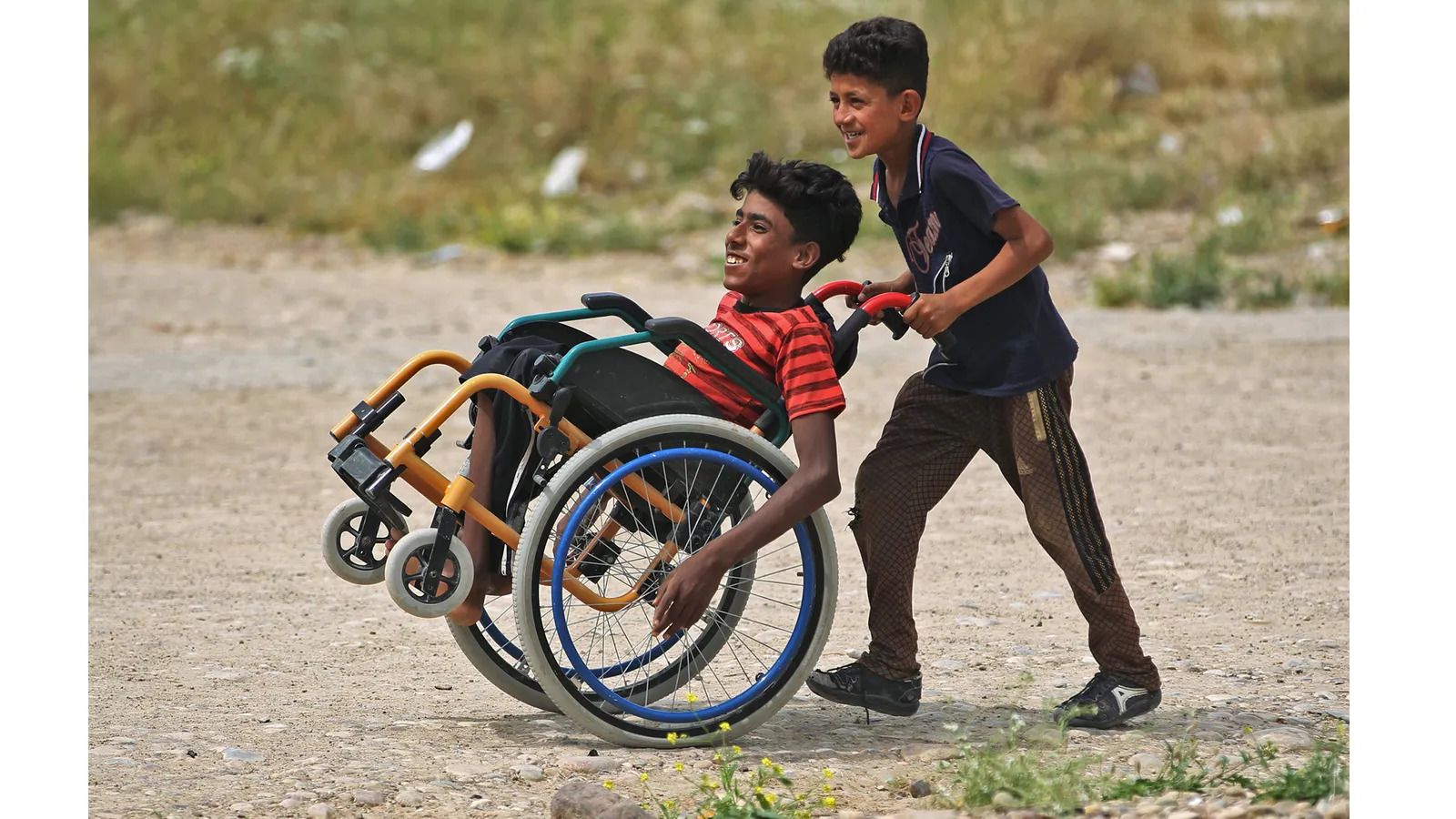
 Children all over the world form close relationships, either with friends or extended family
Health benefits
Helping children develop strong friendships can be a gift with lifelong benefits, including better mental and physical health. Maintaining close friendships has a positive impact on cardiovascular and neuroendocrine health, as well as the immune system, research shows. According to a 2010 review of 148 studies, strong friendships provide greater health benefits than quitting smoking, losing weight or doing exercise. Having a close group of friends and strong family ties reduces people's mortality risk by 50%, the analysis shows. Being lonely or isolated has the same impact on someone's mortality as smoking 15 cigarettes a day, according to a survey of 20,000 Americans.
The Harvard Study of Adult Development, which started in 1938 during the Great Depression and tracked more than 700 men throughout their lives, found that people's satisfaction with their relationships during their 50s was a better predictor of their physical health later in life, than their cholesterol levels.
These findings show the importance of treating friendship as a "lifelong endeavour", says Denworth. "It is never too late to make new friends, but it's a great idea to start early."
While some studies define best friendship as involving only one special friend, the findings generally suggest that it is the quality and reciprocity of the relationship that is the beneficial factor, rather than the number of friends involved.
Such bonds can play a vital role in helping children cope with challenges in their lives and overcome adversity, research shows. Children who have a best friend tend to experience less loneliness and depression and greater self-worth. One study found that having close, supportive friends can help children from low-income backgrounds cope better with difficult circumstances.
Having close friends can help children cope with difficult circumstances
"Children with a higher quality of best friendship demonstrated, in association with higher psychological resilience, a better ability to weather the storm of being in a low-income neighbourhood," says Graber, the study's lead author.
"Their best friendships seemed to be associated with having better coping skills and a better sense of being able to change things about their lives," she says, adding that the findings for friendships among boys and girls were similar.
However, the "best friend" title alone is no guarantee of a high-quality relationship. When a best friendship involves excessively discussing problems, it can lead to increased symptoms of depression and anxiety, according to a 2007 study.
For children who have not yet found that special friend, there are still plenty of opportunities ahead. Friendships change all the time throughout childhood, says Graber. When best friends drift apart or move away it can be difficult for young children, who aren't used to relationships ending. "There isn't a ritual for children to grieve the loss of that relationship," she says, adding that it is important that parents discuss this with their children and support them through the process.
 Close friendship has been shown to boost health, resilience and happiness
Cultural differences
Picking one best friend is not always seen as the ideal model – in some cultures people choose to spend time with a wider group, made up of family and peers, instead of just one other person.
In many small, rural societies around the world, children attend school with their cousins, see them as their close friends, and don't differentiate between friends and extended family, says Evan Killick, a senior anthropology lecturer at the University of Sussex.
Killick has studied the social relationships of the Ashaninka society in the Amazon rainforest. In this community, relationships with family members generally trump friendships, says Killick. "In Western urban societies that idea of having a close friend is important because you don't have those wider kinship networks." Ashaninka children only start forming friendships outside their extended family when they hit puberty and seek trading relationships and marriage partners. At the beginning, they are transactional relationships, focused on pragmatic outcomes, but they can evolve into strong emotional bonds over time, says Killick.
A recent study explored the different ways in which Russians and Canadians regard friendship. It found that Russians view friendship as a more intimate bond, rooted in trust and closeness, compared to Canadians.
"The Russian model is one of fewer friends, but very deep, intense relationships," says Marina Doucerain, lead author of the study and an associate professor at the University of Quebec in Montreal.
The Canadian model places greater emphasis on respecting people's independence and fewer expectations on close friends. "There's not the idea that you will be there for your friend in adversity, no matter what," says Doucerain.
There are striking linguistic differences in the way Russian and English speakers refer to friendship, according to Doucerain. Russians only use the term 'friend' (droog) for people they are very close to and refer to people they enjoy spending time with as 'pal' (druzhishe and koresh), she says. In English, on the other hand, the word 'friend' can describe "a wide range of relationships."
There could be a historical explanation for these different attitudes to friendship, says Doucerain. "In the Soviet Union, it was extremely risky to have close relationships, even among families," she says. "The solution was to have a few individuals that you could trust entirely. This notion of trust is very central to Russian friendships."
Whether it's a playground friend, an Ashaninka-style close cousin, a Russian-style droog, or a fellow dolphin with a taste for deep-water hunting, having a friend and ally in life can clearly make a huge difference. For some, that bond starts in childhood. For others, it may take more time. But as Denworth points out, it's worth persisting – because it's never too late to find a best friend.