

Hong Kong Covid-19 caseload falls to 12, lowest in three months
Hong Kong confirmed 12 new coronavirus cases on Saturday, the fewest in about three months, but authorities said the drop could be due to reduced testing over the holiday and warned hidden transmission chains remained in the community.
Two of the infections were untraceable, while two others were imported involving arrivals from Britain and the Philippines, according to the Centre for Health Protection. Fewer than 10 people tested preliminary-positive. The overall tally of confirmed cases stood at 10,767, while the number of related fatalities stood at 193, including a 60-year-old man who succumbed to the disease on Friday night. The city recorded 12 cases on November 19, and nine cases on November 18.
Health officials urged residents to stay vigilant, saying fewer tests were being carried out over the Lunar New Year period.
“Although the number of new cases recorded is relatively low, it could be related to many clinics being closed and some people being reluctant to visit a doctor during the Lunar New Year holiday,” said Director of Health Dr Constance Chan Hon-yee.
Chief Secretary Matthew Cheung Kin-chung earlier said the pandemic would be deemed under control when the city’s daily infection tally was confined to the single digits, allowing the border with mainland China and many local businesses to reopen.
More than 640,000 Hongkongers have downloaded the government’s Covid-19 risk exposure app with a fresh surge in sign-ups likely, he said.
Health authorities this week announced that social-distancing rules could be relaxed after Lunar New Year from February 18 if the coronavirus situation in Hong Kong remained stable.
The plan would allow restaurants to offer dine-in service later into the night with four people to a table, while gyms, cinemas and other premises could reopen.
But operators would have to follow new measures to prevent the spread of the disease, including requiring patrons to scan a QR code for the app or provide their personal details.
As he sought to reassure the public over privacy issues, Cheung told a radio show that 644,000 people, or about 8.6 per cent of the city’s population, had installed the “Leave Home Safe” app, up from around 470,000 people in early February.
“This is a good indicator and shows more residents are gradually downloading it. I believe there will still be a surge in the next few days,” he said.
But leaders in industries such as catering have raised concerns over the implementation of the new rules, saying businesses were not law enforcement agencies and questioning how they would handle customers who refused to cooperate.
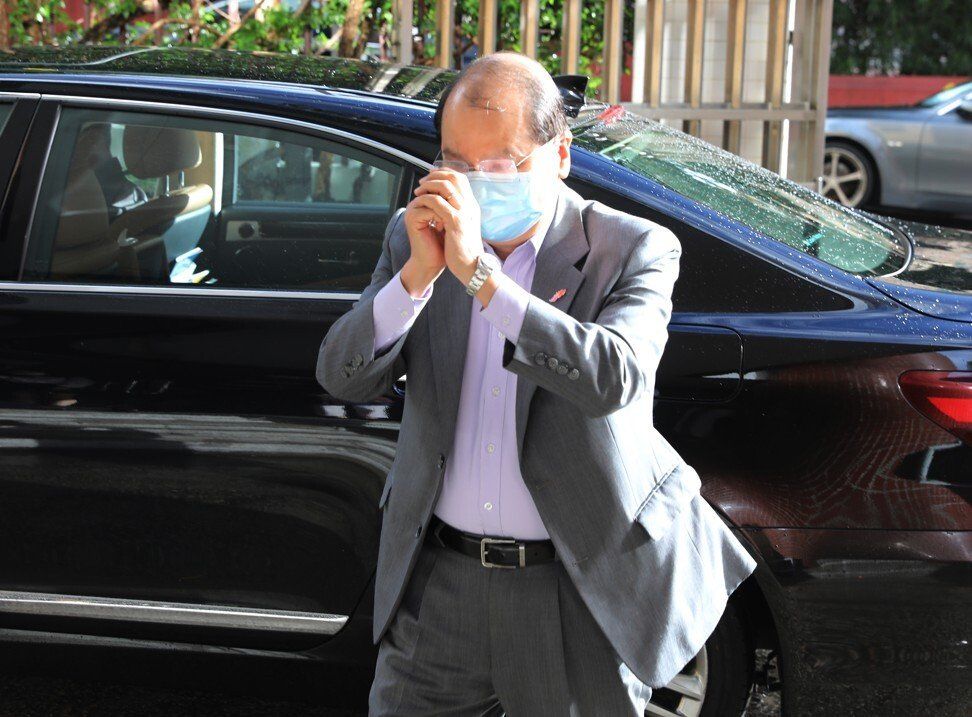 Matthew Cheung, Hong Kong’s chief secretary.
Cheung urged the public not to worry too much about the system’s implementation, predicting cultural change within the community surrounding anti-contagion measures would take time.
“The government is not trying to know what residents are doing. We just want to know who was present at the venues at a specific time,” he said.
The contact-tracing app allows users to scan a QR code at different locations to voluntarily log their movements in support of the city’s fight against the virus. It notifies users if a person confirmed as infected has recently visited those places.
Cheung appealed to residents to stay vigilant in guarding against the virus during what he called a critical few days over Lunar New Year.
“Even if we can’t reach zero cases, when we can get to a very low figure, a single-digit figure for infections in a stable manner … that means the pandemic is under control. Under such a situation, we will have the conditions to reopen our borders and to allow many venues to resume their operations,” he said.
Asked if vaccination could be a condition for allowing easier travel to the mainland and other destinations, Cheung said he would not rule out the idea, but the key was whether it was acceptable to the Chinese government.
On Thursday, representatives from the tourism sector and local delegates to the National People’s Congress said they had urged the central and local governments to allow Hongkongers to take day trips to the mainland to be inoculated without having to undergo quarantine.
Addressing the calls, Cheung said the proposal’s feasibility would also depend on the views of authorities over the border.
On Covid-19 restrictions for restaurants, Liberal Party lawmaker Tommy Cheung Yu-yan, representing the catering sector, was cautiously optimistic that dine-in services at night could resume soon.
The legislator said he hoped the government could list food and beverage workers as one of the priority groups for receiving jabs.
Another pro-Beijing lawmaker Alice Mak Mei-kuen, from the Federation of Trade Unions, suggested the city set up an indicator system to support businesses as they negotiated the crisis.
“When a certain number of people in the population have been inoculated, then social-distancing measures can be relaxed. Or when staff members of a premises get vaccinated, then the business could operate longer service hours,” she said.