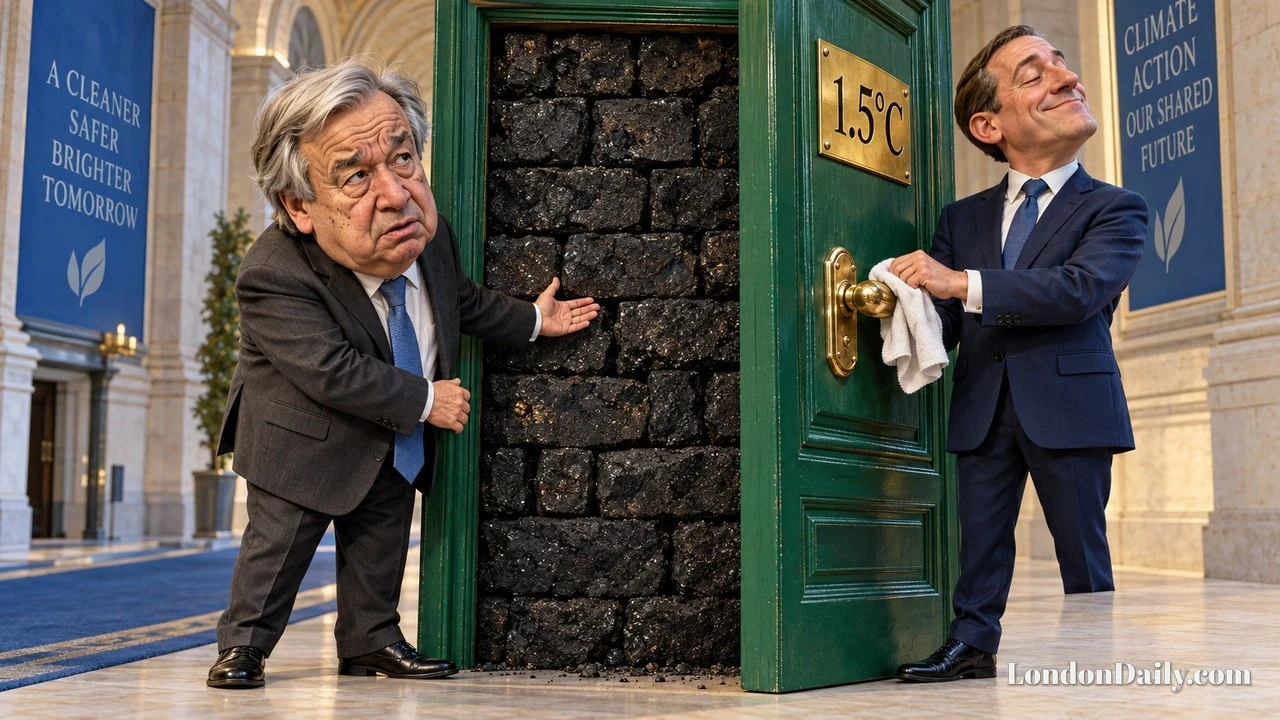
António Guterres says scientists told him he could no longer assure the world that warming could be kept below 1.5C, a reversal he described as an immense personal failure as his final climate summit as UN secretary-general opened in Antalya, Turkey.
COP31 began on Monday and is due to close on 20 November. Guterres, whose second and final term ends at the end of the year, is urging leaders to stop shifting responsibility and accelerate cuts in heat-trapping emissions.
He recalled consulting scientists last year before a major speech. After nine years of defending the central goal of the 2015 Paris agreement, limiting warming to 1.5C above pre-industrial levels, he intended to say it remained achievable with stronger action. Scientists told him accumulated emissions from burning fossil fuels meant that assurance was no longer true.
Guterres places responsibility on political leadership rather than humanity collectively. Protecting the planet requires sustained investment, he argues, while frequent policy changes undermine the long-term planning it needs. He cites his experience as Portugal’s prime minister in the late 1990s as evidence that governments can invest beyond immediate political horizons.
His warnings come amid worsening deadly heatwaves, storms, floods and droughts. An intensifying El Niño, a natural climate pattern, threatens further temperature records. Yet he draws hope from the worldwide expansion of wind and solar power, described as cheaper alternatives to fossil fuels.
Guterres also argues that wars in Ukraine and Iran expose the security risks of fossil-fuel dependence through energy-supply shocks. Artificial intelligence compounds the pressures, he says, through its electricity and water consumption and associated carbon emissions.
During a 2023 visit to Nepal’s Himalayas, he warned that glacier-fed lakes threatened destructive flooding and landslides. Floods and mudslides last August killed more than 1,400 people, with another 5,600 listed as missing; scientists said climate change contributed to the disaster.
He wants taxes on fossil-fuel companies’ large profits to help countries suffering the gravest climate impacts, often despite having contributed little to the problem.
Former US vice-president Al Gore praised his consistent determination and grasp of the threat. Laurence Tubiana, chief executive of the European Climate Foundation, who led the negotiating team behind the Paris agreement, said he had pushed further than any previous UN secretary-general.
Israel’s environment ministry said security constraints prevented an in-person delegation; officials will participate online.
The constraint on Guterres’s final appeal is institutional: countries need not follow his requests, while major powers hold Security Council vetoes. The council is still considering his successor. Turning his advocacy into lasting policy remains a decision for governments.








Join the conversation