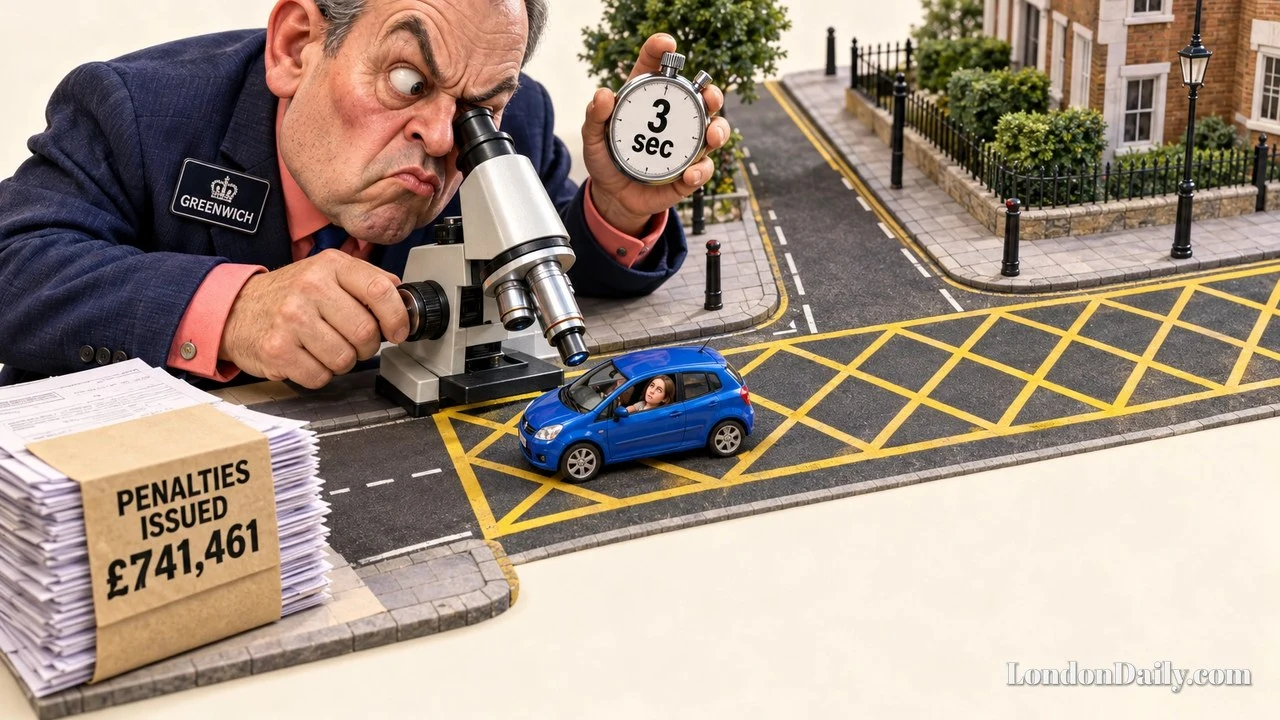
Greenwich Council issued penalties valued at more than £741,000 at a yellow box junction that an independent adjudicator ruled was too large, cancelling a motorist’s £160 fine after a three-second stop.
The woman spent six months challenging the penalty at the junction of Plumstead High Street and Garibaldi Street. Greenwich rejected her initial appeal, but London Tribunals found that her car had stopped beyond the far end of the junction, in a section where the yellow markings extended too far.
The adjudicator concluded that the box “is not substantially compliant with the legislative procedures”. Greenwich disagreed with the reasoning but chose not to contest the appeal.
A subsequent Freedom of Information response recorded 11,950 penalty charge notices with a total monetary value of £741,461 between 7 September 2021 and 30 September 2026. This is the stated value of the penalties, not an established total of money collected.
Sam Wright, the traffic campaigner who helped the motorist, accused the council of using the box as a cash generator. A former Transport for London traffic engineer responsible for designing and approving yellow boxes, he campaigns as the ‘Yellow Box Guru’.
“It’s not just about the box length. It’s the fact that she stopped for three seconds,” Wright said. He criticised the stress caused by penalties for brief stops and called for a minimum stopping period of five to ten seconds before a charge could be issued.
Yellow boxes are intended to prevent vehicles obstructing junctions and exits. The Traffic Signs Regulations and General Directions 2016 permit them at road junctions, roundabouts and beside emergency service entrances. Motorists caught entering and stopping in a box can face a £160 penalty, reduced to £80 if paid within 14 days.
Greenwich rejected Wright’s allegation about revenue. Councillor Calum O’Byrne Mulligan, whose cabinet responsibilities include transport, said keeping this stretch clear helped emergency services respond without unnecessary delays. Police and fire stations are nearby, and he said the fire service had repeatedly raised concerns about obstructed junctions along the road.
“Enforcement is about ensuring traffic flows safely and effectively for the benefit of all road users, including the emergency services, and revenue is not a consideration,” he said.
He also said many adjudicators had upheld the box and promised reviews of locations where evidence suggested changes were needed. The dispute concerns both the extent of the markings and the treatment of brief stops; the council’s commitment leaves any specific alterations unresolved.








Join the conversation