

Forget Scottish independence — in the Outer Hebrides, they just want a working ferry service
The word “remote” is greeted with an eye roll by the tight-knit communities of the Outer Hebrides, a collection of spectacular islands off Scotland’s far northwestern coast where residents insist they have all they need.
But the Scottish government’s mismanagement of its ferry network is in danger of making the word a reality. And 250 miles away, in distant Edinburgh, it’s First Minister Nicola Sturgeon who’s feeling the heat.
This year was meant to bring the first “normal” summer tourism season in Scotland since the coronavirus lockdowns of 2020 and 2021 — yet islanders and tourists alike have been plagued by a litany of issues caused by massive disruption to the Hebrides’ all-important ferry services, which connect the separate islands to one another and provide a lifeline link to the mainland.
“Every morning the first thing I do — everyone’s got the app — is to go through and see which ones are off,” Hebridean business owner Kenny MacLeod told POLITICO, while flicking through a ferry service application on his mobile phone which confirmed a depressing array of “amber” and “red” status updates next to various routes.
MacLeod operates a tour boat company from the Isle of Scalpay that delivers excursions mixing local history, dramatic scenery and rare wildlife. But due to relatively low tourist traffic on the islands this summer, the number of tours he was able to run in July was down by almost a third on his numbers in July 2021 — when coronavirus restrictions had shuttered his business for more than half the month.
“It’s that income over the summer period that enables [businesses] to stay open and provide their services for the people living here over the winter months,” he explains over coffee in the grand — but eerily quiet — Hotel Hebrides in Tarbert, Harris. Staff at the hotel confirm this summer’s lack of tourists has also hit the hotel hard.
The situation is unanimously blamed on the extensive ferry service disruption — largely caused by maintenance problems — which has hurt Scotland’s islands this summer, the Outer Hebrides chief among them.
Ferries run by the Scottish government-owned Caledonian MacBrayne (often shortened to Calmac) operator link the multiple islands to one other, as well as to the nearby Inner Hebrides and the mainland.
The ferries serving the so-called Skye Triangle — between Harris, Skye and North Uist — have been among the worst affected. And every cancellation brings with it a loss of the vital tourism income upon which businesses in the Hebrides have come to rely.
“The islands are very on-trend at the moment. But we don’t have a steady ferry terminal that gives people confidence, and we’ve seen people canceling holidays. We’re losing money every time the ferries are going out of service,” Harris business owner Jamie McGowan said.
McGowan owns several small businesses in Tarbert, Harris’ main tourist hotspot. His luxury candle shop, overlooking the ferry port, often ends up down to a third or a quarter of its normal sales if the service is canceled, he said, while his delicatessen can sometimes land just one-fifth of its usual takings on ferry-free days.
Those days have come more often than Harris’ tourism reliant economy can afford. More than 10 percent of the scheduled ferries servicing the Harris, Uig and North Uist route have been canceled this summer, with more than 15 percent canceled in the busy August period, POLITICO analysis of publicly available figures show.
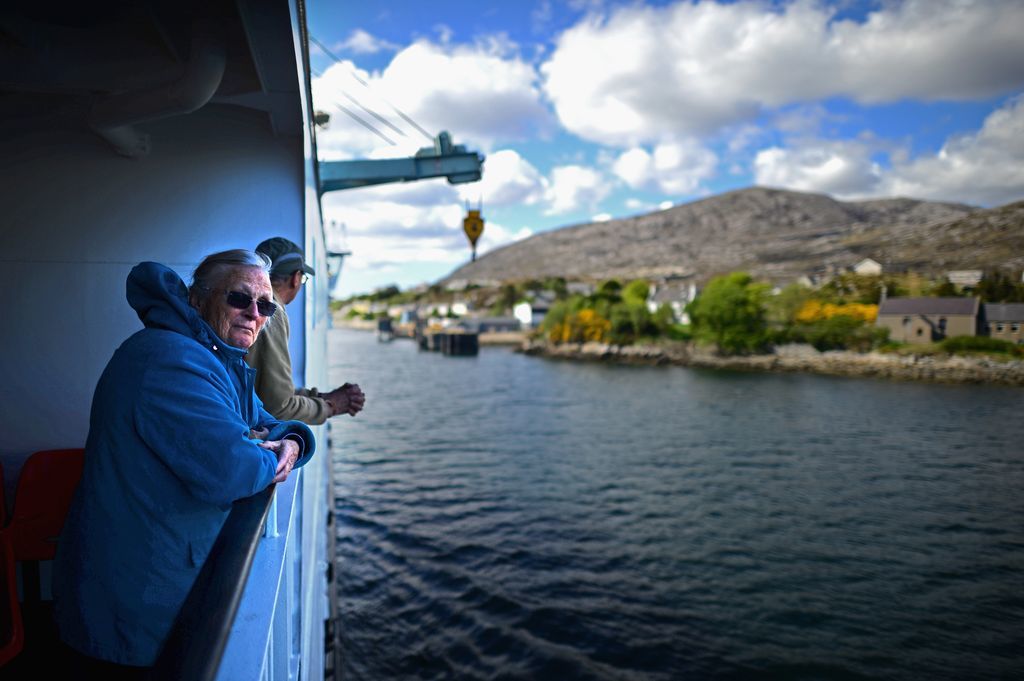 This year was meant to bring the first “normal” summer tourism season in Scotland since the coronavirus lockdowns
The issue is set to get even more acute for concerned business owners in Harris, with scheduled repair works on the Uig pier currently set to end all ferry services on the Tarbert-to-Skye route for 14 weeks over two separate periods next year.
‘You can’t get off the island’
On the nearby island of North Uist (population: 1,254), a store stands alone on a dramatic hillside overlooking a white sand beach, the only shop for miles around.
According to the owner, who preferred not to be named in this article, tourists would typically travel from right across the isles to visit. But this year has seen a far smaller footfall than was hoped for, especially after the shop was closed for 16 months during the pandemic.
For tourists, the experience has not been positive. Multiple news reports have detailed experiences where visitors to the Outer Hebrides were forced to sleep in their cars due to the disruption.
For the islanders, it has proved even more serious. The same shop owner alluded to shortages in a nearby supermarket, which had to ration bread and milk for several days following a ferry cancellation. Some island shops reported shortages of other basic items following the cancellation of vessels carrying freight. Calmac insists ferry disruption was not the cause.
“For people with a young family like me the issue is that you can’t get off the island,” Stornoway cabbie James Macdonald said, speeding through the undulating, heathery landscape between Stornoway in the Isle of Lewis and Tarbert in Harris — slowing down only occasionally to let sheep move off from the narrow road. “It never used to be like this.”
Blame game
One church leader in the Hebrides has suggested the increase in ferry breakdowns this summer shows “God’s displeasure” at the introduction of Sunday crossings back in 2009. Others point the finger closer to home.
Desperate to score points against Sturgeon and her supremely dominant Scottish National Party, opposition politicians pin the blame squarely on the Scottish government she leads.
Opposition lawmakers led by the Scottish Liberal Democrats unsuccessfully called in August for the Scottish parliament to be recalled from its summer recess for Sturgeon to explain what they described as “years of underinvestment in our ferry network.”
Lib Dem MSP Willie Rennie said: “If half the transport links to the first minister’s constituency were removed overnight, her constituents would be beating down her door, and I’m sure a solution would be found in short order.”
 Nicola Sturgeon is often accused of obsessing over independence while taking her eye off the ball on multiple domestic issues
Even before this year’s disastrous summer season, Calmac boss Robbie Drummond admitted to the BBC that the service was deteriorating — blaming rising passenger numbers, worsening weather and a failure to purchase new vessels.
Much ire has been directed at a Scottish government decision to award the contract for two new vessels to a now-nationalized Scottish shipyard in 2015. The ships are now four years late and forecast to cost double their original budget, while the decision to award the contract has been sharply criticized in a report by Scotland’s independent auditor.
Sturgeon has tried to shift the blame onto her then-transport minister, Derek Mackay. Once a close ally of Sturgeon, Mackay was later forced to resign from her government amid a scandal over text messages sent to a teenage boy.
Frustrated by the politicking, islanders simply want action — and a nimble, versatile fleet of ships which ensure adverse weather and electrical faults don’t wreak the same havoc next summer.
Alternatively, the MP for the Outer Hebrides, SNP lawmaker Angus MacNeil, believes his government should seek to install a network of Faroe Islands-style tunnels connecting the Hebrides, effectively rendering the ferry system obsolete.
“Ferries are always going to be problematic,” said MacNeil, who undertakes his 600-mile commute to Westminster every week from the world’s only airport with a beach for a runway.
“We either carry on bellyaching and complaining, or we look for genuine solutions. If you want these problems lessened in five or 10 years’ time, you’ve got to go down the route of tunnels.”
In the immediate future, the issues within Scotland’s nationalized ferry system risk damaging the credibility of an SNP-led government already under fire over the quality of many of Scotland’s public services. Sturgeon is frequently accused by opponents of obsessing over independence while taking her eye off the ball on multiple domestic issues.
“The control of the budget for the ferries is there in the hands of the Scottish government, and they have chosen not to spend it in the way that the people are asking for,” MacLeod, operator of the Scalpay boat tours company, said.
“The SNP have been returned for the last number of elections here. But right now, there’s a huge issue there — decisions are being made at the top by people who don’t have a clue.”
A petition delivered to Holyrood Transport Secretary Jenny Gilruth marking Hebridean anger at the loss of the Tarbert-to-Skye ferry service for six months has accrued more than 40,000 signatures. The population of the Outer Hebrides numbers only 27,000.
But not every visitor to the islands is up in arms about the disruption.
Tourist John Gray, from Glasgow, has been cycling through the entire outer Hebrides. Pausing for a coffee in North Uist, he said he’d found every island he’d visited far quieter than in previous years he’d undertaken the same trip.
“It’s a national treasure, and we’re wasting it,” Gray sighed.
“But,” he added, with a wink, looking round at the silent hillsides, “there are winners and losers in every situation.”