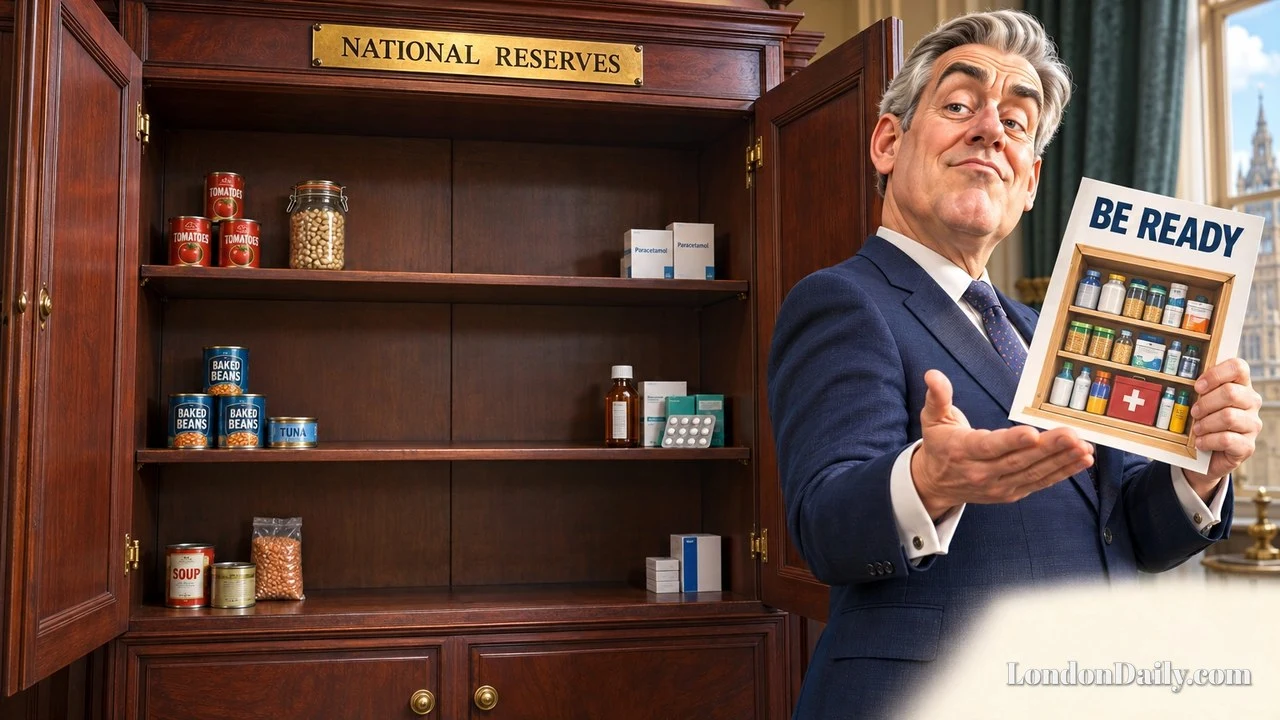
Limited food and medicine stockpiles and a lack of domestic production leave Britain “dangerously exposed” to global supply disruption, the Lords National Resilience Committee has warned, describing the UK as “seriously underprepared” for modern emergencies.
Its report, published on Monday, argues that preparations must account for threats that compound one another, rather than treating each emergency in isolation.
“A cyber-attack can quickly morph into a power cut, then a shutdown of transport, then empty food shelves in the shops,” said the committee’s chairwoman, crossbench peer Baroness Jean Coussins.
Alongside extreme weather and flooding, peers highlighted possible “grey zone” hostility from Russia, China and Iran, including cyberattacks, proxy violence and sabotage of critical undersea cables and pipelines.
The committee said Britain no longer had any domestic antibiotic manufacturers and was highly dependent on Chinese imports. It recognised the Department of Health’s eight-week buffer-stock requirement for certain medicines as an important protection, but questioned whether it covered enough critical products to withstand prolonged disruption. Peers called for investment in domestic production of essential medicines and pharmaceutical ingredients.
They also want a Cabinet minister responsible solely for resilience appointed within six months, arguing that existing arrangements lack sufficient seniority, and a statutory duty requiring routine stress-testing across public and private sector companies and services. Water companies should demonstrate that emergency supplies and distribution could survive prolonged outages.
Other recommendations include abandoning the planned digital terrestrial television switch-off to preserve universal emergency communication, and expanding armed forces “gap year” eligibility to 16-to-24-year-olds outside employment, education or training, alongside wider efforts to recruit civilian volunteers and reservists.
Resilience skills, critical thinking and information literacy should be taught in schools, further education and workplaces, peers said.
The committee welcomed the government’s Be Ready campaign, which encouraged households to keep days’ worth of food and water. But it urged ministers to stop being “squeamish” about explaining threats and share more information within security limits. Coussins said evidence suggested candour would reassure rather than alarm people, helping them understand why and how to prepare.
The Cabinet Office said it would carefully review the report, while arguing that its resilience work went further than that of successive governments. It cited the household campaign, more than £1 billion for pandemic security and what it described as the largest home defence exercise in recent history, planned for next year.
Acknowledging more work remained, it also highlighted cooperation with allies, discussed by the Security Minister aboard HMS Prince of Wales in Oslo last week. The unresolved question is whether those measures provide the sustained supplies and tested services the committee says Britain needs.








Join the conversation