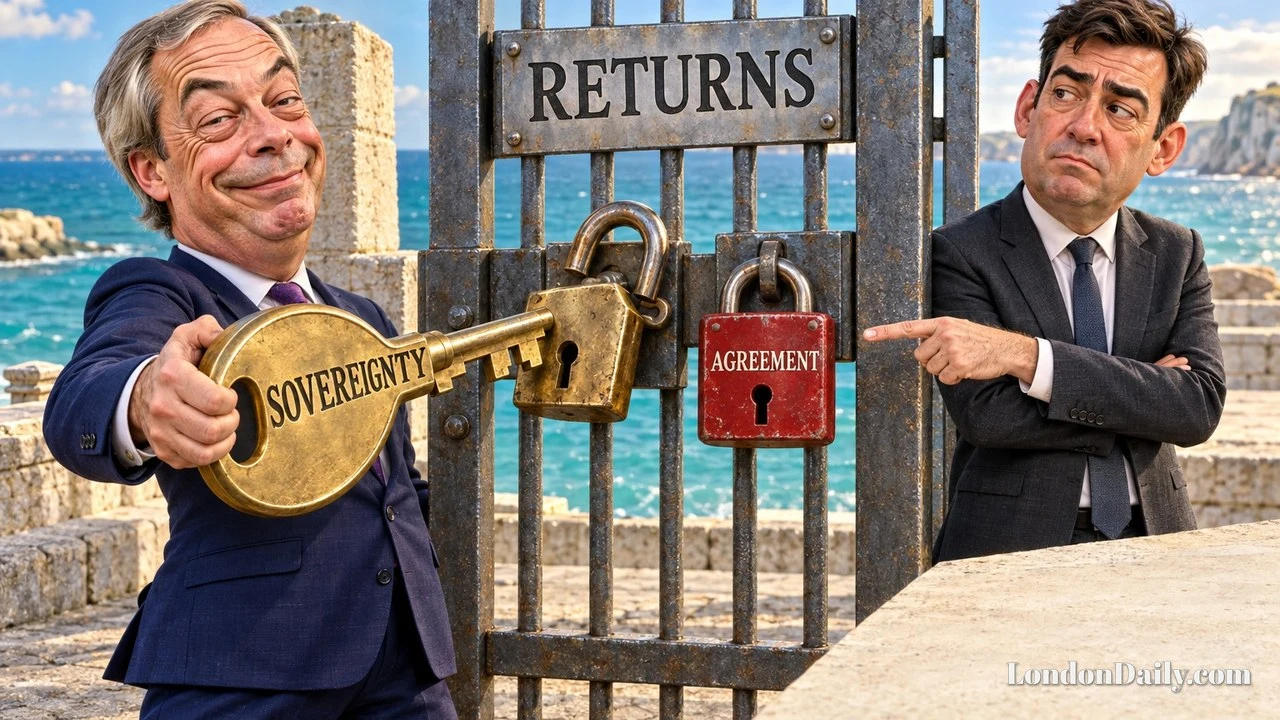
Nigel Farage has accused Prime Minister Andy Burnham of dishonesty over his claim that Brexit contributed to the small boats crisis, arguing that successive governments failed to use the border powers Britain regained on leaving the European Union.
The Reform UK leader also demanded a general election if the government intends to pursue free movement with the EU, alleging that such a change would breach its electoral promises.
The argument attributed to Burnham is that leaving the EU cost Britain its returns agreement and, consequently, weakened immigration control. Farage, a key architect of the 2016 Brexit vote, rejected that explanation. He said the Conservative government had chosen not to exercise the freedoms Brexit provided and that Labour had no intention of doing so.
“Leaving the European Union made us a sovereign country with the ability to make its own decisions,” he said.
The distinction matters: the authority to set border policy and the arrangements needed to return people to other countries are different questions. Farage’s sovereignty argument does not, by itself, resolve the claim about the consequences of losing a returns agreement.
Farage also claimed that Mediterranean boat crossings far exceeded those reaching Britain. He alleged that countries including Germany and Spain had granted EU citizenship over the previous five years to 750,000 people who entered Europe illegally, including Afghans, Eritreans, Iranians and Iraqis. He argued that those passport holders could come to Britain under free movement. This was a warning about the implications of free movement, not evidence that such access had been agreed.
Accusing Burnham of misleading voters, Farage said he had been elected for the Leave-voting seat of Makerfield five months earlier after promising not to reopen these debates. He contrasted Burnham’s position with remarks he attributed to him in December 2016, criticising free movement for depressing wages and making people poorer.
Farage said the government, elected with a large majority two and a half years earlier, had pledged not to rejoin the single market or customs union, or contemplate free movement.
He cited a Brussels summit scheduled for 20 November and alleged that talks were already examining how free movement might operate. The scope of those alleged negotiations was not specified. Calling this a breach of manifesto promises and a betrayal of the 2016 vote, he argued that ministers lacked a mandate even to negotiate such a policy and should seek one through an election.








Join the conversation