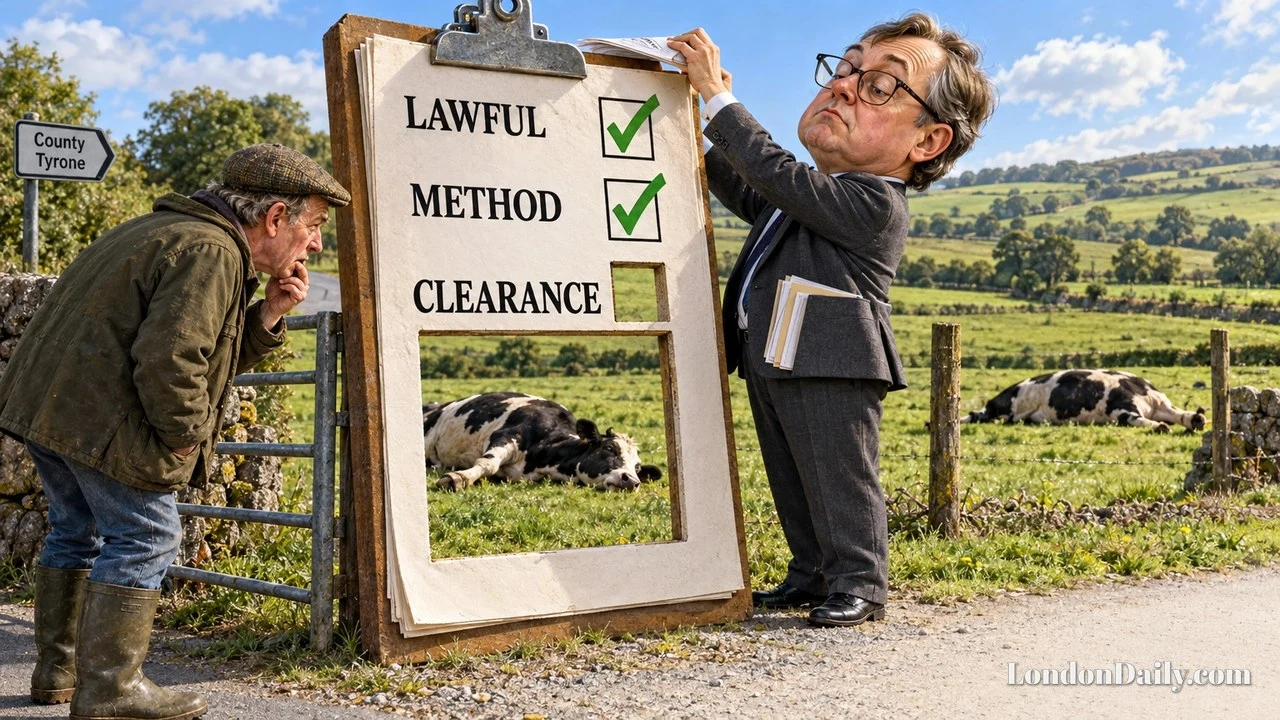
Officials who shot 51 cows in County Tyrone gave “insufficient consideration” to the impact of leaving dead animals visible in open fields, an external review has found, while concluding that the operation was lawful and the culling method appropriate for animal welfare.
The findings draw a distinction between how the cattle were killed and how the wider operation was managed. Dr Martin Blake, a former Irish chief veterinary officer, identified a “clear difference between the technical competence and the administrative governance of the operation”.
The Department of Agriculture, Environment and Rural Affairs (Daera) deployed its Humane Slaughter Team to Fivemiletown on 29 and 30 June. The cull followed a court order which resulted in the keeper’s lifetime disqualification and a deprivation order.
The review found that shooting livestock at pasture using “free bullets” was appropriate from an animal welfare and veterinary science standpoint. It said this avoided the additional fear, panic and distress that forced gathering into yards and transport would have caused cattle unaccustomed to such handling.
Trained marksmen followed recognised technical protocols. However, the subsequent tracking and accounting of livestock across sites exposed a significant gap in site clearance procedures. The review’s support for the shooting method therefore did not extend to an endorsement of the operation’s overall management, particularly the consequences of leaving dead cattle in public view.
Concerns from political representatives and farmers about the public nature of the incident prompted Agriculture Minister Andrew Muir to commission the review. He has pledged to implement all its recommendations.
The political criticism has been severe. The DUP said the findings made “grim reading” for Daera, while the Ulster Unionist Party described the operation as a “shambles”. The Ulster Farmers’ Union called for Muir’s resignation, and a DUP motion of no confidence in him failed.
The practical task now is to address the clearance and oversight shortcomings alongside the veterinary requirements the review found had been met.








Join the conversation