London Daily

Focus on the big picture.
Saturday, Apr 11, 2026

Even if you don't drive, you'll pay for the rise in petrol prices

Even if you don't drive, you'll pay for the rise in petrol prices

Were the chancellor to cut duty or VAT on petrol and diesel, he would be looking to claw it back somewhere else, warns Sky's Paul Kelso.

The £100 tank of unleaded petrol is another milestone on the relentless upward path of fuel prices.

Watching the price click in to three figures for the first time will draw the breath of anyone filling the 55-litre tank of a family saloon.

But whichever way you count it, prices have been kicking consumers in the guts for weeks already.

Fuel inflation has been staggering in the last 12 months, with unleaded 37% more expensive than this week a year ago, and diesel 38%.

Drivers who have no option but to use their cars have little choice but to shop around and suck up the latest hit at the pumps. But even if you do not drive - and millions of Britons are not car owners - you will pay a price.

Given the fundamental role of motor fuel in the economy there is simply no avoiding the impact.

The Office for National Statistics estimates fuel prices accounted for 0.7% of April's headline inflation rate of 9%; a back-of-the-envelope calculation suggests further rises mean petrol and diesel could make up 1% of the rate for May, when the figures are released.

Almost everything we use and buy gets to us by road one way and another, and with hauliers now estimating the annual fuel bill for an HGV at £20,000, it is inevitable some of these costs will be passed on.

There is little sign of prices levelling off, much less declining, in the coming weeks. Prices are determined by the wholesale market of crude oil - still around $120-a-barrel - and more immediately refined gasoline and diesel.

These have been exacerbated by the invasion of Ukraine. Prices were high before Russian tanks rolled in, but the conflict has had an immediate and fundamental impact.

Russia is the world's second-largest oil producer but sanctions and pledges by the EU, the UK and other nations to boycott its oil by the end of the year are set to take an estimated 3 million barrels a day out of global markets.

Just as importantly for the current pump price, Russia is also a major source of refined diesel oil. The war is cited by producers as a factor in driving the widening differential with unleaded prices.

And even if crude prices were to fall, retailers will still be selling us the fuel already stored in their tanks by refineries and distributors. These record prices will be passing through the pumps for some time.

Retailers say they have limited scope to cut costs. They cite tight margins and the need to turn a profit to invest in new technologies government is demanding - including the electric vehicle charging network which is crucial to ending reliance on the internal combustion engine.

They also point out that the overnight 5p cut to fuel duty announced in March cost the industry millions as they had already paid the tax on fuel in storage, but could not pass it on to customers.
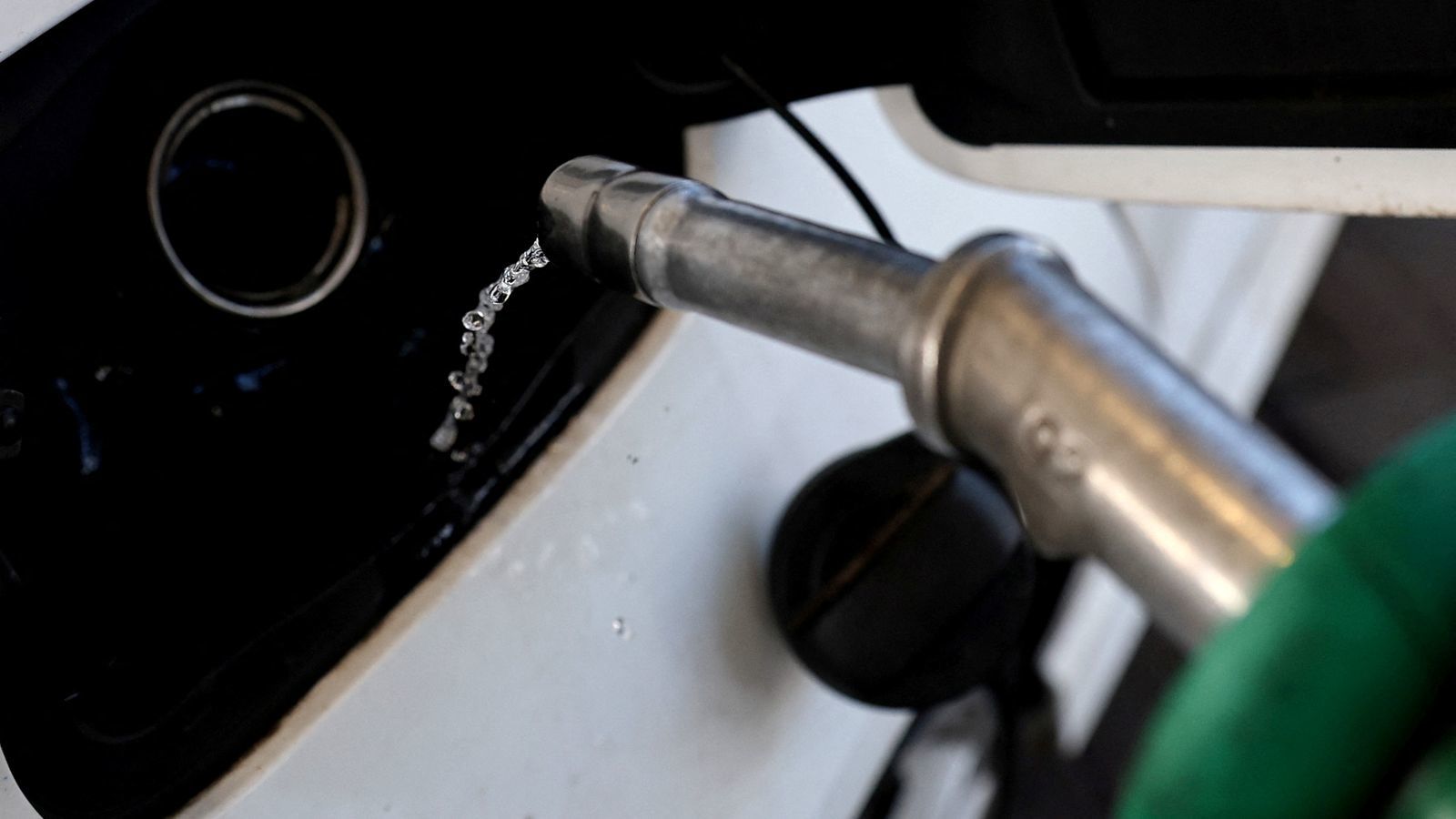
A tank on an average family car can now cost £100


That may not wash with drivers looking at prices already north of £2 a litre. Ministers have threatened to name-and-shame retailers who do not cut prices, and the business secretary has referred the matter to the Competition and Markets Authority, but they and the industry know there is no way of policing the price at the pump while customers are buying.

What government could do is further cut fuel duty or the 20% VAT rate, which together make up around 45% of the pump price and are delivering a windfall to the Treasury as a consequence of high prices.

As with domestic energy prices this spring, we may be entering the "something must be done" phase of this chapter in the cost-of-living crisis. There is no price cap on fuel to protect consumers but for now there is little sense that the chancellor is feeling the heat on fuel.

Fuel duty is forecast to raise £26bn this year. The question for anyone suggesting that number should be cut is where the revenue will come from instead.

Newsletter

Related Articles

0:00
0:00
Close
Starmer and Trump Hold Strategic Talks on Securing Strait of Hormuz Amid Rising Tensions
Unofficial Australia Visit by Prince Harry and Meghan Expected to Stir Tensions with Royal Circles
Pipeline Attack Cuts Significant Share of Saudi Arabia’s Oil Export Capacity
UK Stocks Rise on Ceasefire Momentum and Renewed Focus on Diplomacy
UK to Hold Further Strategic Talks on Strait of Hormuz Security
Starmer Voices Frustration as Global Tensions Drive Up UK Energy Costs
UK Students Voice Concern Over Proposal for Automatic Military Draft Registration
Rising Volatility Drives Uncertainty in UK Fuel and Petrol Prices
UK Moves to Deploy ‘Skyhammer’ Anti-Drone System to Strengthen Airspace Defense
New Analysis Explores UK Budget Mechanics in ‘Behind the Blue’ Feature
Man Arrested After Four Die in Channel Crossing Tragedy
UK Tightens Immigration Framework with New Sponsor Rules and Fee Increases
UK Foreign Secretary Highlights Impact of Intensified Strikes in Lebanon
UK Urges Inclusion of Lebanon in US-Iran Ceasefire Framework
UK Stocks Ease as Ceasefire Doubts in Middle East Weigh on Investor Confidence
UK Reassesses Cloud Strategy Amid Criticism Over Limited Support Measures
UK Calls for Full and Toll-Free Access Through Strait of Hormuz Amid Rising Tensions
Starmer Signals Strategic Shift for Britain Amid Escalating Iran-Linked Tensions
UK Issues Firm Warning to Russia Over Covert Underwater Military Activity
OpenAI Halts Stargate UK Project, Casting Uncertainty Over Britain’s AI Expansion Plans
Starmer Voices Frustration Over Global Pressures Driving UK Energy Costs Higher
UK Deploys Military Assets to Protect Undersea Cables From Suspected Russian Threat
Canada Aligns With US, UK and Australia as Europe Prepares Major Digital Border Overhaul
Meghan Markle’s Planned Australia Appearance Sparks Fresh Speculation
Starmer Warns Sustained Effort Needed to Ensure US–Iran Ceasefire Holds
UK to Partner with Shipping Industry to Rebuild Confidence in Strait of Hormuz, Cooper Says
UK Interest Rate Expectations Ease Following US–Iran Ceasefire Agreement
Starmer Signals Major Effort Needed to Fully Reopen Strait of Hormuz During Gulf Visit
UK Fuel Prices Face Ongoing Volatility Amid Global Pressures and Domestic Factors
Kanye West’s Planned Italy Festival Appearance Draws Debate After UK Entry Ban
Smuggling Routes Shift Toward Belgium as Migrant Crossings to UK Evolve
Ceasefire Offers Potential Relief for UK Fuel and Food Prices Amid Ongoing Uncertainty
Iran Conflict Raises Questions Over UK’s Global Influence and Military Preparedness
Senator McConnell Visits Kentucky to Highlight Federal Investment in Local Projects
Kanye West Barred from Entering UK as Legal Grounds Come into Focus
UK Denies Visa to Kanye West After Sponsors Withdraw from Wireless Festival
Trump-Era Forest Service Restructuring Leads to Closure of UK Lab Focused on Kentucky Woodland Health
Foreign Students in the UK Describe Harsh Living Conditions and Financial Pressures
Reform UK Proposes Visa Restrictions on Nations Pursuing Reparations Claims
Public Reaction Divides Over UK Decision to Bar Kanye West
Calls Grow for UK to Review US Base Access Following Concerns Over Escalating Rhetoric
UK Indicates It Will Not Permit Use of Its Bases for Potential US Strikes on Iran’s Energy Infrastructure
UK Prime Minister Defends Decision to Bar Kanye West, Questions Festival Booking
UK Accelerates Efforts to Harmonise Medical Technology Rules with United States
Wireless Festival Cancelled After Kanye West Denied Entry to the United Kingdom
Australia’s most decorated living soldier was arrested at Sydney Airport and charged with five counts of war-crime murder for the killing of unarmed Afghan civilians
The CIA’s Secret Technology That Can Find You by Your Heartbeat Successfully Locates Downed Airman
Operation Europe: Trump Deploys Vance to Hungary to Save the EU
King Charles Faces Criticism From Some UK Christians Over Absence of Easter Message
Former UK Defence Secretary Raises Concerns Over Ability to Counter Iran Missile Threat
×