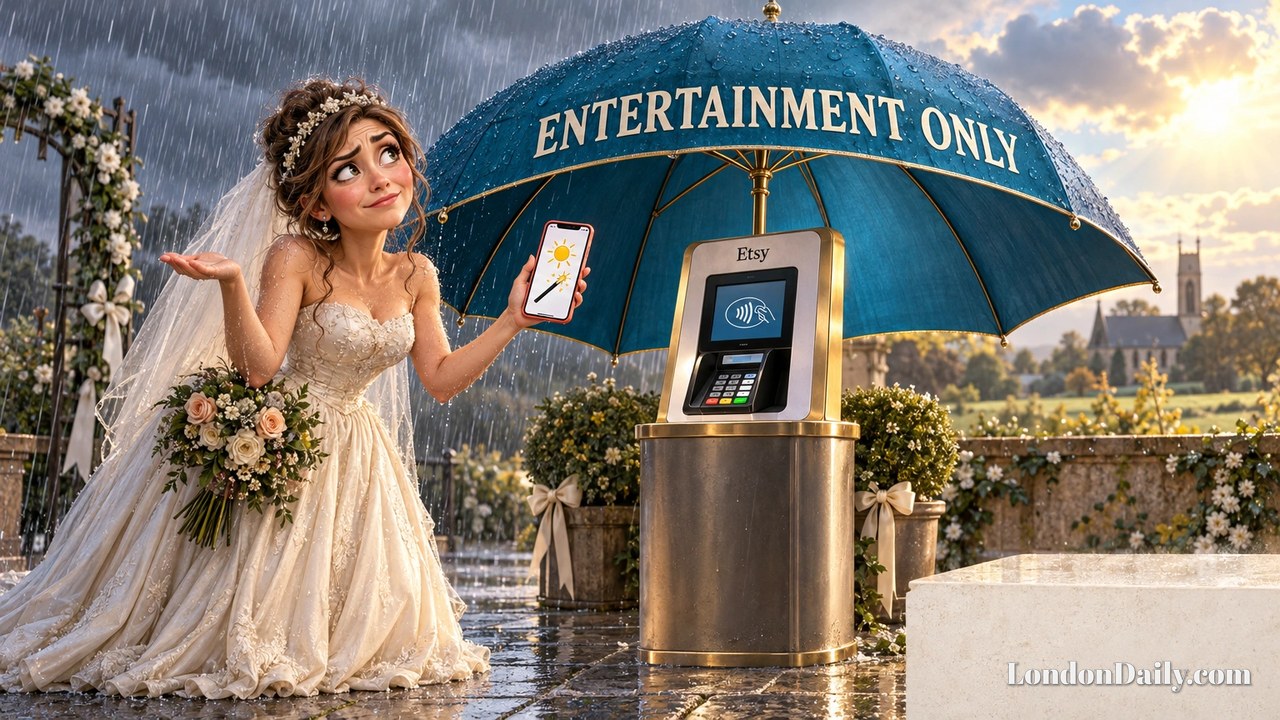
Etsy says searches for spells promising wedding-day sunshine have risen by 206% this year, as online sellers offer magical help with money, relationships and careers. Yet the platform requires spells to be marketed for entertainment only, and customers describe mixed results.
General searches for wedding-related spells and witches are up 105%, according to Etsy, which says interest in “magical touches” for weddings is growing. Those figures establish increased search activity, not whether spells deliver their promised outcomes or how many young people buy them.
Ellecia Cahill, 24, from Erskine, describes herself as a “mystic”. She has made more than 2,000 online sales, offering readings, crystals, amulets and channelled letters: messages purportedly from loved ones.
She says customers are particularly interested in abundance spells, intended to attract money, success and opportunities. Cahill claims a technology investor from Monaco experienced a “significant increase” in his net worth after buying an abundance talisman. That account does not establish that the purchase caused his wealth to grow.
Other online offerings promise dry weather for weddings or help securing tickets to sold-out concerts. Cahill, however, presents her work as more than a business. She believes younger people, despite being accustomed to logical thinking, want something magical and may seek reassurance when lonely. She wants to provide comfort and a “safe space”.
“Even if magic isn't real, if it helps someone feel more confident what is the harm?” she said.
For actress Laura Blair, 29, from Glasgow, the experience was partly encouraging. She bought a spell for a specific job goal, supplied her full name and further details, and received a video of the allocated witch performing it. The intended outcome did not happen exactly as hoped, but Blair says she has since secured multiple acting roles and been busier than ever.
Chloe, 22, also from Glasgow, bought a spell after a break-up, hoping to get her former partner back. “It was a waste of time and money,” she said, though she now thinks its failure may have been for the best.
Alexandria Arthur-Hastie, a sociologist of religion at Leeds Beckett University, sees a shift from traditional religion towards personalised spirituality. She describes online witchcraft as a further stage in spirituality’s commercialisation, with programmes such as Sabrina the Teenage Witch and Charmed helping to bring magic into the mainstream, and social media now enabling discovery.
Her explanation centres on support during uncertainty over relationships, work and the future. Many contemporary witches, she says, regard themselves as healers doing caring work akin to counselling. That describes their understanding of the role, rather than evidence of supernatural results.








Join the conversation