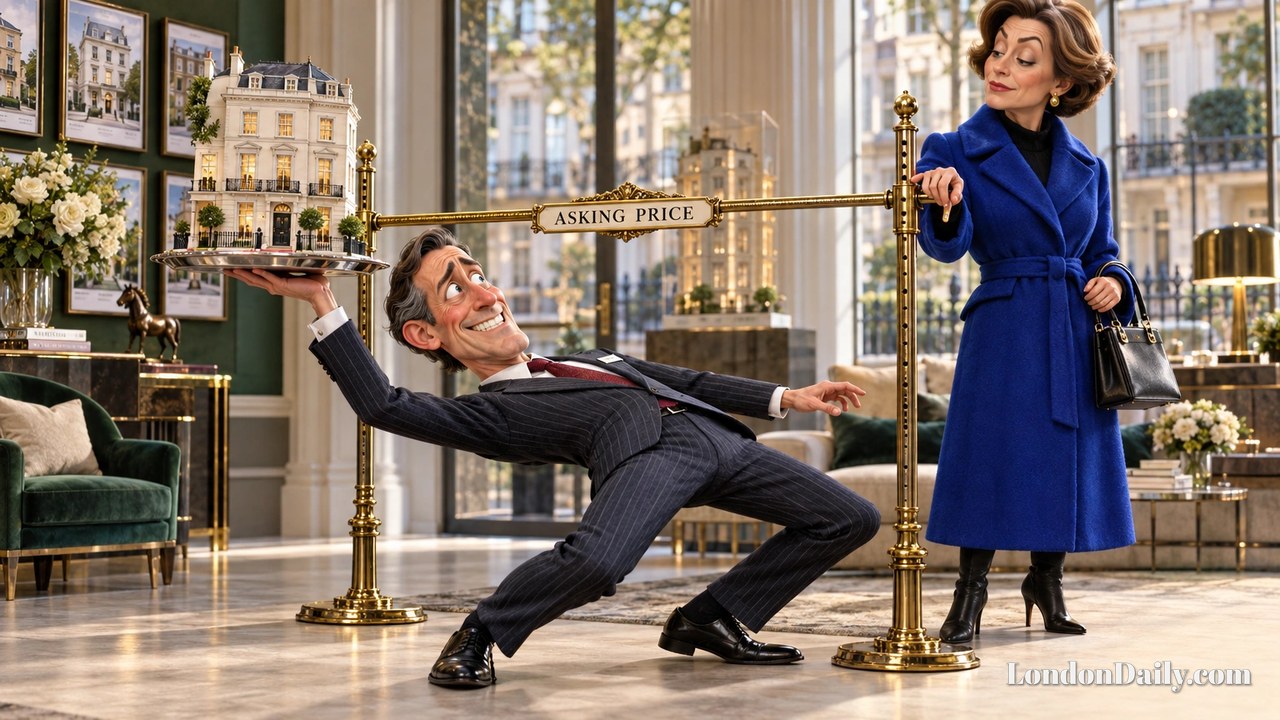
Eight in 10 homes sold in London’s most expensive neighbourhoods are changing hands below their asking price, research by Coutts has found, as falling prices and fewer transactions expose weakness in the capital’s prime property market.
Prices in prime central London fell 5% in the third quarter of 2026, leaving them 14% below their 2014 peak. Properties sold at an average discount of 10% to their asking price, according to the private bank, which serves wealthy clients.
For some owners, the decline represents hundreds of thousands, or even millions, of pounds in lost property value. A discount to an asking price does not, however, establish whether a seller has made a loss against the original purchase price.
The downturn has followed Brexit, the Covid pandemic, higher property taxes and rising borrowing costs. Buying and selling agents have also reported weaker interest from foreign-born buyers following the abolition of the non-dom tax regime.
Knightsbridge and Belgravia, and South Kensington, have suffered particularly steep falls: prices are respectively 30.8% and 26.9% below their peaks, Coutts said.
The slowdown extends beyond valuations. New listings fell 14% from the previous quarter, while available stock was 6% lower year on year. Third-quarter transactions declined 9.1%, with the sharpest contraction in the £2m–£5m bracket, where sales fell 22.3%.
Alex Webster, Coutts’ head of lending, said buyers and sellers were becoming more cautious even before the chancellor John Healey’s first Budget this week. Sellers would watch whether it “encourages some of that delayed activity to return”, she said, adding: “But financing conditions and the wider economic environment will continue to influence the market.”
The Bank of England’s base rate has remained at 3.75% since last December. Yet bond-market volatility has pushed up the swap rates used to price fixed-rate mortgages. Expectations are growing that the monetary policy committee will raise the base rate to 4% next week, its first increase in three years.
Separate Savills research offers a qualification to the broader weakness. Buyers at the very top of the market are driving activity: 26 sales above £10m took place in the third quarter, bringing the annual total to 127, worth £2.88bn. That activity shows the market is not moving uniformly, even as the wider prime segment records falling prices and sales.







Join the conversation