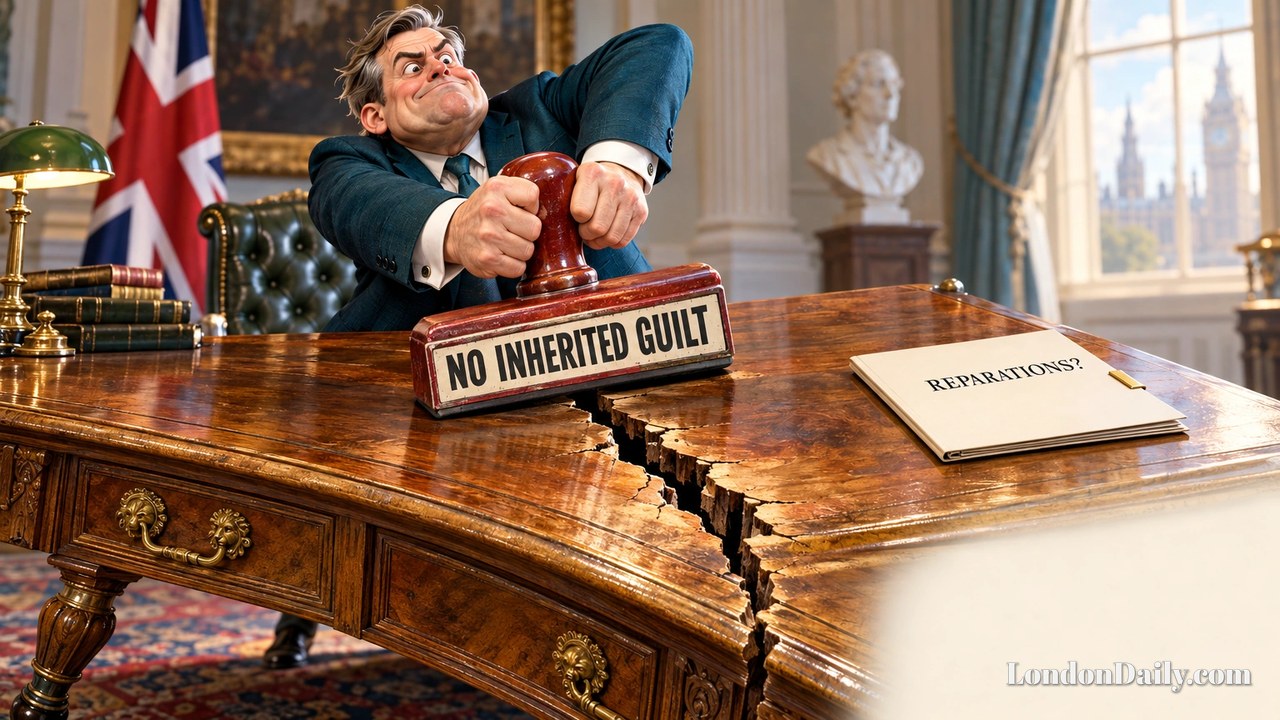
Andy Burnham’s rejection of financial reparations protects a principle: people should not be punished for crimes they did not commit. But protesters accompanying King Charles’s Caribbean tour press a different question: can an obligation to repair injustice survive without inherited guilt?
The prime minister is beginning talks about a formal apology for Britain’s role in transatlantic enslavement, including a proposed “debt reset” for Commonwealth countries facing higher borrowing costs. He nevertheless rejects financial reparations for what “happened in a different age under different laws and in which they played no personal part”.
That answers ancestral blame, but not necessarily restitution. An innocent holder of something unjustly obtained can still have responsibilities towards those deprived of it. Applied to slavery, this argument requires evidence of continuing benefits and harms, and an account of which institutions bear responsibility. It does not require treating every British citizen as a slaveholder by descent.
Nor does every demand mean an unspecified cheque. Sharon Purser-Cooper, who joined a Nassau protest organised by the Rastafari organisation Ethiopia Africa Black International Congress, wants investment in healthcare, education, agriculture and infrastructure, alongside an apology. Her demand gives repair a practical purpose.
The strongest objection remains substantial: a claim against an identifiable beneficiary does not automatically justify charging every taxpayer. Public money has competing uses. Collective payment could burden people with no demonstrated connection to the benefit, while naming worthwhile projects establishes neither the compensation owed nor whether those projects would repair the relevant harm.
That challenges the allocation and design of reparations; it does not justify excluding every financial remedy. If the wrong people would pay, the next task is to identify defensible payers, rather than conclude that nobody owes anything. Equally, campaigners must establish the connection between responsibility and their proposed remedy.
The government’s alternative deserves the same scrutiny. Debt relief could provide practical help, but assistance responds to need; restitution recognises an obligation. An apology and debt reset cannot be deemed an adequate settlement simply because they are more politically acceptable.
A Jamaican petition referred by the king to the privy council for advice is due to be heard in March. It asks whether forced transportation to Jamaica was lawful, constituted a crime against humanity, and obliges Britain to provide restitution for slavery and its enduring consequences. These remain questions, not rulings.
Welcoming crowds and protests alike leave the moral dispute unresolved. Burnham’s strongest point is that personal guilt cannot be inherited. The challenge he must still answer is whether responsibility for retained benefits or enduring institutional wrongs can outlive their perpetrators.








Join the conversation