Documents Reveal Mandelson Urged JPMorgan to Pressure UK Government Over Banker Bonus Tax
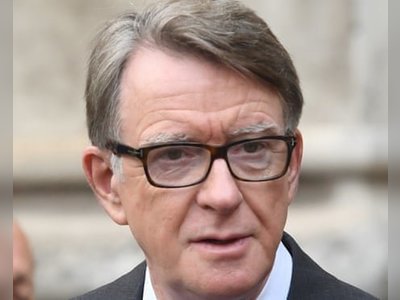
Newly disclosed emails from the United States Department of Justice reveal that Lord Peter Mandelson, a senior British politician at the time, suggested that the chief executive of JPMorgan should ‘‘mildly threaten’’ the UK chancellor over a proposed supertax on banker bonuses in 2009.
The correspondence, exchanged with financier Jeffrey Epstein during Mandelson’s tenure as business secretary in Gordon Brown’s government, shows Epstein prompting Mandelson on how to influence the policy, which would have imposed a 50 per cent levy on bonus payments above £25,000.
In an email exchange in December 2009, Epstein asked whether Jamie Dimon should ‘‘call Darling one more time’’, referring to then-chancellor Alistair Darling.
Mandelson responded affirmatively, saying ‘‘Yes and mildly threaten’’, in an apparent effort to soften the government’s stance.
The tax was introduced after the global financial crisis amid public anger at the banking sector, and ultimately raised more than £2 billion, though Darling later expressed regret over the policy.
Mandelson has since defended his actions by saying his efforts reflected the broader views of the banking industry at the time and not any single institution’s influence.
He stated that UK and international banks broadly opposed the proposed levy, arguing it would harm the financial services sector.
After leaving ministerial office, Mandelson founded an advisory firm that counted JPMorgan among its clients, and he later served as the UK ambassador to the United States until his resignation amid controversy over his links with Epstein.
The release of the emails has intensified scrutiny of Mandelson’s relationship with Epstein, a convicted sex offender whose financial dealings and extensive network have drawn sustained attention.
Critics have seized on the evidence as emblematic of problematic ties between political leaders and powerful financial actors.
A think-tank expert described it as extraordinary for a serving government minister to advise a foreign bank to pressure the UK government on tax policy.
Despite this, Mandelson has reiterated his stance that his actions were consistent with industry views and denies any wrongdoing.
The revelations add to a broader set of documents exposing Mandelson’s historical connections to Epstein, including evidence of financial transfers in the early 2000s and continued communications after Epstein’s conviction.
The disclosures have stimulated debate within British political circles about ethics, influence and the appropriate conduct of former ministers who maintain relationships with influential private figures.