Deutsche Bank chief executive Christian Sewing pushed for greater risk-taking, resisted compliance staff and concealed problems from shareholders despite promising to end its scandals, an investigation drawing on more than 15 million leaked internal documents alleges.
The Financial Times investigation, Inside Deutsche Bank, challenges Sewing’s reputation as the executive who rescued one of Europe’s largest banks from crisis and delivered record profits after taking charge in 2018. It also alleges accounting manoeuvres and financial reporting bordering on misleading.
Emails, internal investigations, board minutes, employee chats and compliance files reportedly show plans under Sewing to expand Russian operations despite mounting geopolitical tensions. He allegedly dismissed concerns from staff responsible for ensuring legal and regulatory compliance about Kremlin-linked clients.
The investigation also alleges that the bank accidentally disclosed US President Donald Trump’s tax returns during his first term and concealed the mistake from the White House. Sewing was briefed on the crisis response.
It reports that Deutsche Bank processed nearly $600 million in suspicious payments connected to Jeffrey Epstein, substantially more than previously known. Wider findings concern governance weaknesses, technological failures and compliance lapses, including an admission to regulators that the bank had effectively operated outside the legal and regulatory framework.
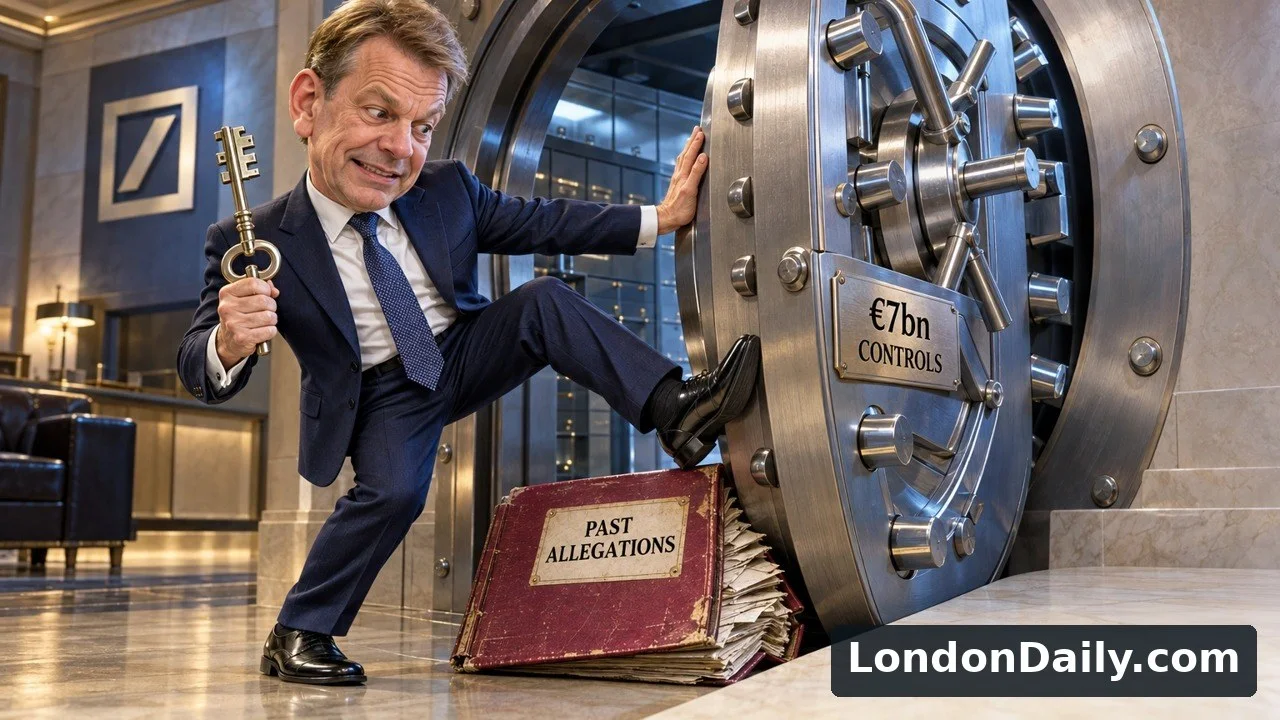
Deutsche Bank says the matters date back many years, sometimes two decades, and were examined and discussed with regulators where relevant. It says Sewing has fundamentally transformed the institution, with €7 billion invested in improving controls between 2019 and 2025. Markets, major regulators, supervisors, clients and other stakeholders have recognised its progress, it says.
That defence makes timing central: the allegations concern past conduct, while the bank’s response rests on its subsequent reforms. The claims about Sewing also challenge the leadership credited with delivering that change.
Since 2021, Deutsche Bank has been under a deferred prosecution agreement with the US Department of Justice, conditional on remedial commitments. German authorities have raided it three times this year. Since 2012, it has paid €18.6 billion to settle claims involving market manipulation, Russian money laundering, weak controls, mis-selling and misrepresentation.
Two whistleblowers, motivated chiefly by Russian money and oligarch connections, passed the files to journalists Josy Joseph and Khadija Sharife. They said they acted in the public interest; one called for wholesale leadership and cultural change.
More than 200 journalists from dozens of outlets examined the material. South African non-profit Barracuda Media co-ordinated the investigation, with technical support from Germany’s DARC data and research centre.
Further reports are expected this week on secret payments to a Qatari royal family member and anti-money-laundering weaknesses at a bank handling more than €1 trillion in international transfers daily.








Join the conversation