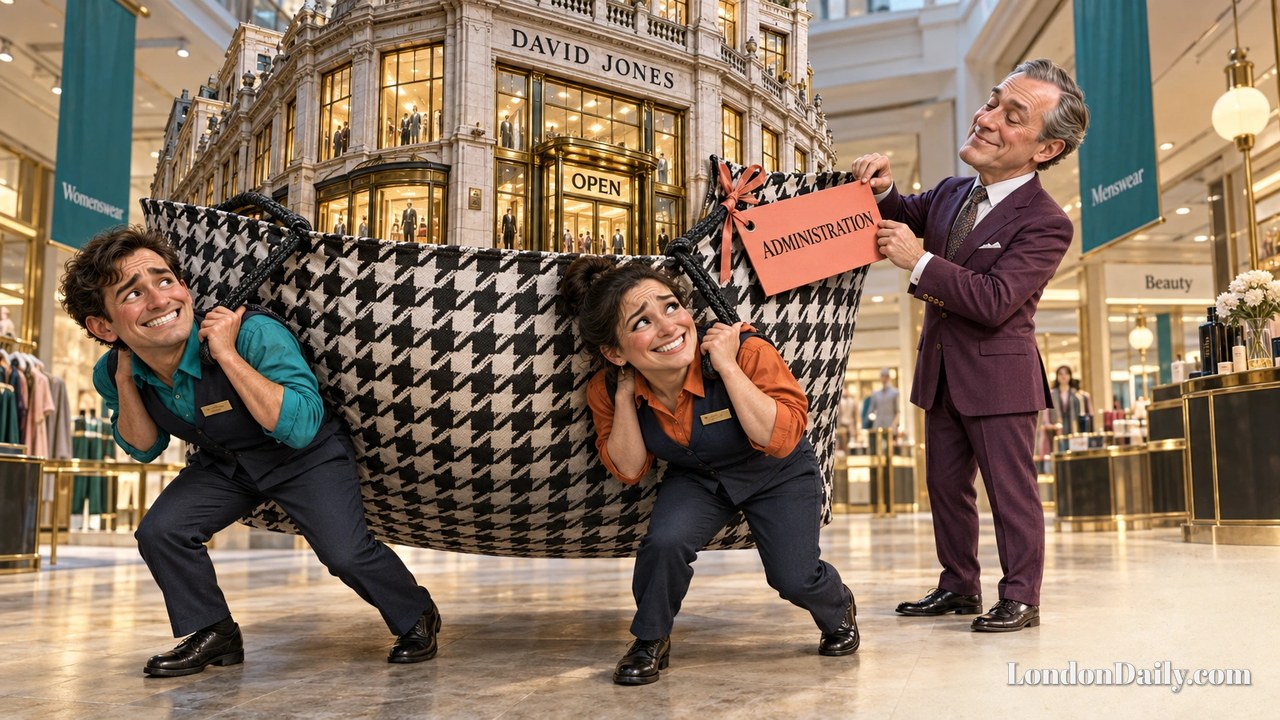
David Jones, Australia’s oldest department store chain, has entered voluntary administration after 188 years, putting thousands of jobs at risk while its shops and online business remain open.
The retailer, known locally as DJs, employs about 6,000 people across a business with 38 physical stores. Its financial difficulties have deepened over years as customers have moved away from traditional shops towards online shopping.
Voluntary administrators McGrathNicol said trading would continue while receivers FTI Consulting review the company. The immediate pressure extends to its relationship with a major landlord: 17 stores are in Westfield shopping centres.
Hours before the board voted to appoint administrators, Westfield owner Scentre said David Jones had failed to pay October’s rent and was “therefore in breach” of its tenancy agreement.
Christopher Hill, of FTI Consulting, attributed the retailer’s position to difficult trading conditions, rising costs, supply-chain challenges and a substantial, outdated store estate. Appointing administrators and receivers would provide “breathing space” and an opportunity to restructure, he said.
Chief executive Erica Berthold said the brand had a “well-developed plan” to “reset the business for the future”. She thanked customers, staff and partners for their continuing support, invoking Australians’ memories of visiting its stores.
That confidence contrasts with the assessment of Jana Bowden, who teaches marketing at Macquarie University’s Business School. She described the collapse as the “death knell” for the department store format, arguing that David Jones had lost much of the glamour that once distinguished it.
Bowden called its former incarnation “the Aussie version of Harrods”, where premium labels offered shoppers a sense of arrival. Although its city stores retained their upmarket character, she said, suburban branches lacked excitement.
The chain’s black-and-white houndstooth design became associated with luxury. Visits to its Sydney and Melbourne flagships, particularly their Christmas window displays, were a family ritual; Bowden said people travelled for hours to see them. In 1954, during her first visit to Sydney, the then 27-year-old Queen Elizabeth II attended a banquet on the seventh floor of its Elizabeth Street store.
Those associations explain the brand’s cultural significance, but the immediate task is commercial. Continued trading gives the business an opportunity to restructure; it does not yet settle the future of its stores or the jobs that depend on them.








Join the conversation