

Daniel Morgan: Met Police accused of 'form of corruption' in report
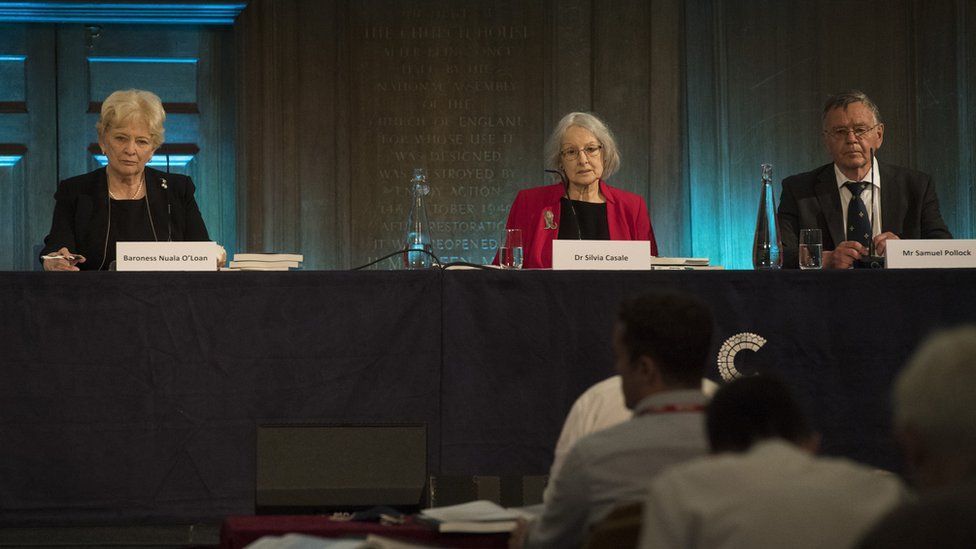
The force's first objective was to protect itself, said Baroness O'Loan, the head of an independent panel.
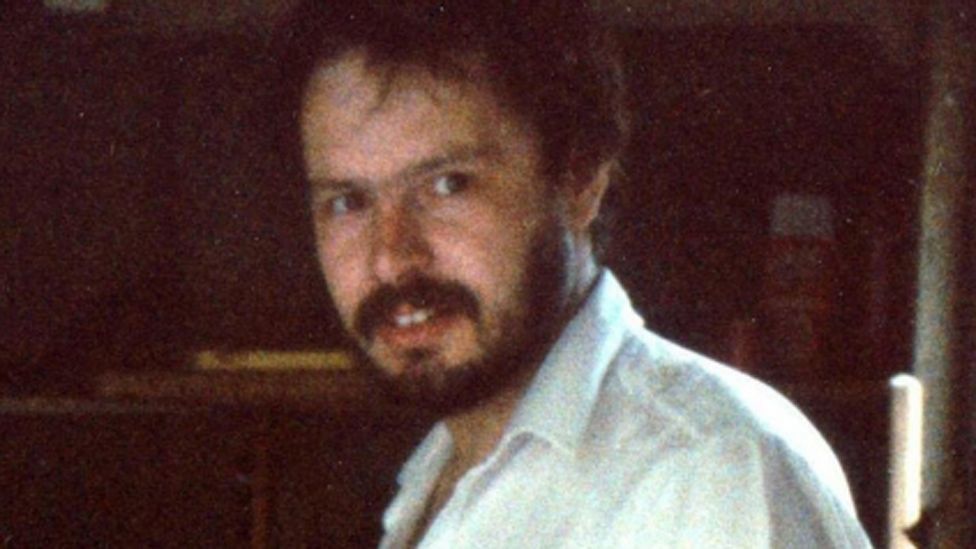
Private investigator Mr Morgan was attacked with an axe in the car park of a pub in south-east London in 1987.
Met Police Commissioner Dame Cressida Dick has apologised to his family.
She said it was a "matter of great regret that no-one has been brought to justice and that our mistakes have compounded the pain suffered".
Despite five police inquiries and an inquest, no-one has been convicted over the father of two's death, with the Metropolitan Police previously admitting corruption had hampered the original murder investigation.
Mr Morgan, from Llanfrechfa near Cwmbran in south Wales, died outside the Golden Lion pub in Sydenham on 10 March 1987.
The panel found his family had "suffered grievously" as a consequence of the failure to achieve justice for them.
It criticised the "unwarranted assurances" they were given, the misinformation put into the public domain, and a failure "to acknowledge professional competence, individuals' venal behaviour, and managerial and organisational failures".
"The Metropolitan Police also repeatedly failed to take a fresh, thorough and critical look at past failings," the report said.
"Concealing or denying failings, for the sake of the organisation's public image, is dishonesty on the part of the organisation for reputational benefit and constitutes a form of institutional corruption."
The report said there were several theories as to why Mr Morgan was killed, among them:
* He was on the verge of revealing links between corrupt police officers and organised criminals
* He had mentioned to friends he had been offered £250,000 by a Sunday newspaper for an expose on how he got his information
* Police officers in south-east London who were allegedly making money by selling information and moonlighting as security guards were concerned he was about to expose them - however, the report claims this motive was never seriously investigated
* Mr Morgan had worked as a bailiff and the day before his murder he served a court summons on a man who had previous convictions for violent offences
Mr Morgan's brother Alistair said earlier that Dame Cressida should "absolutely" be considering her position in light of the report.
Mr Morgan's family - who believe he was on the brink of exposing police corruption when he was killed - said in a statement: "We welcome the recognition that we - and the public at large - have been failed over the decades by a culture of corruption and cover-up in the Metropolitan Police, an institutionalised corruption that has permeated successive regimes in the Metropolitan Police and beyond to this day."
The family's statement added: "At almost every step, we found ourselves lied to, fobbed off, bullied, degraded and let down, time and time again."
Key panel findings:
* From the beginning, there were allegations police officers were involved in the murder, and that corruption by police officers played a part in protecting the murderer(s) from being brought to justice
* The crime scene was not searched and was left unguarded; alibis were not sought for suspects
* Serving and retired officers told the panel some officers who tried to report wrongdoing by other officers had been ostracised, transferred to a different unit, encouraged to resign, or faced disciplinary proceedings
* An investigation into the force by an external force, Hampshire Police, was compromised by the inclusion of a senior Met officer on the team
* Then-Assistant Commissioner Dame Cressida Dick initially refused to grant access to a police internal data system and the most sensitive information
* The panel recommended that police officers should be required to declare membership of organisations like the freemasons when they join the service, and that protections should be put in place for police whistle-blowers
* The report also recommended clear boundaries be maintained between senior officers and those working for the mass media, after it said a former bookkeeper for Southern Investigations, the detective agency founded by Mr Morgan and Jonathan Rees, claimed in 1990 about half its income came from the now-defunct Sunday tabloid, News of the World (NOTW).
* The private detective agency also placed Met Police officer Det Ch Supt David Cook under surveillance in 2002, at a time when he was leading the murder investigation, at the request of the NOTW. It was claimed this was done to look into whether Mr Cook was having an extramarital affair with Jacqui Hames, when in fact they were a married couple and had two children
* Rather than dealing with the surveillance as a possible crime, Met bosses called a welfare meeting with Mr Cook, something the panel said was "inappropriate". It was not fully investigated until nine years later
In a statement released early on Tuesday evening, Dame Cressida said she had been "personally determined" that the Met provided the panel with the fullest level of co-operation.
"I recognise this is a powerful and wide-ranging report," she said. "We will take the necessary time to consider it and the associated recommendations in their entirety."
Met Assistant Commissioner Nick Ephgrave said that since the murder the force had "completely overhauled our ability to identify corruption". He added: "I am confident we have never been better at finding corruption and getting rid of it."
Speaking in the Commons shortly after the publication of the panel's report, Home Secretary Priti Patel said it was "deeply alarming" and revealed a "litany of mistakes" by the Met Police.
She said the behaviour of the force had "irreparably damaged the chances of successful prosecution".
Shadow home secretary Nick Thomas-Symonds said the report was "damning," adding that the Morgan family had endured a "three-decade nightmare".
Corruption within the Met Police
Tom Symonds, home affairs correspondent
The early years of the Daniel Morgan saga experienced policing that was "poor or below accepted standards", while there was a "historical phenomenon" of regular drinking sessions in which officers mixed with local figures "operating on the fringes of legality".
More serious was evidence that stories were sold by the police to the press; misuse of the police national computer; and the planting of false evidence.
The inquiry also found links between "personnel at the highest levels of the Metropolitan Police and people working for a news organisation linked to criminality associated with the murder of Daniel Morgan". The evidence relates to dealings with the News of the World.
The panel strongly criticises the Met for impeding its investigation by failing to co-operate with elements of its work.
The Met has at times accepted failings in the Morgan case, and suggested corruption was to blame, but when asked to explain what this meant, the panel said little detail was often provided.
The force also placed barriers in the way of the inquiry when the panel asked for a computer terminal so that it could access the police Holmes investigation database.
A series of recommendations includes better vetting of police officers and a requirement for police officers to register their membership of any organisation, including the freemasons.
Continuing his criticism of Dame Cressida, Mr Morgan said: "I think certainly we need much better leadership than she has provided here.
"Anyone with any knowledge of the history of the police knows how much they hate scrutiny, and I think she has been true to form in that respect."
The Morgan family's solicitor Raju Bhatt said: "You heard from the panel that the institutionalised corruption that they found is a current problem in the present tense.
"The current leadership in the Met has to take responsibility for that continuing."
When asked if Prime Minister Boris Johnson - who had spoken to then-Met Deputy Assistant Commissioner John Yates about Mr Morgan's murder when London mayor in 2009 - had full confidence in Dame Cressida, Mr Johnson's spokesman replied: "Yes".

For an inquiry commissioned by the home secretary to accuse a police force of "institutional corruption" is about as serious a finding as it is possible to imagine.
Legitimacy is the vital ingredient in the British approach of policing by consent.
Today's report, therefore, represents a major crisis for the Met in general and for its commissioner Dame Cressida Dick in particular.
In simple terms, the force is accused of putting its corporate reputation ahead of the search for truth.
Dame Cressida is personally accused of obstructing the panel's work, and causing delays which added further and unnecessary distress to the family of a murder victim.
The commissioner has made it clear she is not resigning. The prime minister has said she has his backing and Scotland Yard is denying it sought to hamper the inquiry.
But unlike other institutional scandals affecting the Met, this is not just about historical or operational failings.
This is about a culture which the panel says exists to this day, and evidence of which can be traced to the desk of the woman who currently heads the force.