London Daily

Focus on the big picture.
Tuesday, Jun 16, 2026

Covid: Why are so many people catching it again?

Covid: Why are so many people catching it again?

In the early days of the pandemic, it was extremely rare to hear of people catching Covid twice.

That's not the case any more, especially since the Omicron variant emerged in late November 2021.

Why are more people catching Covid again?


Part of it is Omicron itself - a variant that's better at sneaking past defences built on old infections.

Part of it is a numbers game. So many of us have already been infected at some point, that a rising proportion of new infections are a second bout.

But getting Covid twice in a short space of time is still pretty unlikely, even with the latest version of Omicron which is widespread in the UK.

And for most people a second infection is less likely to make them very ill.

How likely are you to catch Covid twice?


Eventually, pretty likely - immunity fades and coronaviruses evolve.

Most people can expect to catch the other coronaviruses, such as those which cause common cold symptoms, many times in their life.
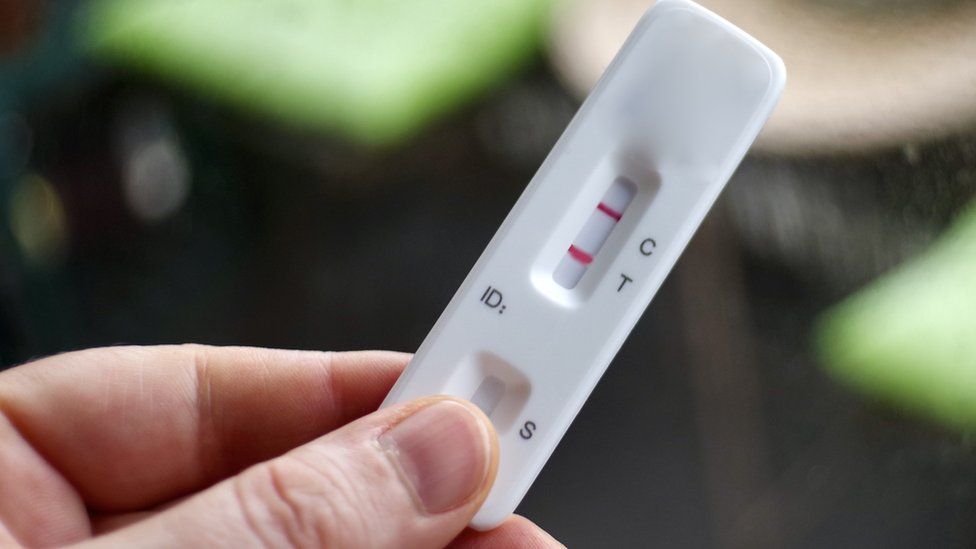

But early in the pandemic, that didn't seem to be the case with Covid.

Fewer than 1% of all cases recorded in the UK before November 2021 were labelled as reinfections.

But then Omicron took over. This looks very different to the versions of coronavirus that we saw before.

Its differences give it a better chance of sneaking past the body's early defences, which were based on exposure to previous Covid infections.

And so the rates of reinfection have been about 10 times higher this year compared with rates seen earlier in the pandemic.

How is the new version of Omicron different?


This new "Spring" Omicron - known as BA.2 - has driven UK infections back up to record levels.

The Office for National Statistics said that about one in 16 people across the UK had Covid in the week ending 19 March.
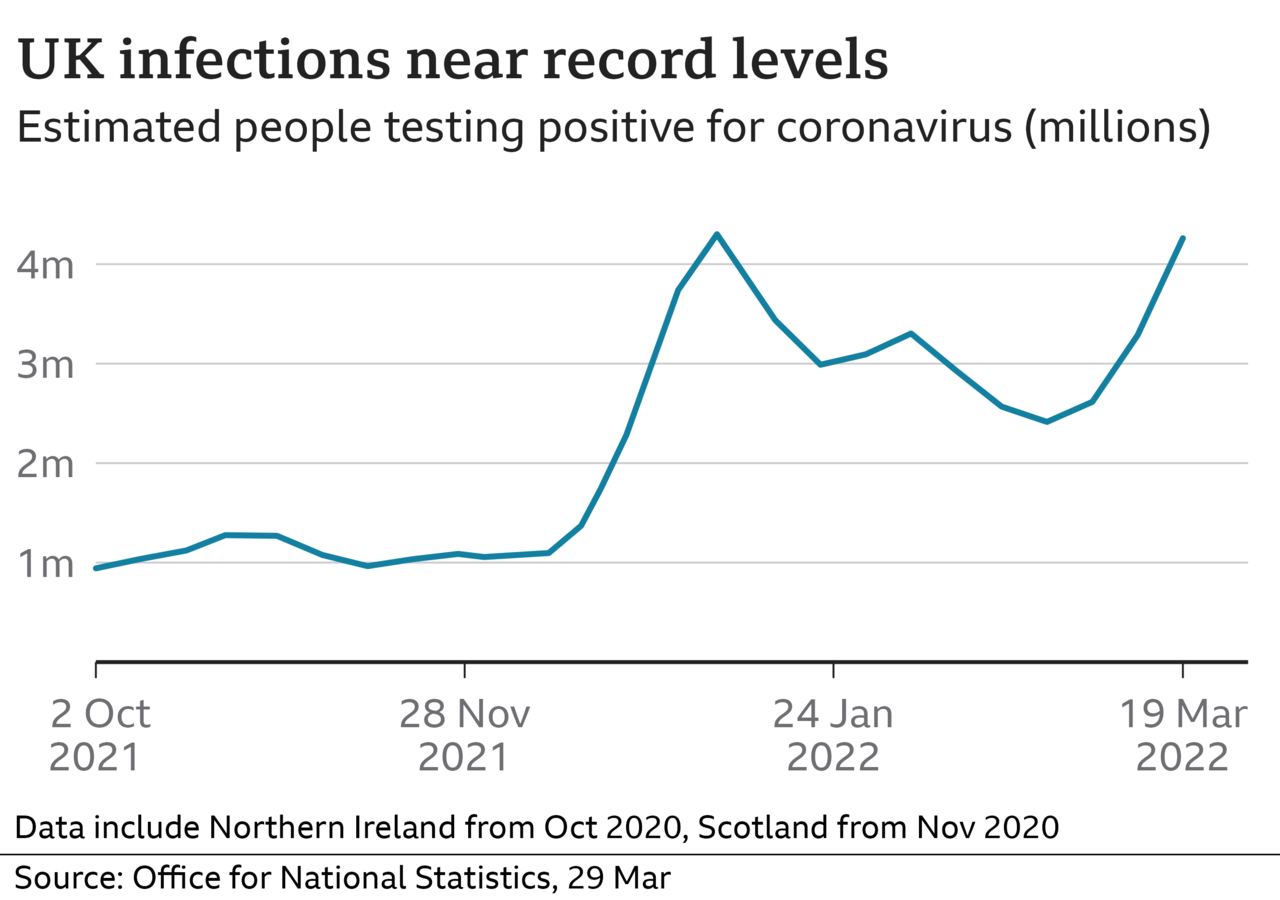

It is similar to - but even more infectious than - the version that came before, "Christmas" Omicron (BA.1).

If you've had Covid in the past few months, it's likely to have been a version of Omicron, which in turn should give you good protection against a second bout of it.

The data we have so far suggest that a second Omicron infection is "rare, but can occur". More reinfections have been seen among younger people and those who haven't been vaccinated.

Laboratory studies suggest that a combination of an Omicron infection and vaccination could leave your body even better prepared to fight off a new infection than one infection alone.

About 4.5 million people have had a Covid booster dose since the start of the year, with another two million getting their second dose.

And tens of millions of us have protection from a recent infection. About one in three of us caught Covid during the first Omicron wave.

But even if there's only a small chance of any one person catching Omicron a second time, you're quite likely to hear about it happening. It's a small chance multiplied by the tens of millions of people who have recently had Covid.

Will it make me sicker?


So far, it looks like a case of BA.2 is no more likely to put you in hospital than a case of BA.1 was.

And even if you do test positive again, that "is not the same as being sick with Covid-19," according to immunologist Prof Eleanor Riley. "It means there is virus in your nose and throat."

The protection provided by vaccination or having had a previous infection is more useful at preventing the virus from getting into your body and doing serious damage, than it is at keeping the virus out of your nose and throat.

Prof Riley thinks if you test positive again but feel well, "your main concern should be whether you might pass it on to someone who is particularly vulnerable".

An infection can still land some people in hospital, particularly those with weakened immune systems or underlying health conditions.
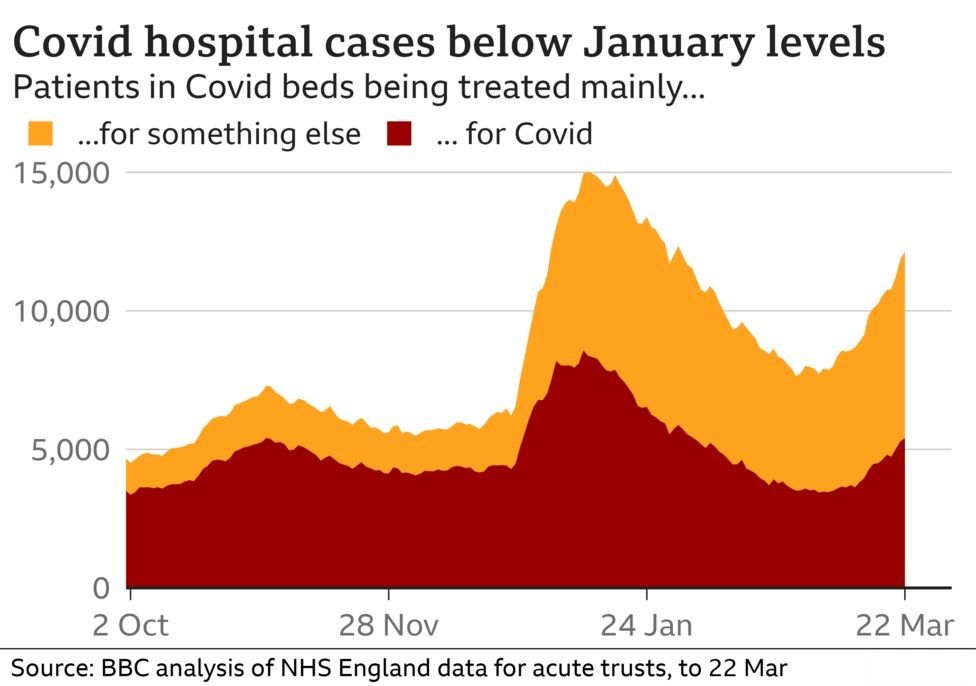

But despite the record numbers of Covid infections, the current wave is putting even fewer people in hospital than we saw in January - precisely because so many of us now have a combination of protection from vaccination and previous infections.

During January's peak, about 55% of people in Covid beds in English hospitals were being treated mainly for their Covid. The most recent figures, for 22 March, say that figure is down to about 45%.

And the total numbers of people in hospital with Covid are less than half of what we saw in January 2021.

The government hopes the spring booster vaccine rollout will help top up immunity for the most vulnerable, and make it even harder for Omicron to cause serious illness, whether it strikes once or twice.

Comments

Oh ya 4 year ago
It antibody dependent enhancement, just like honest smart doctors said would happen. Your ammune system gets weaker with every clot shot you take. This was a world wide IQ test and you failed

Newsletter

Related Articles

0:00
0:00
Close
UK Supreme Court Revises Legal Definition of Deprivation of Liberty
King’s Birthday Honours Recognise Contributions Across Science, Culture and Public Service
UK Ministry of Defence Reports Interdiction of Russian Shadow Fleet Vessel
UK and US Launch Joint Regulatory Programme for Medicines and Healthcare Products
Solicitor General Refers Murder Sentence to Court of Appeal Under Unduly Lenient Scheme
UK Launches £1.6 Million Mobile Museum Initiative to Expand Cultural Access
Judicial Pay Structure Undergoes Government Review Following Senior Recommendations
Government Confirms Nearly 180 New Youth Hubs Across the United Kingdom
UK Government Expands Careers Support Through Partnership with LinkedIn
Digital News Report Highlights Growing Global Concern Over AI and Information Overload
UK Chancellor Reaffirms Fiscal Discipline and Borrowing Reduction Strategy
UK Government Invests £219 Million in Sustainable Aviation Fuel Development
Rolls-Royce Small Modular Reactors Secures Major Swedish Export Contract
Government Confirms Locations for Nearly 180 Youth Hubs Across Great Britain
UK Government Partners with LinkedIn to Expand Employment Support Services
Reuters Institute Report Flags Rising Public Anxiety Over News and Information Overload
UK Government Commits £219 Million to Expand Sustainable Aviation Fuel Industry
Chancellor Convenes Market Engagement Group to Assess UK Economic Outlook and Productivity Risks
Rolls-Royce Wins Multibillion-Pound Swedish Contract for Small Modular Nuclear Reactors
Government to Ban Social Media Access for Under-Sixteens Across the United Kingdom
Government Approves Fast-Tracked Broadcast Merger Reshaping UK's Media Landscape
Resignation of Defence Secretary John Healey Triggers Debate Over UK Military Strategy
Britain Intensifies Diplomatic Efforts to Support US-Iran Ceasefire
Bank of England Faces Tough Interest Rate Choices After Economic Contraction
Belfast Sees Second Day of Anti-Migrant Riots as Police Deploy Water Cannons
UK Economy Shrinks in April as Energy Price Shocks Weigh on Growth
UK to Ban Social Media Access for Children Under 16 From 2027
UK Parliament Opens Week of Fast-Tracked Security and Infrastructure Legislation
Northern Ireland Projects £21 Million Boost From Major Cultural and Sporting Events
UK and Japan Sign Technology Security Pact to Strengthen AI and Supply Chain Cooperation
UK Welcomes US-Iran Peace Breakthrough Aimed at Restoring Strait of Hormuz Shipping
British Forces Intercept Russian Shadow Fleet Oil Tanker in English Channel Sanctions Operation
UK to Ban Social Media for Under-16s Under Landmark Online Safety Expansion
Anti-Immigrant Riots Spread Across Belfast, Raising Security Concerns
Ministry of Defence Opens Europe's Largest Drone Testing Facility in Swindon
Kemi Badenoch Calls for Deregulation to Restore City's Global Competitiveness
UK Housing Market Posts Sharpest June Price Decline in Fourteen Years
NHS Waiting Lists Rise to 7.22 Million as Diagnostic Delays Reach New Highs
Makerfield By-Election Raises Prospect of Labour Leadership Challenge
Bank of England Expected to Hold Interest Rates at 3.75% Despite Growing Policy Divisions
Royal Marines Seize Sanctioned Russian Oil Tanker in English Channel
Prime Minister Keir Starmer Set to Ban Social Media and AI Chatbots for Under-16s
United Kingdom Markets Rally After US-Iran Deal Reopens Strait of Hormuz
Defence Secretary John Healey Resigns Over Military Spending Dispute, Triggering Cabinet Crisis
Royal Navy Takes Part in Trooping the Colour for the First Time in 350 Years
Think Tank Warns Labour's European Union Reset Could Carry Significant Economic Costs
UK Semiconductor Centre and Japan's Rapidus Forge Advanced Chip Manufacturing Partnership
UK and Japan Launch Offshore Wind Compact Backed by £9 Billion in Investment
Starmer and Trump Discuss Iran Peace Efforts and Reopening of the Strait of Hormuz
United Kingdom and Japan Sign £18 Billion Investment Partnership Focused on Clean Energy and Advanced Technology
×