

Covid: UK isolation period shortened to 10 days
The change will also apply to people instructed to quarantine after returning from high-risk countries.
And it means anyone who has been self-isolating for 10 days or more will be able to end their quarantine on Monday.
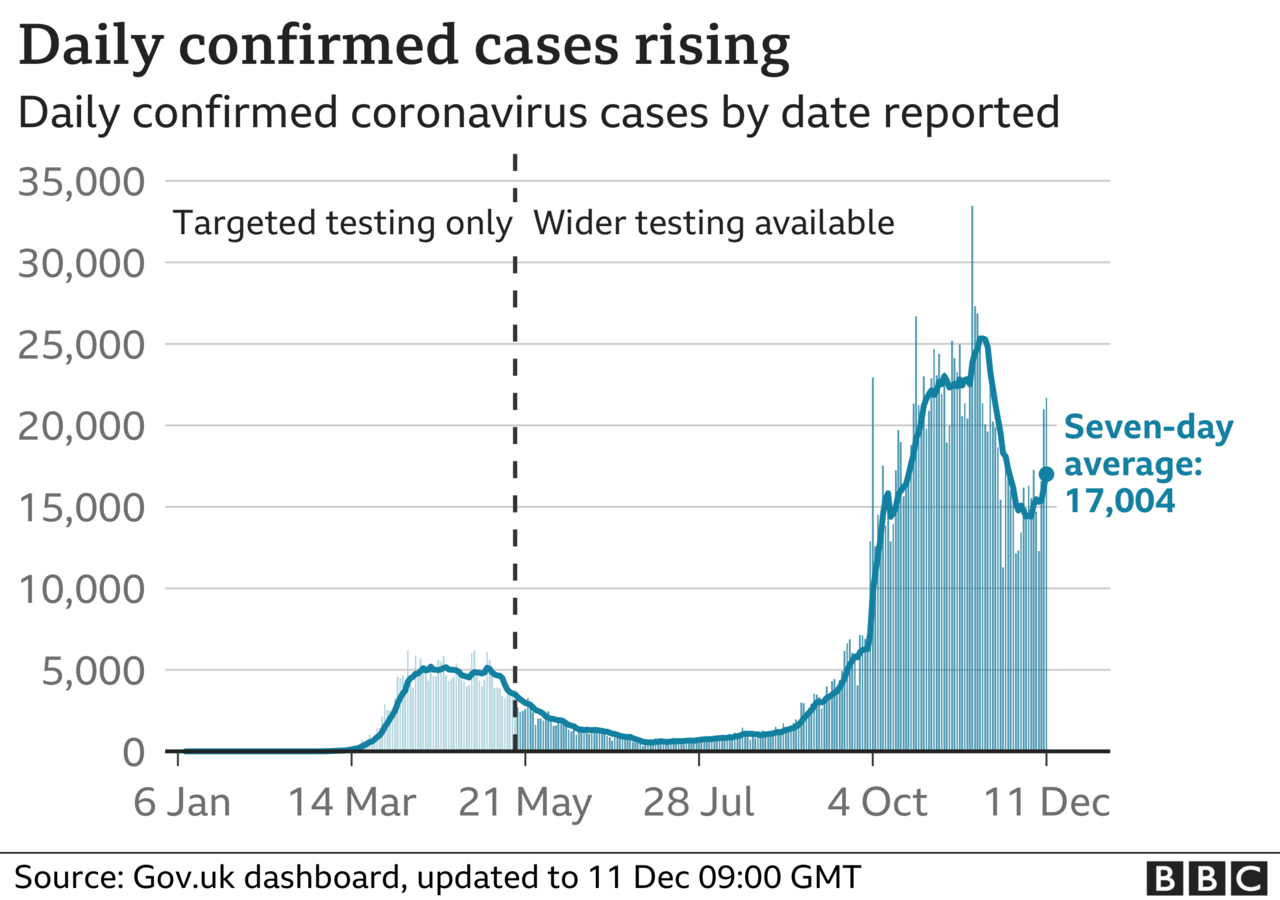
The announcement comes as data shows Covid cases falling in most of England and Northern Ireland.
But the Office for National Statistics (ONS) figures show that in the week to 5 December, there were increases in coronavirus case numbers in London and the east of England.
Meanwhile, new data shows the virus's reproduction or R number is back at levels seen two weeks ago (0.9 - 1) meaning the epidemic is not growing, but it's not really shrinking either.
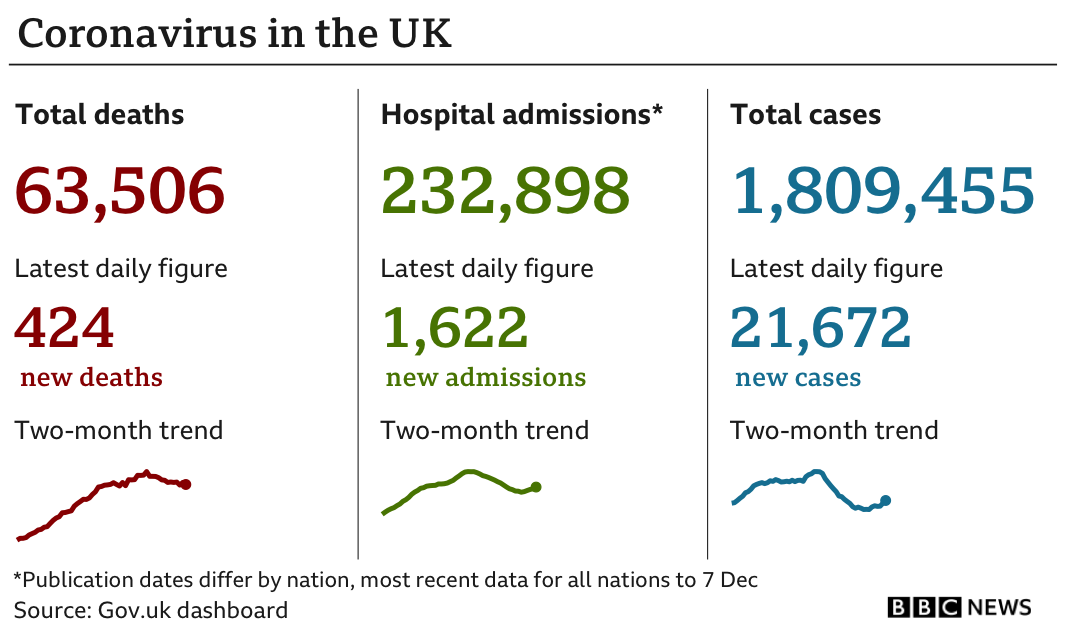
According to the latest government data, there have been a further 424 deaths within 28 days of a positive test in the UK and another 21,672 coronavirus cases.
On Thursday, Health Secretary Matt Hancock announced mass testing would be rolled out for secondary school children, their families and teachers in the worst-affected areas of London, Kent and Essex where cases are rising.
The change in self-isolation rules was announced in a statement from the four UK chief medical officers (CMOs) said: "After reviewing the evidence, we are now confident that we can reduce the number of days that contacts self-isolate from 14 days to 10.
"People who return from countries which are not on the travel corridor list should also self-isolate for 10 days instead of 14 days."
Each of the four nations has its own lists of "travel corridor" countries which are exempt from the quarantine rules. While in the main, they include the same countries, they can differ slightly.
The change to self-isolation rules has already been announced in Wales, but this new announcement will apply to all four nations.
Those with symptoms or a positive test are already expected to isolate for 10 days.
The CMOs added that self-isolation was "essential to reducing the spread of Covid as it breaks the chains of transmission".
The NHS app in England will not update its 14-day counter until next Thursday.
Because there will be a time-lag before it updates, anyone who has been advised to isolate by the app can leave isolation if their countdown timer hits three days between Monday and Thursday.
People are most infectious around the time they first develop symptoms and, 10 days into an infection, only about 2% will still be capable of passing on the virus to others.
The change in the rules reflects this low risk, which was judged not to justify asking people to self-isolate for longer periods.
Deputy Chief Medical Officer for England Dr Jenny Harries said the science was based on "a continuous accumulation of evidence through the pandemic".
She said the "tail end" of an infection was the period someone was least likely to transmit infection.

The latest estimate of the R number for the UK is 0.9 and 1 - up very slightly on the previous week. This means that the epidemic is still shrinking after lockdown but very slowly.
This is borne out by the latest Office for National Statistics infection survey. It indicates that cases continued to fall in most of England and Northern Ireland last week. But the view of the Scientific Advisory Group for Emergencies (Sage) is that the situation is fragile.
Cases are increasing in London and the East of England - especially among secondary school age children - and previous experience indicates that a surge among older age groups will inevitably follow.
The government's scientific advisers believe that it will be important to keep infection levels as low as possible in the run up to the holidays.
That's because the relaxation of restrictions that permit families to meet over Christmas will accelerate any increase in cases - and lead to another spike in infections early in the New Year.
One study suggested that less than 20% of people fully complied with self-isolation - although it's been pointed out this doesn't distinguish between people breaking the rules slightly by going for a walk on their own, and those who ignore it entirely.
Economic hardship has been identified a key factor in people not being able to isolate.
But it is understood the main aim of the change was not to encourage more people to comply.
Instead, the chief medical officers, say it reflects the highest-risk period, when people are most likely to be infectious.
A pilot in Liverpool is looking at testing the contacts of an infected person every day for a period after exposure, and not asking them to isolate unless they test positive.
This will be seen as the most attractive option as, if it doesn't increase infections, it will prevent significant numbers of people including school children from having to stay at home.
But it's not thought this will be able to be rolled out until early next year, provided the results of the pilot are positive.