London Daily

Focus on the big picture.
Tuesday, Jun 23, 2026

Covid: Record 4.9 million people have the virus in UK

Covid: Record 4.9 million people have the virus in UK

About one in every 13 people in the UK has coronavirus, according to latest estimates from the Office for National Statistics (ONS).

That is some 4.9 million people, up from 4.3 million people the week before.

ONS officials say that is the highest number seen since its survey began at the end of April 2020.

The surge in infections is being driven partly by the contagious Omicron BA.2 sub-variant and people mixing more.

The figures for the week ending 26 March are thought to give the most accurate reflection of what's happening with the virus in the community.

The ONS survey tests thousands of people randomly in households across the UK - whether or not they have symptoms.

Kara Steel, senior statistician for the Covid-19 infection survey, said: "Infection levels remain high, with the highest levels recorded in our survey seen in England and Wales and notable increases among older age groups."

The latest data comes on the day that most people in England will have to start paying for Covid-19 tests.

The government's "living with Covid" plan means free testing will only continue for certain groups - including some people with weakened immune systems, people admitted to hospital and health and care staff.

In general people who test positive for Covid are now advised to try to stay at home for five days and avoid contact with others.

For most children and young people under 18, three days is enough, says the latest official advice.
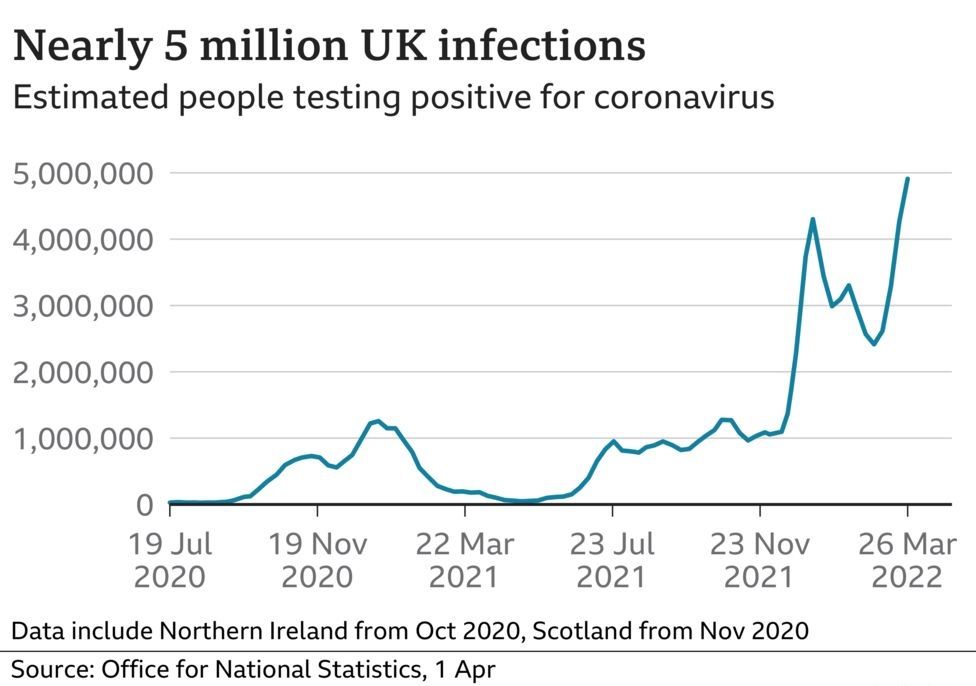

Estimated infection rates across the nations showed:

*  One in 13 people in England had coronavirus - about 7.6% of the population, up from 6.4% the week before

*  One in 14 people in Wales - or 7% of the population - up from 6.4% the previous week

*  One in 12 people in Scotland - or 8.6% , down from 9% the week before

*  One in 15 people in Northern Ireland - or 6.7% of the population, down from 5.9% the week before

In England and Wales infections continued to rise, while overall trends in Scotland and Northern Ireland were uncertain.

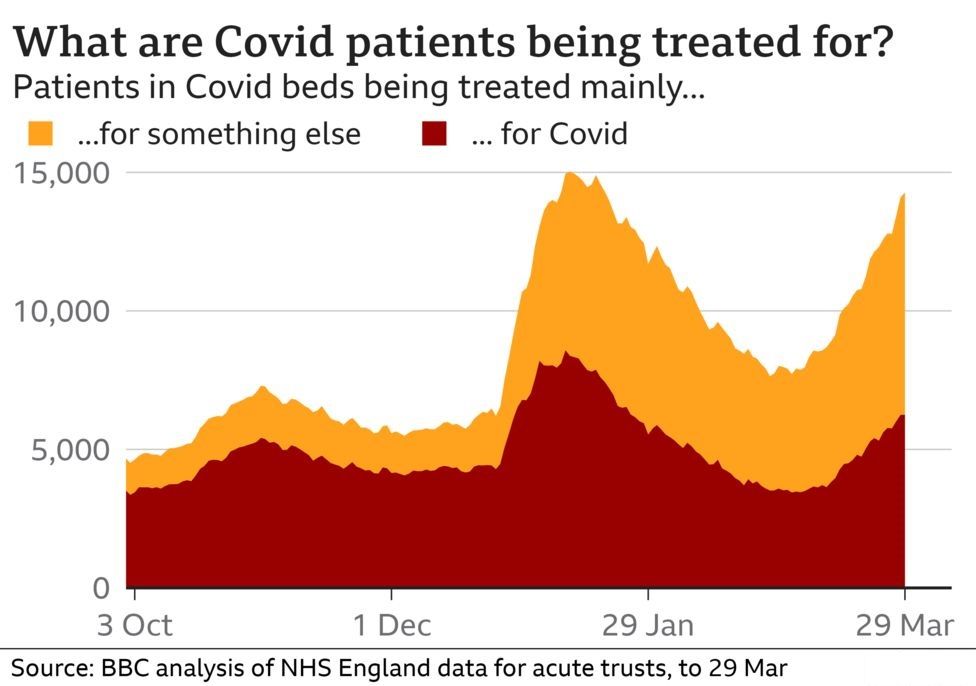
The number of people in Covid beds in hospitals has returned to January 2022 levels, data from NHS England suggests.

But there is a key difference - in January about 56% of people in Covid beds in hospitals were being treated mainly for their Covid, but as of Tuesday (29 March) that figure is down to about 44%.

And the number of people being treated for very severe Covid infections and needing intensive care remain low - as vaccinations continue to protect people from severe disease.

Rates in older people continue to be a concern.

On Thursday, Prof Sir Johnathan Van-Tam, speaking on his last day as England's deputy chief medical officer, said protecting older age groups kept him up at night.

At a Royal Society of Medicine conference, he said: "Case rates here in the UK are really, really high and hospitalisations in London, for example, are becoming exceptionally high again.

"And what keeps me awake at night is whether the people we have called - over-75s - for their second booster dose are going to come forward really rapidly and really quickly in the next few days and weeks, because it is going to be important."

People aged over 75 and those who have weakened immune systems can book a spring booster jab to top up their protection against the virus.


Newsletter

Related Articles

0:00
0:00
Close
UK Heatwave Disrupts Transport, Healthcare and Public Services as Red Weather Alerts Expand Nationwide
Barclays Warns of Growing Cyber Risk Divide Between Large UK Firms and Micro Businesses
European Defence Plans Including Ukraine Integration Prompt UK Strategic Reassessment
UK Equity Markets React as US–Iran Peace Roadmap Eases Oil Price Pressures
United Kingdom Expands Global Clean Energy Partnerships With Brazil, Morocco and Tanzania
Lord David Frost Urges Incoming UK Leadership to Abandon EU Regulatory Reset Strategy
Housing Groups Support Amendment to Strengthen Fire and Gas Safety Access Powers in Social Housing
South London NHS Estates Staff Ballot on Industrial Action Over Pay Structures in Hospital Maintenance Services
United Kingdom Government Invests £60 Million in AI Research Labs at Oxford and University College London
Barclays Cyber Security Report Highlights Rising Threat Exposure Among UK Small Businesses in AI-Driven Attacks
UK Met Office Heatwave Triggers Transport Warnings as Rail Operators Urge Cancellations Amid Infrastructure Strain
South London NHS Estates Workers Ballot for Strike Action Over Pay Disputes Across Major London Hospitals
Barclays Warns of Severe Cyber Security Gap Between Large Corporations and Small Businesses in the United Kingdom
United Kingdom Government Allocates £60 Million for Artificial Intelligence Research Laboratories at Oxford and UCL
National Health Service Approves Teplizumab Treatment to Delay Onset of Type One Diabetes in First European Rollout
Met Office Issues Rare Red Extreme Heat Warning Across London, South East and West Midlands as Transport and Health Systems Face Disruption
Prime Minister Keir Starmer Resigns After Labour Party Revolt Following Economic Stagnation and Local Election Losses
United Kingdom Economy Contracts for Second Consecutive Month as Private Sector Weakens and Job Loss Fears Rise
Taxpayer Support Grows for Higher Digital Levies on Multinational Tech Companies
Bank of England Signals Caution Over Inflation Despite Easing Energy Prices
Lloyds Banking Group Expands Artificial Intelligence Hiring Amid Sector-Wide Automation Shift
Film Producer Corporate Collapse Leaves Creditors Facing Unrecoverable Losses
UK Ten-Year Brexit Anniversary Highlights Ongoing Political and Economic Uncertainty
Nottingham Maternity Scandal Inquiry Reveals Systemic Failings in NHS Care
Met Office Heatwave Prompts Public Health Warnings Across United Kingdom
Concerns Rise Over Fiscal Stability as Political Uncertainty Weighs on UK Borrowing Costs
UK Taxpayers Back Higher Digital Taxes on Global Technology Firms, Survey Shows
Bank of England Holds Interest Rates Steady Amid Persistent Services Inflation
Reform UK and Opposition Leaders Call for General Election Following Starmer’s Departure
Ten Years After Brexit Referendum, UK Faces Ongoing Political Fragmentation and Economic Debate
Nottingham University Hospitals Maternity Inquiry Exposes Severe NHS Failures
Met Office Issues Heat Health Alerts as United Kingdom Faces Record-Breaking Temperatures
Andy Burnham Emerges as Front-Runner for Labour Leadership After Starmer’s Resignation
Keir Starmer Resigns as UK Enters New Phase of Political Leadership Transition
UK Expands Alcohol Ban Enforcement Using Tagging Technology Ahead of World Cup
UK Invests £50 Million in Critical Minerals Supply Chain Security
UK Appoints Special Envoy on Preventing Sexual Violence in Conflict
UK Introduces Fines for Landlords of Unsafe Rental Properties
Reform UK Leads Opinion Polls as Immigration Debate Reshapes UK Politics
Police Investigate Edinburgh Attacks as Potential Hate Crimes
King Charles to Publish Personal Tax and Royal Household Financial Records
Nottingham University Hospitals Maternity Inquiry Report Set for Publication
Heat-Health Alerts Issued Across London and Southern England Amid Rising Temperatures
UK Economy Shows Pressure From Middle East Conflict Despite Modest Growth
Brexit Anniversary Reignites Debate Over UK Economic and Political Direction
UK Parliament Continues Legislative Work Amid Leadership Transition
Financial Markets Hold Steady After UK Leadership Shake-Up
Andy Burnham Enters Labour Leadership Race With Strong Parliamentary Backing
Keir Starmer Resigns as UK Prime Minister After Two Years in Office
Reform UK MP Lee Anderson to Raise Pension Concerns Over British Coal Staff Superannuation Scheme
×