London Daily

Focus on the big picture.
Friday, Jul 24, 2026

Covid now a pandemic of poor nations, WHO envoy tells UK MPs

Covid now a pandemic of poor nations, WHO envoy tells UK MPs

Rich counties taking risk by ‘hoovering up’ boosters, all-party group on coronavirus told

Covid is now a pandemic of poor nations, a leading global expert has told a cross-party group of MPs, adding that governments that are attempting to vaccinate their way out of the pandemic are taking a huge risk.

Dr David Nabarro, the World Health Organization’s special envoy on Covid, told the all-party group on coronavirus that the world was still deep in the pandemic, with 5,413 reported deaths in the past 24 hours alone. “This is a disease now fundamentally of poor people and poor nations,” he added.

Without mentioning the UK by name, Nabarro said wealthy countries that were attempting to “vaccinate a population out of an active pandemic” were taking a huge gamble, saying one concern was the rise of new variants that may evade current vaccines, while another was that the population may be reluctant to comply should measures such as mask-wearing and social distancing be re-introduced.

“If there is a hoovering up of vaccines for the boosters, that is just going to have a global consequences that are really quite extreme, and everybody needs to know that,” he said.

According to official data, more than 22% of people in the UK aged 12 or over have had a booster dose, while an estimated 68.6% of the entire population have had at least two jabs.

In stark contrast, in Africa just 6% of people had been fully vaccinated by the end of October, the WHO said. According to figures from Our World in Data, some African countries have even lower levels – in Nigeria the figure is only 2.8%.

Speaking at a meeting of the all-party parliamentary group on coronavirus (APPG) on Tuesday, Anna Marriott, health policy adviser for Oxfam and policy adviser to the People’s Vaccine Alliance said the situation was dire. “If we look at low-income countries as a whole, shockingly, less than 1% of the total vaccine supply has been delivered to those poorest countries, many of which are in Africa,” she said.
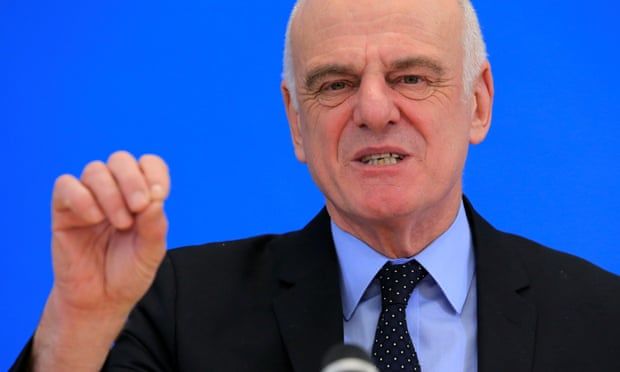
Dr David Nabarro: ‘If there is a hoovering up of vaccines for the boosters, that is just going to have a global consequences.’


“Pharmaceutical corporations have de-prioritised developing countries, including the continent of Africa,” she said, adding that included de-prioritisation of vaccine-sharing schemes such as Covax and efforts on the part of the African Union to purchase vaccine. “Rich countries have pushed themselves to the front of the vaccine queue by willingly paying higher than necessary prices,” she said.

Dr Ayoade Alakija, co-chair of the African Union Africa vaccine delivery alliance for Covid-19 said it was crucial to waive Covid vaccine patents to allow countries to manufacture doses themselves. “The transfer of technology should be mandated. These vaccines are a public global good; it should be mandated of those companies and there should be absolutely no talk of them losing profits in a pandemic, it is inhumane, it is immoral. And quite frankly, it is also quite stupid,” she said.

One problem raised by experts, including Eva Kadilli, director of Unicef’s supply division, was that some vaccines donated by rich nations had a short expiry date. That put huge strain on healthcare systems, which had to scramble to use them in time, while the different storage requirement of the jabs meant there could be logistical problems if vaccines arrived at short notice.

Dr Nicaise Ndembi, chief science adviser to the Africa CDC (the Africa Centres for Disease Control and Prevention), said close to 700,000 vaccines had expired, saying this could add to vaccine hesitancy. “If people are aware that we’re destroying vaccines, they are sure that something is wrong,” he said.

Newsletter

Related Articles

0:00
0:00
Close
Burnham Rules Out New Scottish Independence Referendum in First Talks With Swinney
OpenAI Sued After ChatGPT Allegedly Discouraged Emergency Care Before Near-Fatal Embolism
Viral Video Raises Questions Over Twelve-Dollar Croissants at Manhattan Bakery
UK Balances Security Commitments With Economic Growth Priorities
Retail and Hospitality Sectors Navigate Consumer Caution and Tax Changes
Key Trends to Watch
British Land Appoints Joanne McNamara as New Chief Executive Officer
UK Government Names New Life Peers Including Former Military and Civil Service Leaders
Institute of Directors Urges Government Action on Employment Costs and Skills Shortages
IMF Raises UK 2026 Growth Forecast to One Percent
UK Retail Sales Growth Slows Sharply as Households Cut Discretionary Spending
UK Ten-Year Bond Yields Remain Above Five Percent as Government Faces Higher Debt Costs
UK Government Plans Earlier End to Low-Value Import Duty Exemption for Online Retail Parcels
Reform UK Leads Tight Westminster Voting Poll as Conservatives and Labour Remain Close
Royal Navy Carrier Strike Group Completes First Arctic and North Atlantic Mission Phase
Andy Burnham Government Cuts Business Rates for Pubs and Music Venues by Twenty Percent
UK Inflation Falls to Two Point Six Percent in June as Food and Fuel Prices Ease
Andy Burnham Becomes UK Prime Minister Facing Growth Challenges and Fiscal Pressure
UK Government Reviews Long-Term Balance Between Cost Relief, Industry Support, and Public Investment Priorities
BBC Could Receive Permanent Royal Charter Under Government Proposal
Northern Ireland Proposes End to Severe Weather Exemptions for Electricity Compensation Rules
Andy Burnham Holds Talks With UK Devolved Leaders on Regional Cooperation and Devolution
House of Lords Launches Inquiry Into Risks Facing UK Democratic Institutions
ScottishPower Renewables Plans Major Rebuild of Whitelee Wind Farm With Fewer Larger Turbines
UK and Italy Leaders Discuss Global Combat Air Programme and Future European Cooperation
UK Government Announces Six Hundred Million Pound Aerospace Investment Package at Farnborough Airshow
European Union Approves UK Participation in Ninety Billion Euro Ukraine Support Loan Framework
Rolls-Royce Warns UK Government Over Jet Engine Funding Decision and Future Manufacturing Plans
UK Inflation Falls to Two Point Six Percent in June as Fuel and Food Prices Ease
Andy Burnham Begins Premiership With Two Pound England Bus Fare Cap and Electricity Tax Cut Plan
YouGov Poll Shows Tight Competition Among UK Political Parties
Space Technology Investment Expands Through UK-US Cooperation at Farnborough Airshow
UK Opens Final India Young Professionals Scheme Ballot for Three Thousand Applicants
United Kingdom Approved for Ukraine Financial Support Initiative With EU Partners
UK and Ireland Leaders Discuss Security, Energy and Regional Cooperation
British Heart Foundation Identifies Ten UK Areas With Severe Shortages of Defibrillators
Former Southern Water Executives Charged Over Alleged Water Test Manipulation Scheme
IMF Warns UK Economic Growth Will Slow to One Percent in 2026
UK Inflation Falls to Two Point Six Percent in June as Food and Energy Costs Ease
United Kingdom Joins European Union Loan Mechanism to Support Ukraine’s Defense Needs
Prime Minister Andy Burnham Introduces Two-Pound Bus Fare Cap and Energy Tax Relief Measures Across England
Northern Ireland Secures Additional Infrastructure Funding From UK Treasury
Wales Approves Port Investment Plans to Support Green Energy Supply Chains
UK Financial Regulator Simplifies Stock Market Rules to Attract More Listings
UK Reports Decline in Small Boat Crossings Across the English Channel
UK Government Creates Emergency Support Fund for Financially Pressured Universities
Scottish Government Launches Economic Strategy Focused on Innovation and Renewable Industries
UK Expands Sustainable Farming Incentives to Support Environmental Measures
UK Government Introduces New Neighbourhood Policing Standards Across England and Wales
UK Competition Regulator Opens Review of Artificial Intelligence Foundation Models
×