The High Court in Belfast has upheld the ban on the Drumcree parade, ruling that Northern Ireland Secretary Sir Chris Bryant acted lawfully on security advice. Portadown Orange District says it will appeal, arguing that unlawful protests prevented it exercising an established legal right.
The judicial review, brought by a Portadown Orangeman against Bryant and PSNI Chief Constable Jon Boutcher, challenged the secretary of state’s decision of 9 October.
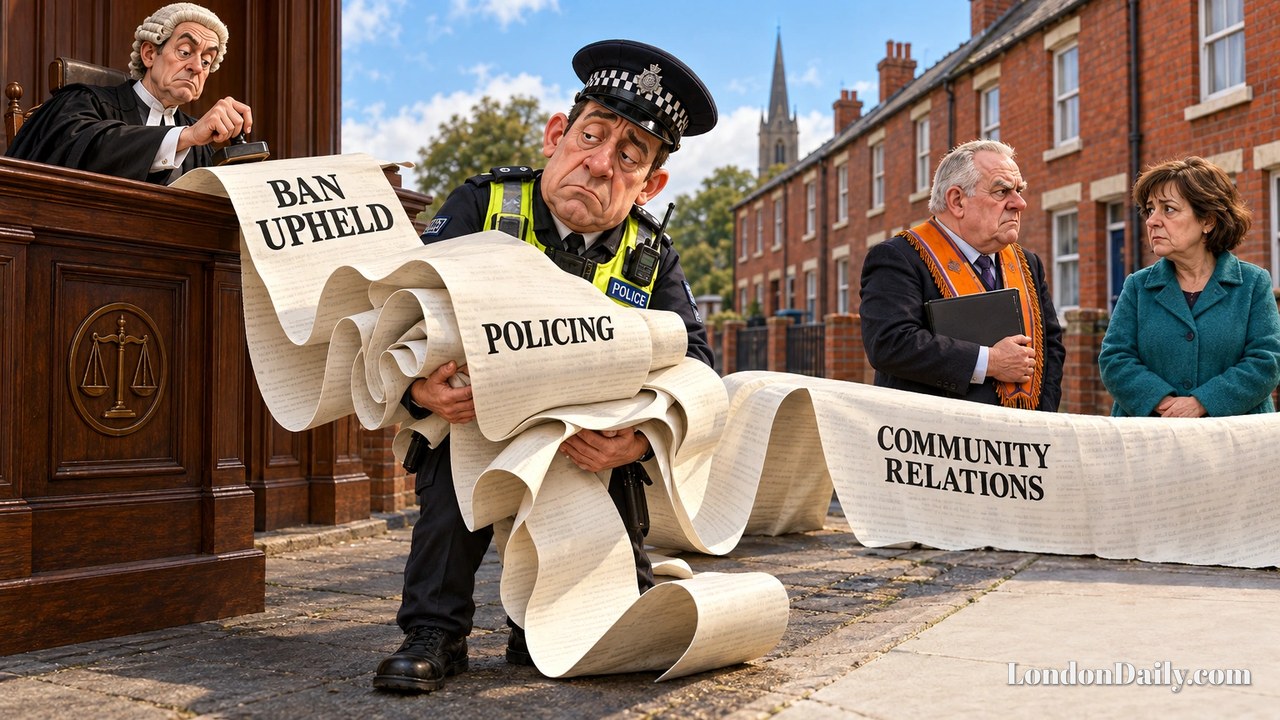
Mr Justice Scoffield ruled that Bryant had acted within his discretion, while finding it “highly regrettable” that intervention had been necessary. Opponents of the march should “take no particular joy”, he said, citing financial costs, diverted police resources and damage to community relations.
The judge said the threat of serious, widespread disorder had loomed large. He also raised concerns about respect for the rule of law, including among elected representatives who participated in the unnotified protest.
Boutcher had advised that all lawful, proportionate options for completing the procession were exhausted. Further intervention, he said, would risk serious injury, disorder and its spread across Northern Ireland. The court also heard police intelligence that dissidents might have attacked officers with guns had they cleared a route.
The ruling therefore upholds the security-based ban; it does not settle the competing arguments over what prevented the march. Portadown Orange District said its legal right had been “thwarted” by unlawful activity. DUP MP Carla Lockhart argued that unlawful conduct must not be seen to prevail. TUV leader Jim Allister said the right remained and warned of repetition. Loyalist activist Jamie Bryson said police inability to protect 35 Orangemen was a serious finding.
Residents maintained that the ban was lawful. Breandán Mac Cionnaith said their position was justified by the Good Friday Agreement’s promise of freedom from sectarian harassment. Solicitor Darragh Mackin praised residents’ conduct throughout proceedings and urged a move forward.
Sinn Féin’s Deirdre Hargey defended supporting residents but said events had damaged community relations. Senior party figures have attended police interviews over their protest roles; Finance Minister John O’Dowd confirmed his attendance on Wednesday.
The immediate dispute followed court action overturning an earlier prohibition. The Parades Commission then permitted a restricted march on 27 September, but up to 1,000 people, including First Minister Michelle O’Neill, blocked the road. An almost fortnight-long stand-off followed; daily protests have since dissipated.
The wider dispute almost derailed the peace process in the mid-1990s. The commission, operating since 1998, barred that summer’s march along Garvaghy Road, a decision the Orange Order has challenged for three decades. The latest judgment leaves further litigation in prospect.








Join the conversation