Chinese Wind Turbine Makers Push Deeper Into Europe After UK Security Pushback Reshapes Offshore Wind Procurement
As Britain tightens scrutiny over Chinese involvement in critical energy infrastructure, manufacturers pivot toward continental Europe, where industrial policy, energy security, and supply chain dependence are increasingly in tension.
SYSTEM-DRIVEN shifts in Europe’s energy infrastructure are reshaping the offshore wind industry, as governments attempt to reconcile rapid renewable deployment with growing concerns over security, industrial dependence, and strategic supply chains.
The result is an increasingly fragmented market in which Chinese wind turbine manufacturers face restrictions in some jurisdictions while continuing to expand in others.
The immediate catalyst is a tightening of procurement and security scrutiny in the United Kingdom, where policymakers have moved to reduce exposure to Chinese equipment in sensitive energy infrastructure, particularly offshore wind projects linked to the national grid.
This reflects a broader trend in which energy transition infrastructure is no longer treated purely as a commercial or environmental issue, but also as a national security asset.
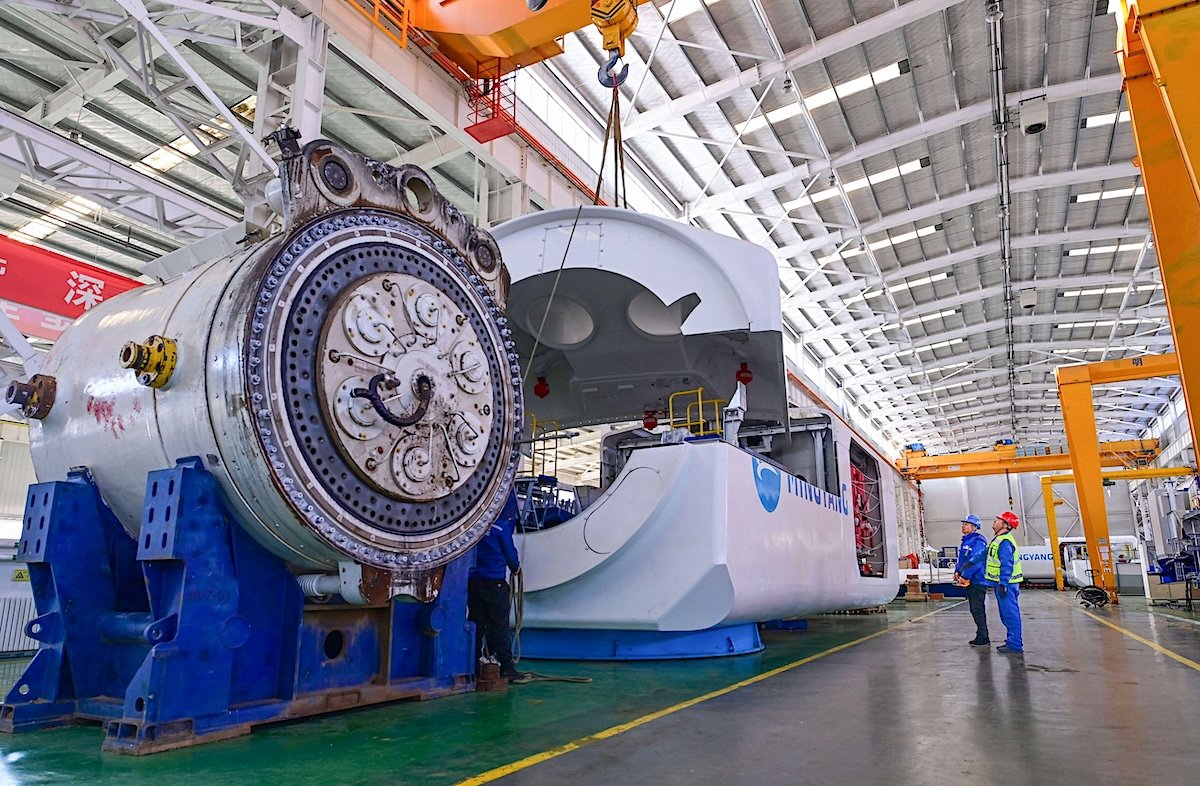
China’s wind turbine manufacturers, including major exporters with strong positions in global manufacturing capacity, have historically competed on cost advantage and rapid scaling ability.
However, in the UK context, their participation has become politically sensitive due to concerns over critical infrastructure dependence, cybersecurity risks, and geopolitical alignment.
As a result, their direct role in UK offshore wind supply chains has faced increasing barriers.
Rather than retreating from the European market, these companies are adapting by intensifying efforts in continental Europe, where policy approaches are less uniform.
Several EU member states continue to prioritize rapid renewable capacity expansion and cost efficiency, which can make Chinese manufacturers attractive partners despite political scrutiny.
At the same time, even within Europe, regulatory reviews and security assessments are becoming more common in large-scale energy tenders.
The structural tension is clear: Europe needs vast amounts of new wind capacity to meet decarbonization targets, but the industrial base required to build it is globally concentrated.
China dominates key segments of turbine manufacturing, including components, supply chain logistics, and cost-optimized production at scale.
That dominance creates both economic efficiency and strategic vulnerability, depending on the policy lens applied.
In the UK, the policy direction has increasingly prioritized supply chain resilience and domestic industrial participation in offshore wind development.
This has translated into stricter procurement rules and informal market pressures that reduce the likelihood of Chinese turbine deployment in new projects.
While not a full legal ban across all categories, the practical effect has been a significant contraction of opportunities in sensitive segments of the sector.
Across Europe, responses are less centralized.
Some countries are moving toward formal screening mechanisms for foreign involvement in critical infrastructure, while others continue to emphasize cost reduction and deployment speed.
This divergence has created a two-speed market in which Chinese firms can still compete strongly in certain jurisdictions while being effectively excluded or discouraged in others.
For European energy systems, the stakes extend beyond turbine supply.
Offshore wind is becoming a backbone of future electricity generation, and any constraints in supply chains can directly affect project timelines, electricity prices, and decarbonization targets.
At the same time, reliance on a narrow set of global suppliers introduces systemic risk, particularly when geopolitical tensions are elevated.
The commercial consequence is a gradual reconfiguration of bidding strategies.
Chinese manufacturers are increasingly positioning themselves through indirect partnerships, localized assembly arrangements, and selective market entry strategies in Europe, while Western competitors and domestic industrial policy frameworks attempt to capture a larger share of the value chain.
The broader implication is that offshore wind is no longer a purely climate-driven industry.
It is now a contested industrial arena where security policy, trade strategy, and energy transition goals intersect.
The outcome will determine not only who builds Europe’s wind farms, but also how resilient and politically independent its future energy system will be.
The result is an increasingly fragmented market in which Chinese wind turbine manufacturers face restrictions in some jurisdictions while continuing to expand in others.
The immediate catalyst is a tightening of procurement and security scrutiny in the United Kingdom, where policymakers have moved to reduce exposure to Chinese equipment in sensitive energy infrastructure, particularly offshore wind projects linked to the national grid.
This reflects a broader trend in which energy transition infrastructure is no longer treated purely as a commercial or environmental issue, but also as a national security asset.
China’s wind turbine manufacturers, including major exporters with strong positions in global manufacturing capacity, have historically competed on cost advantage and rapid scaling ability.
However, in the UK context, their participation has become politically sensitive due to concerns over critical infrastructure dependence, cybersecurity risks, and geopolitical alignment.
As a result, their direct role in UK offshore wind supply chains has faced increasing barriers.
Rather than retreating from the European market, these companies are adapting by intensifying efforts in continental Europe, where policy approaches are less uniform.
Several EU member states continue to prioritize rapid renewable capacity expansion and cost efficiency, which can make Chinese manufacturers attractive partners despite political scrutiny.
At the same time, even within Europe, regulatory reviews and security assessments are becoming more common in large-scale energy tenders.
The structural tension is clear: Europe needs vast amounts of new wind capacity to meet decarbonization targets, but the industrial base required to build it is globally concentrated.
China dominates key segments of turbine manufacturing, including components, supply chain logistics, and cost-optimized production at scale.
That dominance creates both economic efficiency and strategic vulnerability, depending on the policy lens applied.
In the UK, the policy direction has increasingly prioritized supply chain resilience and domestic industrial participation in offshore wind development.
This has translated into stricter procurement rules and informal market pressures that reduce the likelihood of Chinese turbine deployment in new projects.
While not a full legal ban across all categories, the practical effect has been a significant contraction of opportunities in sensitive segments of the sector.
Across Europe, responses are less centralized.
Some countries are moving toward formal screening mechanisms for foreign involvement in critical infrastructure, while others continue to emphasize cost reduction and deployment speed.
This divergence has created a two-speed market in which Chinese firms can still compete strongly in certain jurisdictions while being effectively excluded or discouraged in others.
For European energy systems, the stakes extend beyond turbine supply.
Offshore wind is becoming a backbone of future electricity generation, and any constraints in supply chains can directly affect project timelines, electricity prices, and decarbonization targets.
At the same time, reliance on a narrow set of global suppliers introduces systemic risk, particularly when geopolitical tensions are elevated.
The commercial consequence is a gradual reconfiguration of bidding strategies.
Chinese manufacturers are increasingly positioning themselves through indirect partnerships, localized assembly arrangements, and selective market entry strategies in Europe, while Western competitors and domestic industrial policy frameworks attempt to capture a larger share of the value chain.
The broader implication is that offshore wind is no longer a purely climate-driven industry.
It is now a contested industrial arena where security policy, trade strategy, and energy transition goals intersect.
The outcome will determine not only who builds Europe’s wind farms, but also how resilient and politically independent its future energy system will be.