London Daily

Focus on the big picture.
Thursday, Jan 29, 2026

China: How is its zero-Covid strategy changing?

China: How is its zero-Covid strategy changing?

China's zero-Covid policy has been among the strictest approaches to tackling the pandemic anywhere in the world.

But a recent surge in infections is forcing it to reconsider how it deals with the pandemic.

How serious is the current wave?


The latest jump in daily cases, widely spread across the country, has been driven largely by the Omicron variant.

Tens of millions of people in China, including the entire north-eastern province of Jilin, and the tech-hub city Shenzhen in the south, have been ordered into lockdown.

Shanghai, China's largest city, has become the latest city to join the list after battling the new wave for nearly a month.

Makeshift hospitals and quarantine centres have been set up across the country.
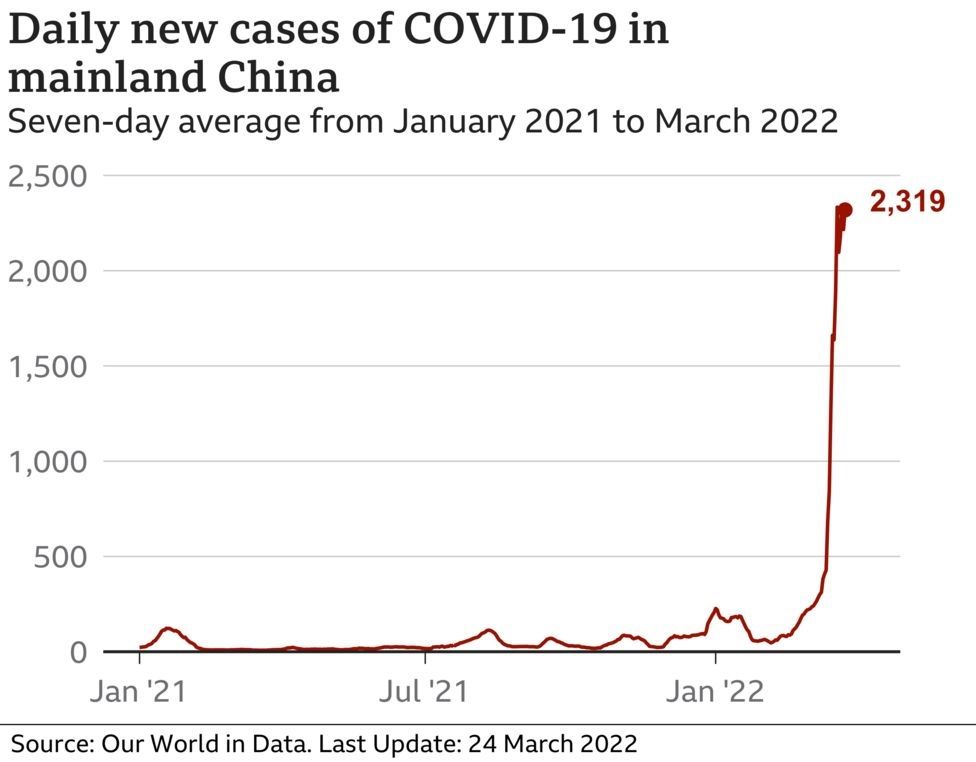

However, compared with the United States and Europe, infection rates remain low.

In the week prior to 24 March, there were just over 14,000 new cases in the whole of mainland China. In the UK over a similar period, there were over 610,000 new infections.

How is China's policy changing?


As more infections are detected across the country, China's strict zero-Covid strategy is becoming increasingly difficult to sustain.

However, most of its principal elements remain in place:

*  Travel to and from China is strictly limited, and there are restrictions on internal movement

*  Travellers from abroad with permission to enter China are screened and sent to government-designated hotels for a mandatory quarantine of at least two weeks, followed by a further period of monitoring

*  Regular community testing programmes are carried out and if infections are detected, residents can be evicted and sent to quarantine facilities (along with targeted area lockdowns)

*  All non-essential businesses have been shut, apart from food shops and some other essential suppliers

*  Schools are closed and public transport is suspended, with almost all vehicle movement banned

Millions of people are currently under lockdown in China


As China's healthcare system is put under increasing strain, some regulations have been relaxed:

*  People with mild symptoms no longer need to attend designated hospitals, but they still need to isolate at centralised facilities

*  Quarantine-period rules have been reduced

*  City-wide testing is no longer being carried out - replaced by local community testing

*  Self-testing kits are to be made available in stores across the country and online, but those who test positive will need to take PCR tests

China has approved antigen (lateral-flow) self-test kits after cases hit a two-year high


How successful has China's zero-Covid policy been?


China has had remarkable success containing the pandemic prior to the current outbreak.

Since the end of 2019, it has reported just over 4,600 deaths (according to Our World in Data). In the United States, more than 970,000 have died and in the UK, a little over 160,000.
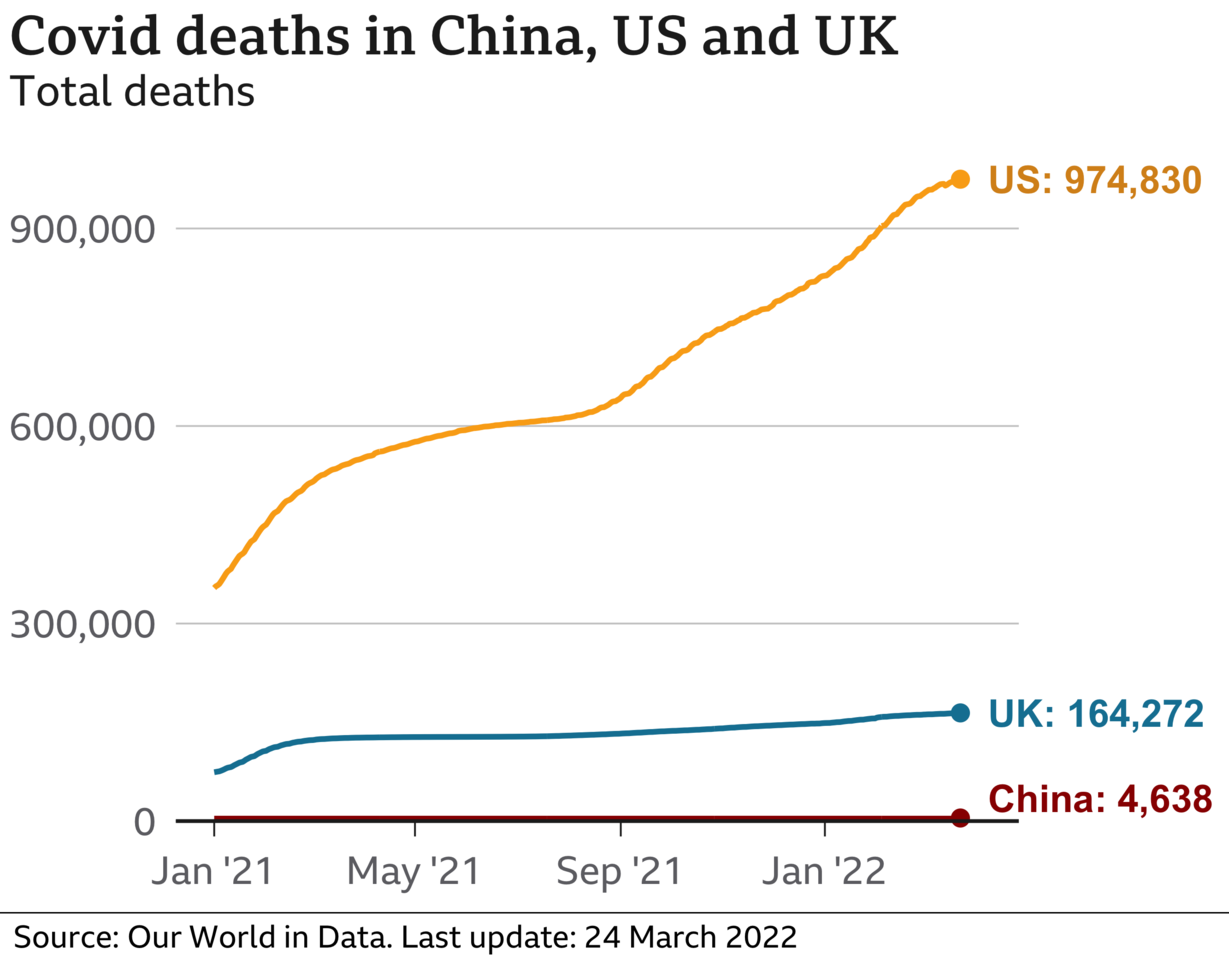

That's around three deaths per million people in mainland China, compared with 2,922 in the US and 2,402 in the UK.

Reported infections in China have also been very low throughout the pandemic.

Concerns have been expressed about the accuracy of the official data, but it seems clear that both infection and death rates have been low when compared with other countries.

About 88% of the population is now fully vaccinated. Despite this, China is almost alone in adhering to strict zero-Covid policies.
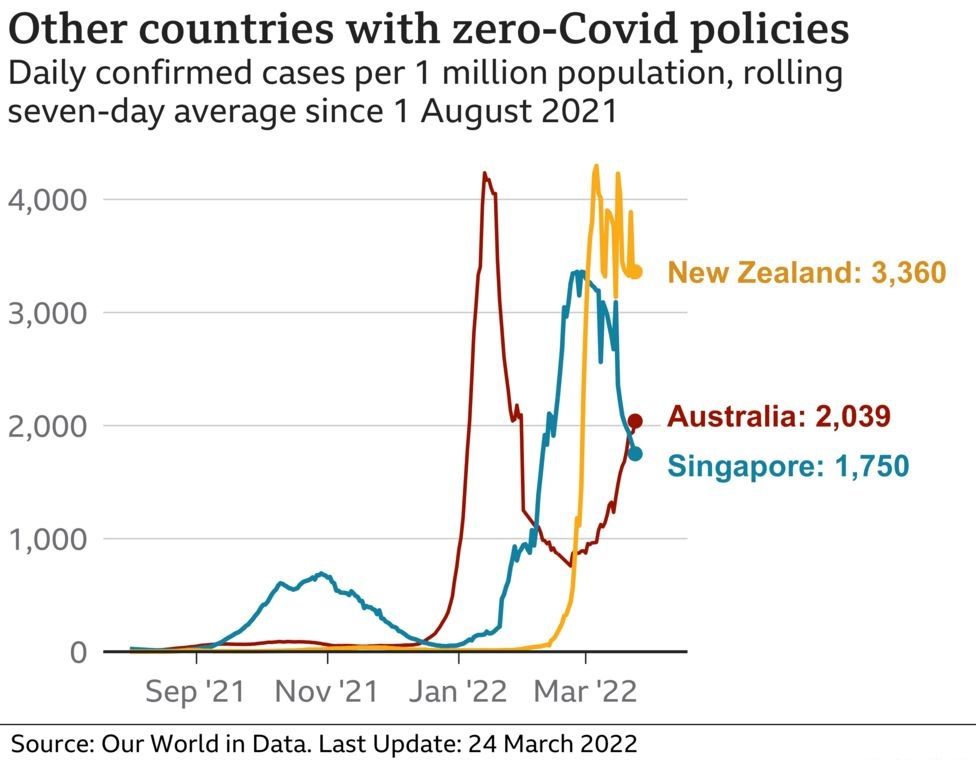

Australia, New Zealand and Singapore, relaxed their strict policies in the latter part of 2021 as vaccination rates improved.

Cases did then surge in those three countries, largely as a result of the spread of the Delta and Omicron variants of coronavirus - but have remained relatively low in comparison with countries across Europe and in the United States.

Newsletter

Related Articles

0:00
0:00
Close
Starmer Seeks Economic Gains From China Visit While Navigating US Diplomatic Sensitivities
Starmer Says China Visit Will Deliver Economic Benefits as He Prepares to Meet Xi Jinping
UK Prime Minister Starmer Arrives in China to Bolster Trade and Warn Firms of Strategic Opportunities
The AI Hiring Doom Loop — Algorithmic Recruiting Filters Out Top Talent and Rewards Average or Fake Candidates
Amazon to Cut 16,000 Corporate Jobs After Earlier 14,000 Reduction, Citing Streamlining and AI Investment
Federal Reserve Holds Interest Rate at 3.75% as Powell Faces DOJ Criminal Investigation During 2026 Decision
Putin’s Four-Year Ukraine Invasion Cost: Russia’s Mass Casualty Attrition and the Donbas Security-Guarantee Tradeoff
Wall Street Bets on Strong US Growth and Currency Moves as Dollar Slips After Trump Comments
UK Prime Minister Traveled to China Using Temporary Phones and Laptops to Limit Espionage Risks
Google’s $68 Million Voice Assistant Settlement Exposes Incentives That Reward Over-Collection
Kim Kardashian Admits Faking Paparazzi Visit to Britney Spears for Fame in Early 2000s
UPS to Cut 30,000 More Jobs by 2026 Amid Shift to High-Margin Deliveries
France Plans to Replace Teams and Zoom Across Government With Homegrown Visio by 2027
Trump Removes Minneapolis Deportation Operation Commander After Fatal Shooting of Protester
Iran’s Elite Wealth Abroad and Sanctions Leakage: How Offshore Luxury Sustains Regime Resilience
U.S. Central Command Announces Regional Air Exercise as Iran Unveils Drone Carrier Footage
Four Arrested in Andhra Pradesh Over Alleged HIV-Contaminated Injection Attack on Doctor
Hot Drinks, Hidden Particles: How Disposable Cups Quietly Increase Microplastic Exposure
UK Banks Pledge £11 Billion Lending Package to Help Firms Expand Overseas
Suella Braverman Defects to Reform UK, Accusing Conservatives of Betrayal on Core Policies
Melania Trump Documentary Sees Limited Box Office Traction in UK Cinemas
Meta and EssilorLuxottica Ray-Ban Smart Glasses and the Non-Consensual Public Recording Economy
WhatsApp Develops New Meta AI Features to Enhance User Control
Germany Considers Gold Reserves Amidst Rising Tensions with the U.S.
Michael Schumacher Shows Significant Improvement in Health Status
Greenland’s NATO Stress Test: Coercion, Credibility, and the New Arctic Bargaining Game
Diego Garcia and the Chagos Dispute: When Decolonization Collides With Alliance Power
Trump Claims “Total” U.S. Access to Greenland as NATO Weighs Arctic Basing Rights and Deterrence
Air France and KLM Suspend Multiple Middle East Routes as Regional Tensions Disrupt Aviation
U.S. winter storm triggers 13,000-plus flight cancellations and 160,000 power outages
Poland delays euro adoption as Domański cites $1tn economy and zloty advantage
White House: Trump warns Canada of 100% tariff if Carney finalizes China trade deal
PLA opens CMC probe of Zhang Youxia, Liu Zhenli over Xi authority and discipline violations
ICE and DHS immigration raids in Minneapolis: the use-of-force accountability crisis in mass deportation enforcement
UK’s Starmer and Trump Agree on Urgent Need to Bolster Arctic Security
Starmer Breaks Diplomatic Restraint With Firm Rebuke of Trump, Seizing Chance to Advocate for Europe
UK Finance Minister Reeves to Join Starmer on China Visit to Bolster Trade and Economic Ties
Prince Harry Says Sacrifices of NATO Forces in Afghanistan Deserve ‘Respect’ After Trump Remarks
Barron Trump Emerges as Key Remote Witness in UK Assault and Rape Trial
Nigel Farage Attended Davos 2026 Using HP Trust Delegate Pass Linked to Sasan Ghandehari
Gold Jumps More Than 8% in a Week as the Dollar Slides Amid Greenland Tariff Dispute
BlackRock Executive Rick Rieder Emerges as Leading Contender to Succeed Jerome Powell as Fed Chair
Boston Dynamics Atlas humanoid robot and LG CLOiD home robot: the platform lock-in fight to control Physical AI
United States under President Donald Trump completes withdrawal from the World Health Organization: health sovereignty versus global outbreak early-warning access
FBI and U.S. prosecutors vs Ryan Wedding’s transnational cocaine-smuggling network: the fight over witness-killing and cross-border enforcement
Trump Administration’s Iran Military Buildup and Sanctions Campaign Puts Deterrence Credibility on the Line
Apple and OpenAI Chase Screenless AI Wearables as the Post-iPhone Interface Battle Heats Up
Tech Brief: AI Compute, Chips, and Platform Power Moves Driving Today’s Market Narrative
NATO’s Stress Test Under Trump: Alliance Credibility, Burden-Sharing, and the Fight Over Strategic Territory
OpenAI’s Money Problem: Explosive Growth, Even Faster Costs, and a Race to Stay Ahead
×