London Daily

Focus on the big picture.
Thursday, Jul 23, 2026

China, 14 Asian partners sign world’s biggest trade pact

China, 14 Asian partners sign world’s biggest trade pact

Regional Comprehensive Economic Partnership, which covers about 30 per cent of global GDP, signed on sidelines of virtual Asean summit.

China and 14 other countries on Sunday signed a sprawling Asian trade deal seen as a huge coup for Beijing in extending its influence.

The Regional Comprehensive Economic Partnership (RCEP) – which includes the 10 members of the Association of Southeast Asian Nations (Asean), Japan, South Korea, New Zealand and Australia – is the world’s largest trade pact in terms of GDP, analysts say.

First proposed in 2012, the deal was sealed on the sidelines of the Asean annual summit as leaders push to get their pandemic-hit economies back on track.

“I am happy that after eight years of complex discussions, today we officially end RCEP negotiations,” Vietnamese Prime Minister Nguyen Xuan Phuc said ahead of the virtual signing.

The agreement to lower tariffs and open up the services trade within the bloc does not include the United States and is viewed as a China-led alternative to a now-defunct Washington trade initiative.

The RCEP “solidifies China’s broader regional geopolitical ambitions around the Belt and Road Initiative”, said Alexander Capri, a trade expert at the National University of Singapore Business School, referring to Beijing’s signature investment project that envisions Chinese infrastructure and influence spanning the globe.

“It’s sort of a complementary element,” he said.
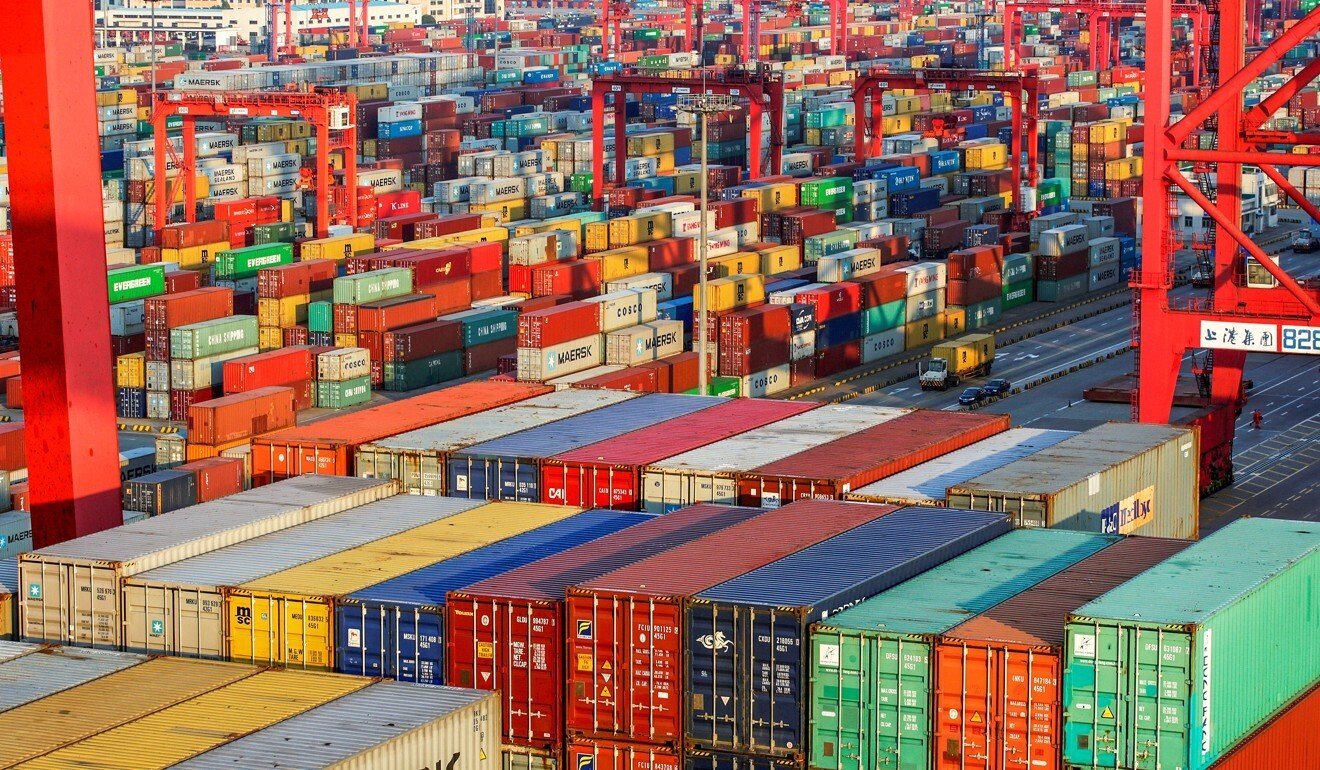

The RCEP is the world’s largest trade pact in terms of GDP.


But many of the signatories are battling severe coronavirus outbreaks and they are also hoping the RCEP will help mitigate the crippling economic cost of the illness.

Indonesia recently tumbled into its first recession for two decades while the Philippine economy shrunk by 11.5 per cent year on year in the third quarter.

Covid has reminded the region of why trade matters and governments are more eager than ever to have positive economic growth,” said Deborah Elms, executive director of the Asian Trade Centre, a Singapore-based consultancy.

“RCEP can help deliver it,” she said.

India pulled out of the agreement last year over concerns about cheap Chinese goods entering the country and was a notable absentee during Sunday’s virtual signing. It can join at a later date if it chooses.

Even without India, the deal covers 2.1 billion people, with RCEP’s members accounting for about 30 per cent of global GDP.

Crucially, it should help shrink costs and make life easier for companies by letting them export products anywhere within the bloc without meeting separate requirements for each country.
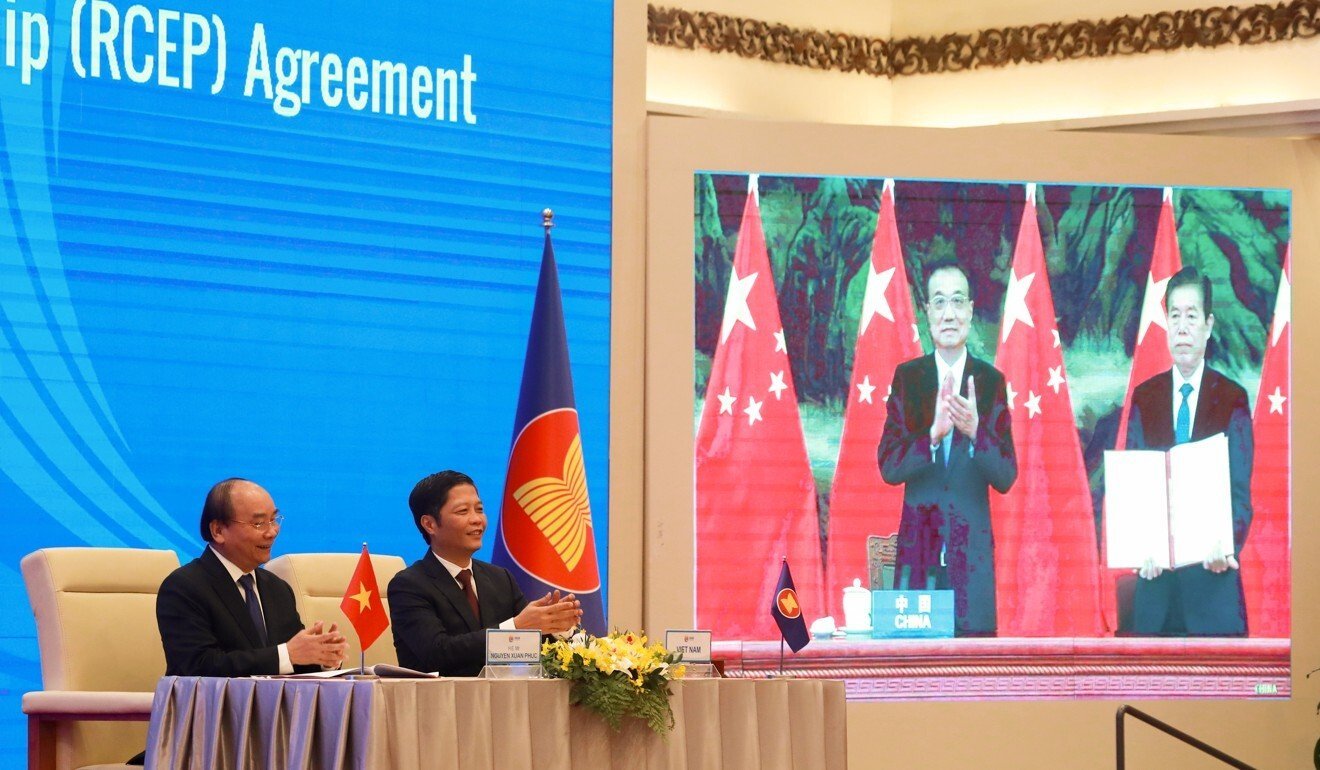

The RCEP agreement touches on intellectual property, but environmental protections and labour rights are not part of the pact.


The agreement touches on intellectual property, but environmental protections and labour rights are not part of the pact.

The deal is also seen as a way for China to draft the rules of trade in the region, after years of US retreat under President Donald Trump which have seen Washington pull out of a trade pact of its own, the Trans-Pacific Partnership (TPP).

Though US multinationals will be able to benefit from the RCEP through subsidiaries within member countries, analysts said the deal might cause US president-elect Joe Biden to rethink Washington’s engagement in the region.

This could see the US eye the potential benefits of joining the TPP’s successor deal, the Comprehensive and Progressive Agreement for Trans-Pacific Partnership, said Rajiv Biswas, Asia-Pacific chief economist at IHS Markit.

“However, this is not expected to be an immediate priority issue … given the considerable negative response to the TPP negotiations from many segments of the US electorate due to concerns about US job losses to Asian countries,” he said.


Newsletter

Related Articles

0:00
0:00
Close
Northern Ireland Secures Additional Infrastructure Funding From UK Treasury
Wales Approves Port Investment Plans to Support Green Energy Supply Chains
UK Financial Regulator Simplifies Stock Market Rules to Attract More Listings
UK Reports Decline in Small Boat Crossings Across the English Channel
UK Government Creates Emergency Support Fund for Financially Pressured Universities
Scottish Government Launches Economic Strategy Focused on Innovation and Renewable Industries
UK Expands Sustainable Farming Incentives to Support Environmental Measures
UK Government Introduces New Neighbourhood Policing Standards Across England and Wales
UK Competition Regulator Opens Review of Artificial Intelligence Foundation Models
UK Deepens Indo-Pacific Security Cooperation After Talks With Singapore and Japan
UK Announces Rail Modernisation Plan for Northern England With New Infrastructure Funding
UK Government Updates Housing Planning Rules to Accelerate Residential Construction
UK Approves Major North Sea Offshore Wind Project to Support Clean Power Goals
UK Health Service Begins Major Digital Upgrade to Cut Hospital Waiting Times
Bank of England Holds Interest Rates Steady as UK Inflation Pressures Remain Persistent
UK Universities and Industry Expand Space and Defense Research Partnerships
House of Lords Approves Social Housing Bill Amendments on Shared Ownership Rights
House of Lords Advances Civil Aviation Bill With New Passenger Protection Measures
UK Government Suspends Tariffs on Fertilizer and Food Imports to Reduce Costs
Russell Group Universities Support New UK Business Department Focused on Innovation
UK Parliament Opens Inquiry Into Transport Barriers Facing Young Jobseekers
Home Builders Federation Calls for Lower Costs as New UK Government Sets Housing Priorities
Andy Burnham Meets UK Devolved Leaders to Strengthen Regional Cooperation
Andy Burnham Holds First International Calls With Trump, Macron, and Zelenskyy
Andy Burnham Reshuffles Cabinet With John Healey Appointed Chancellor of the Exchequer
Andy Burnham Government Removes VAT From Electricity Bills to Cut Household Costs
Andy Burnham Becomes United Kingdom Prime Minister After Sir Keir Starmer Resigns
Miliband Sets Climate and International Law at Centre of UK Diplomacy
US Gasoline Returns to $4 as Renewed Iran Fighting Disrupts Oil Flows
Czech Central Bank Governor Rejects Early Euro Entry and Rate-Cut Pressure
Trump Orders 50% Tariffs on Selected Canadian Imports
Pentagon Discloses Nearly 100 US Troop Injuries During Renewed Iran Fighting
Trump Readies New Tariffs as Temporary Global Levy Nears Expiry
US Judge Pauses Paramount Skydance and Warner Bros Discovery Merger Over Antitrust Concerns
NHS England Faces Growing Retention Pressure Among Younger Midwives
UK Data Centre Expansion Faces Water and Grid Capacity Challenges
UK Defence Shares Rise After John Healey Appointment and Continued Spending Commitments
OECD Urges UK Government to Review Pension Triple Lock to Protect Public Finances
Bank of England Keeps Cautious Approach as Energy Costs Threaten Inflation Progress
County Councils Call for Wider Devolution and Long-Term Social Care Funding Reform
IMF Urges UK Government to Maintain Fiscal Discipline as Growth Forecast Slows
Russian Warship Holds Live-Fire Exercises Near UK Coast as Royal Navy Monitors Activity
Mitie Agrees Three Point One Billion Pound Takeover by OCS in Another Blow to London Listings
JPMorgan Chase Warns Bank Levies Could Hit UK Growth and Drive Capital Away
UK Unemployment Holds at Four Point Nine Percent as Labour Market Shows Resilience
UK Government Borrowing Falls Below Forecasts as Treasury Receives Early Fiscal Boost
John Healey Cuts VAT on Household Electricity Bills After Cancelling National Digital ID Scheme
Andy Burnham Forms New Labour Government With Ten-Year National Renewal Plan
EU Imposes Record €550 Million Digital Services Fine on AliExpress
UK Publishes Updated Consumption-Based Carbon Emissions Data
×