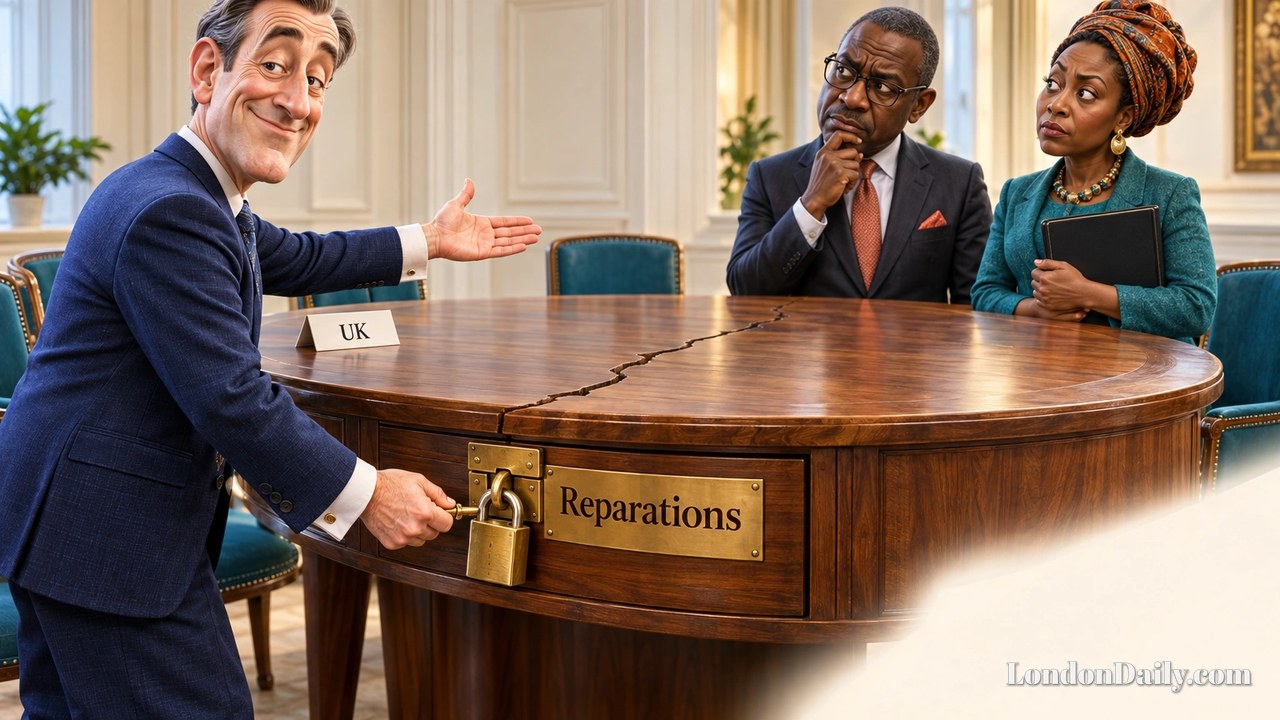
Britain has promised good-faith talks about the historical harms of the transatlantic slave trade while ruling out reparations. Can that dialogue properly address those harms if one possible response has been excluded before it begins?
At the Commonwealth Heads of Government Meeting in Antigua and Barbuda, leaders welcomed the UK’s agreement to a “structured, time-bound, inclusive and good-faith dialogue” with affected parties. Prime Minister Andy Burnham is open to a formal apology, but not reparations. The commitment is to talks, not yet to an apology or an agreed remedy.
The strongest challenge concerns the difference between acknowledging a wrong and addressing its consequences. An apology recognises responsibility; reparations seek redress. If compensation is sought for continuing harms, sorrow does not answer the claim. The argument concerns what remains to be repaired, not simply what should be said about the past. Excluding reparations limits affected parties’ influence over the outcome, however inclusive the discussions.
There is a serious defence of Britain’s position. Good-faith negotiation need not mean accepting every proposed outcome. A government can acknowledge historical wrongdoing while disputing that compensation is justified, fairly allocated or workable. It also owes duties to present-day taxpayers. An apology has moral value without an accompanying payment.
That defence identifies a genuine burden on the reparations case. Slavery’s enormity does not itself determine who should pay now, who should receive compensation or how much. A claim against a particular beneficiary and one against the public purse require different justifications.
But difficulty designing a remedy does not prove that nothing is owed. Nor does the innocence of people alive today answer a claim based on retained benefits or continuing institutional responsibility rather than inherited personal guilt. Those grounds require examination; they do not establish any particular liability automatically. A categorical refusal forecloses the remedy before those arguments are tested.
The timetable remains unsettled. Officials say it will be agreed later, although Foreign Secretary Ed Miliband suggested talks could conclude in around a year. Asked by BBC Newscast whether an apology might come by the G20 summit in Manchester next November, he replied: “Broadly speaking, yes.” That is an indication, not a deadline.
King Charles III told leaders that the trade still “casts a shadow” over Commonwealth members, expressing profound personal sorrow. The political question is what acknowledgement requires.
Britain need not promise payment before hearing the case. But refusing reparations requires an argument about why redress is unjustified, not merely difficult. Equally, demanding reparations requires establishing an obligation and its proper bearer. An apology cannot settle either question.








Video comments