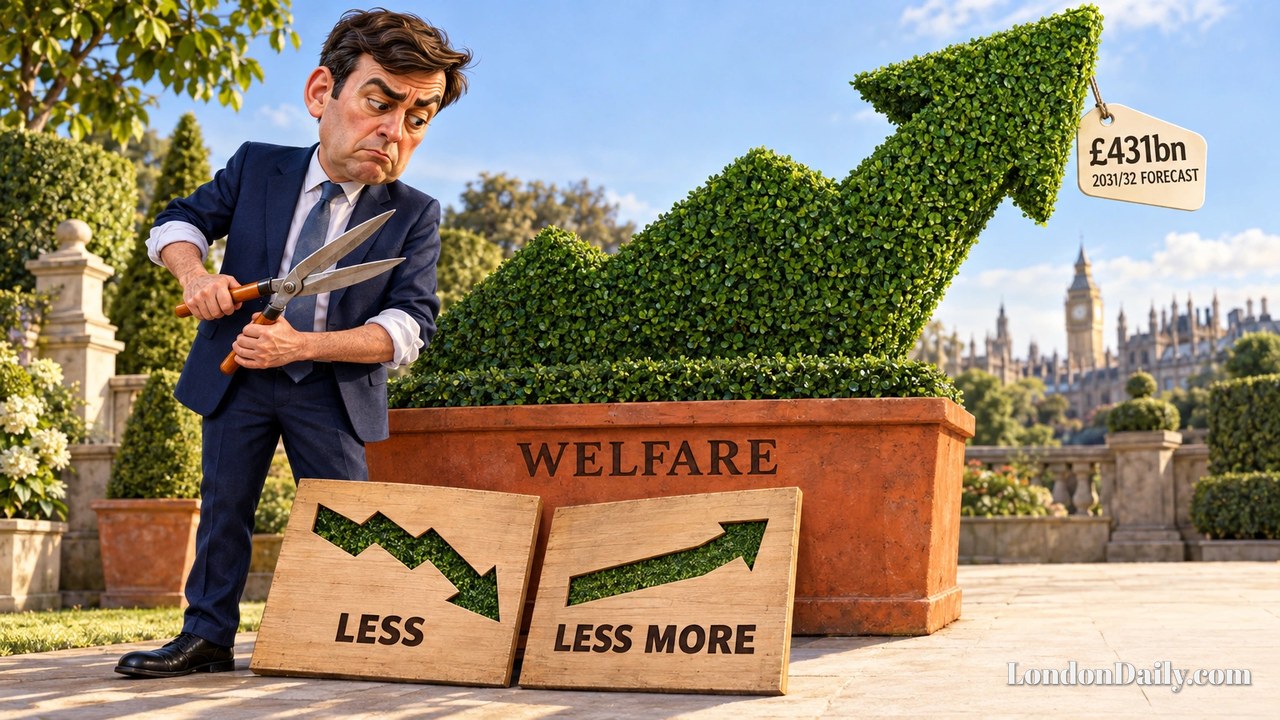
Andy Burnham has said he wants to reduce welfare spending as quickly as possible, but has not guaranteed a cut before the next general election. The government has also left unresolved whether its ambition means spending less than today or slowing the increases already forecast.
The uncertainty follows Wednesday’s Budget and an exchange involving Chancellor John Healey. Asked whether the benefits bill would fall before polling day, Healey said: “There will be, there will be a reduction in the benefits bill, we'll do that in a Labour way.”
Treasury sources disputed interpreting that as a commitment to a reduction before the election, which must take place by August 2029. Downing Street said it was “not setting an arbitrary target or timetable”.
During a visit to Derby, Burnham argued that helping people into sustainable employment, rather than making immediate reductions in support, offered the route to lower spending. He said “crude cuts” could leave people in crisis and lead to higher public expenditure elsewhere.
That distinction matters against a rising spending forecast. The Office for Budget Responsibility expects welfare expenditure to increase by £19bn this year to £353bn, reaching £431bn in 2031/32, driven primarily by health-related and pensioner benefits.
The latter total includes £209.8bn for pensioners, covering the state pension and winter fuel payments; £110.7bn for universal credit and its legacy equivalents; and £69.6bn for disability benefits such as personal independence payments. The government has already pledged to reform the state pension triple lock from 2030.
Conservative leader Kemi Badenoch accused Labour of being “addicted to welfare” and described the country as “overspent, overborrowed, overtaxed, and drowning in an out-of-control welfare system”. She argued that the Budget’s limited action had harmed economic and national security, and mocked the subsequent conflicting messages about the timing of reductions.
Former Bank of England chief economist Andy Haldane, who has previously advised Burnham, offered a financial-market argument for restraint. A credible plan to curb the benefits bill would “play spectacularly well” with markets, he said.
Further proposals are expected after two reviews are published in November: a disability benefits review co-chaired by minister Sir Stephen Timms, and Alan Milburn’s examination of young people not in education, employment or training. Burnham described the Milburn report as the next major priority.
Former prime minister Sir Keir Starmer commissioned both reviews after plans including tighter eligibility for some health-related benefits prompted a mass Labour rebellion and a government climbdown in June 2025. The forthcoming proposals will have to address both the spending trajectory and the political difficulty of changing entitlement.








Join the conversation