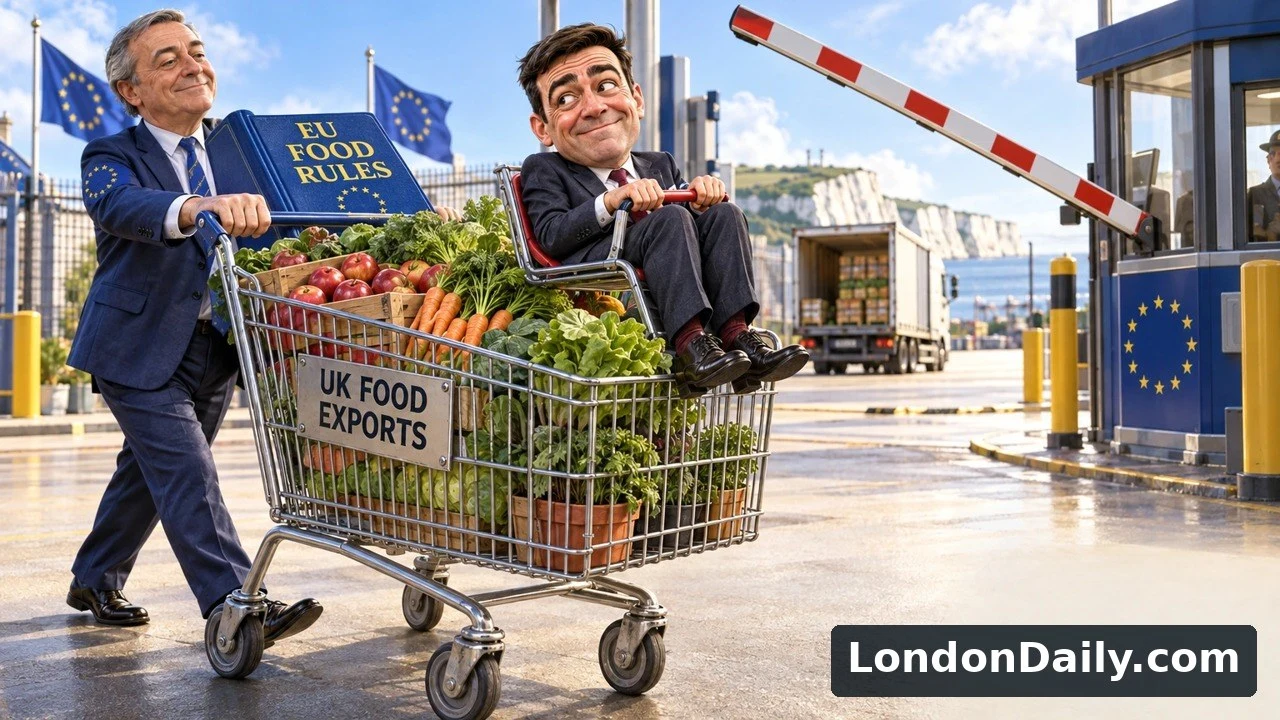
Prime Minister Andy Burnham is in Brussels to finalise a deal that would align Britain with EU food and plant trade rules from March 2028, removing post-Brexit export checks but leaving the UK without a vote on future regulations.
The agreement makes the trade-off explicit: easier commerce in exchange for accepting rules Britain cannot formally determine. Ministers hope to secure influence, but the two sides remained at odds over that role on the eve of the summit.
Burnham says Treasury analysis estimates the package could add up to 0.5% to gross domestic product, calling it “The single biggest growth intervention in this Parliament.” He argues closer co-operation would lower supermarket costs and give young Britons opportunities to work and travel in Europe. “In a more dangerous world, we are stronger together,” he said.
The Prime Minister is due to meet European Commission president Ursula von der Leyen and European Council president Antonio Costa before a joint press conference. Negotiations continued down to the wire.
The package covers food and agriculture, emissions trading and youth mobility. Reported British concessions include 100,000 work visas a year for young Europeans, allowing temporary work, and raising the age limit from 30 to 31. UK negotiators initially sought a lower cap.
Brussels also wants EU students charged domestic university tuition fees, reducing fees from around £38,000 to £9,970. Britain has resisted, with a six-month deadline to reach agreement.
Reform UK leader Nigel Farage called the deal a “betrayal”. He acknowledged agricultural alignment would make food exports “a little bit easier”, but argued that surrendering regulatory control was unnecessary for good trading relations. He accused Labour of rejoining part of the single market despite its election commitment, warning that the debate would turn to EU membership.
Conservative shadow environment secretary Victoria Atkins argued that farmers would face rules favouring highly subsidised foreign competitors, without a British say, vote or veto, while taxpayers paid the cost.
Expected commitments also cover supply-chain security, a digital partnership and a “Channel action plan” addressing irregular migration and small-boat crossings. Burnham said agreement on the latter would be a “really big deal”.
The summit follows last year’s inaugural meeting in London. It was postponed from July after Sir Keir Starmer resigned as prime minister.
Burnham plans discussions with Brussels after the summit and a national conversation later this year about longer-term options, potentially including full membership. Major changes would wait until after a general election: he remains committed to the 2024 Labour manifesto’s prohibition on returning to the customs union, single market or free movement.








Join the conversation