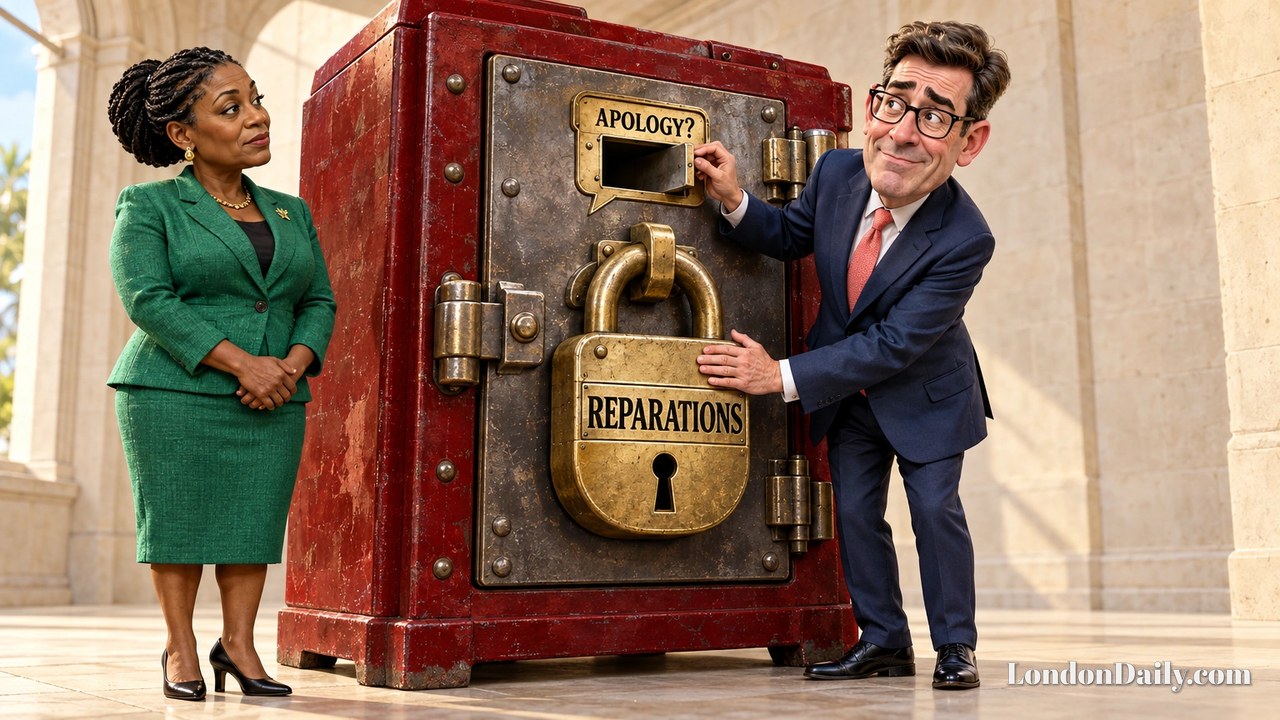
Prime Minister Andy Burnham has opened the door to a formal British apology for the transatlantic slave trade while ruling out financial reparations, ahead of a Commonwealth leaders’ summit in the Caribbean next week.
Burnham said he wanted a structured dialogue with countries affected by the trade, describing it as a “brutal and barbaric violation” and saying Britain must “face up to the past”. But his refusal to consider payments leaves a significant difference between his position and the demands of Caribbean leaders and campaigners.
“Listening to calls for a formal apology on behalf of the British state will form an important part of this process. I am open to them,” he wrote. That is an offer to consider an apology, not a commitment to issue one. The British government has never formally apologised for slavery or offered reparations.
On financial liability, Burnham maintained his predecessors’ policy. “I do not think that British people today can be held liable for historical wrongs, however heinous, that happened in a different age under different laws and in which they played no personal part,” he wrote, describing payments as “not the right answer”.
Barbadian Prime Minister Mia Mottley, who has sought reparations, welcomed the statement and said she would engage in good faith while continuing to seek reparatory justice.
Denis O’Brien, founder of The Repair Campaign, said it was disappointing and insufficient. “The British Government must stop obfuscating and give a full and formal apology now. This would be a significant and symbolic first step towards reparatory justice,” he said.
Caribbean nations have renewed their demands as King Charles III tours the region. A government source described dialogue as “morally the right thing to do”. Downing Street also sees a stronger Commonwealth as serving British interests amid efforts by China and Russia to extend their influence. President Vladimir Putin hosted a Russia–Africa summit in Moscow this week.
English authorities and the monarchy were prominent participants in the trade from the 16th century. Parliament passed legislation to abolish slavery in 1833, compensating British plantation owners for the loss of enslaved people. The UK finished repaying the debt incurred for those payments in 2015.
Burnham will attend next week’s summit with an offer of dialogue, but without the financial redress sought by reparations advocates.








Join the conversation