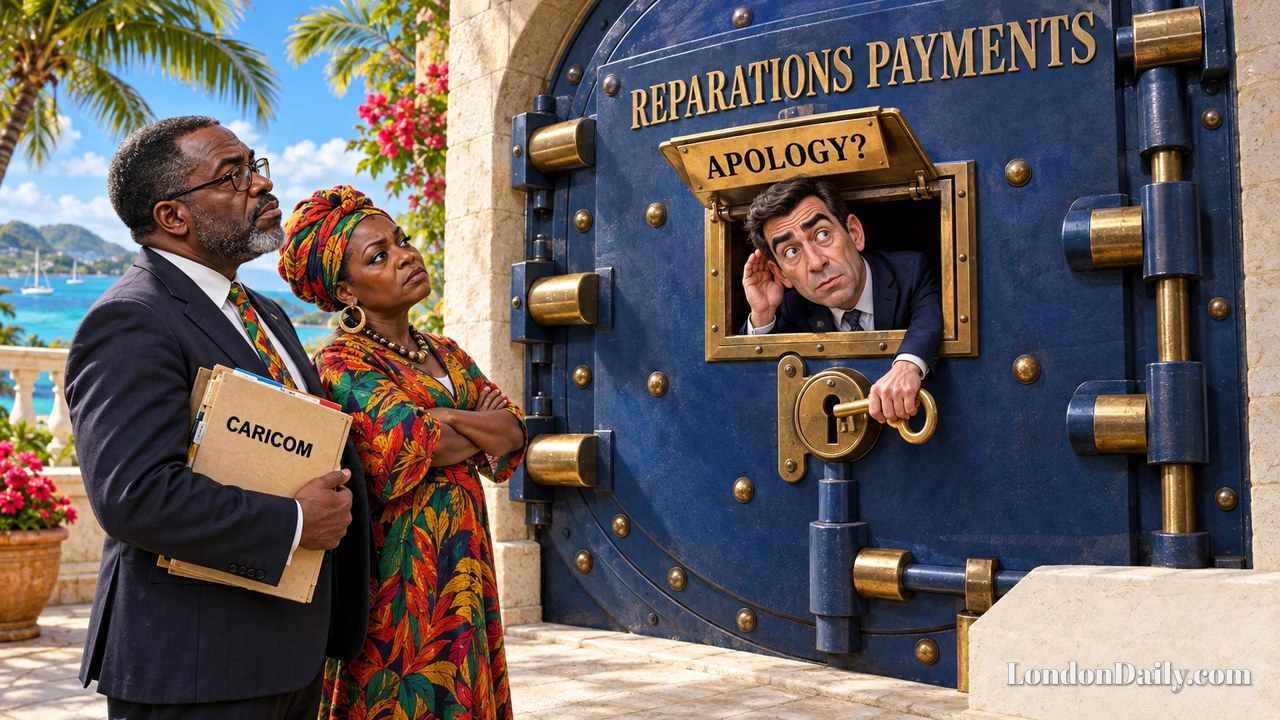
Andy Burnham has opened the door to a formal British apology for slavery while maintaining his opposition to reparations payments, as campaigners prepare protests during next week’s Commonwealth summit in Antigua.
The prime minister’s offer of structured dialogue creates scope for discussion but falls short of campaigners’ demands for an apology and negotiations on redress. King Charles and Burnham face demonstrations in St John’s, alongside a beach vigil remembering enslaved Africans and the launch of a global reparations caravan combining advocacy, demonstrations and culture.
Writing on Friday, Burnham said: “Listening to calls for a formal apology on behalf of the British state will form an important part of this process and I am open to them.” But he maintained successive governments’ opposition to payments: “I do not think that British people today can be held liable for historical wrongs”.
James Knight, of Citizens for Reparatory Justice, said earlier announcements ruling out an apology and reparations had made protest necessary. He described that stance, ahead of a meeting where Caribbean representatives wanted discussion, as insulting and insensitive.
Reparations are outside the official agenda of the 56-country gathering. Nevertheless, Hilary Beckles, chair of the Caribbean Community’s reparations commission, called it the “first round of reparations negotiations”. Caribbean leaders are expected to raise the issue behind closed doors, with supporting organisations meeting separately.
There are diplomatic limits: the commission said Commonwealth members had not unanimously agreed to advance dialogue on historical harms from the slave trade.
Buckingham Palace, responding to Antigua and Barbuda reparations commission chair Dorbrene O’Marde, said Britain’s reparations position was a matter for the government. O’Marde argued that royal acknowledgement of slavery’s suffering had not produced action, and that an apology would open the way to negotiations.
Campaigners cite a 25 March UN resolution, backed by 123 countries, describing the trafficking and racialised chattel enslavement of Africans as the gravest crime against humanity. Commission vice-chair Verene Shepherd also cited an August UN racial discrimination committee recommendation that countries are legally obliged to consider reparations and address slavery’s enduring legacy. She argued that these developments strengthened the campaign’s legal foundations and international legitimacy.
Jamaican officials lodged a petition to the king in September seeking legal advice on their reparations claim; it is due before the privy council in March.
A full, formal apology heads Caricom’s 10-point plan. Shepherd said it would acknowledge responsibility and commit to repair. Yet some citizens want more: Guyanese visual designer Ron ChangYuen questioned the value of the king’s visit without significant results, while dramatist Deandra Daniels said an apology alone would not address generational trauma.








Join the conversation