Andy Burnham has argued that closer food and farming ties with the European Union could ease supermarket price pressures, urging Britain to pursue deeper co-operation beyond an upcoming summit in Brussels.
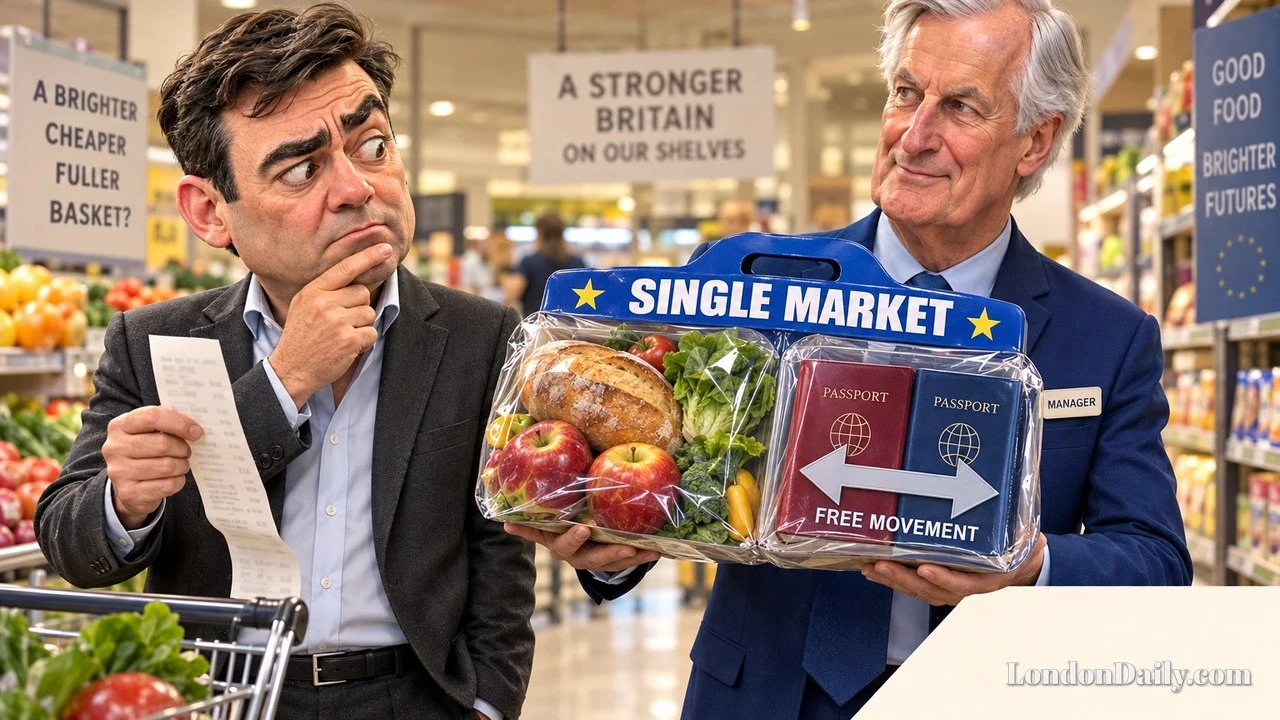
His case links the wider European relationship to household costs: reducing post-Brexit trade barriers, he says, would make importing and exporting food easier for farmers and producers while helping consumers.
“Cutting red tape on food coming in and out of the country will ease pressure on prices at the supermarket, while making life easier for farmers and food producers,” Burnham said.
The summit will focus on reducing those barriers, closer co-operation on emissions trading and making it easier for young people to work, live and study between the UK and Europe in both directions. These are areas for negotiation, rather than evidence of savings already reaching households.
Burnham said the gathering “doesn’t need to be the end of our ambition”. He argued that deeper co-operation could also encourage growth, improve safety and provide more tools to tackle illegal migration. Government sources suggested that restoring access to the EU’s migration database would help address illegal Channel crossings and other migration crime.
Burnham has said any decision on rejoining the EU should rest with the public, with a range of options put before voters. He has ruled out major changes before an election.
The distinction between practical agreements and a much closer relationship matters, however. Michel Barnier, the EU’s former chief Brexit negotiator, warned that Britain could not select only the single market arrangements it wanted. He said member states would insist on measures including free movement of people in exchange for easier trade.
Former Irish premier Leo Varadkar raised a separate obstacle to membership. Varadkar, who helped secure the 2019 Brexit agreement with Boris Johnson, said Britain would be unlikely to regain its £5 billion annual rebate, negotiated by Margaret Thatcher, if it rejoined.
Those warnings concern the terms of a deeper relationship and possible membership, not simply the summit’s food and farming agenda. Burnham’s immediate argument is about easing costs; the larger political choice is what obligations Britain would accept for greater access.








Join the conversation