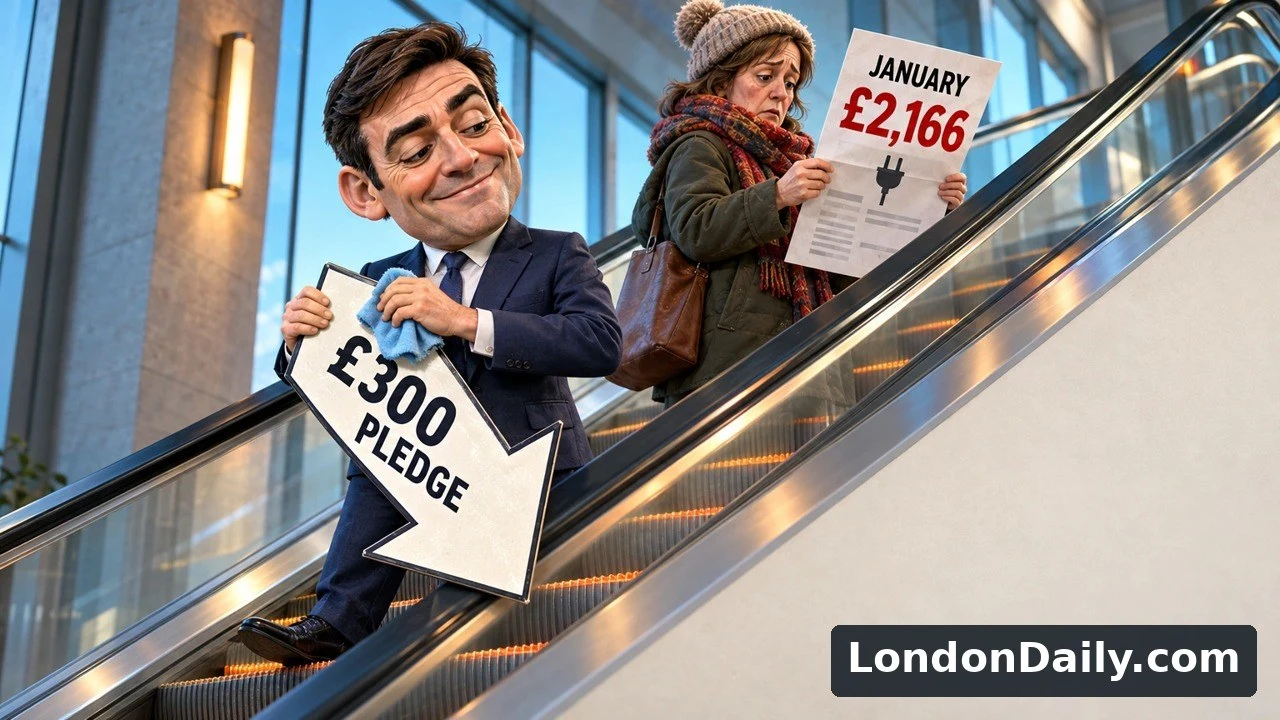
Burnham is standing by Labour’s pre-election promise to cut annual household energy bills by £300, even though January’s price increase will leave the typical bill nearly £600 higher than when the commitment was made.
Delivering the original target would then require a reduction of £898. The widening gap separates the government’s longer-term argument for renewable energy from the immediate costs facing households.
Sir Keir Starmer made the pledge before the 2024 election, promising more wind and solar farms. In June 2024, Ed Miliband, then shadow net-zero secretary, said Labour’s “green prosperity plan” would reduce average bills by £300 “because renewables are far cheaper than gas”.
The average annual bill was then £1,568, putting the promised level at £1,268. Ofgem’s announcement on Wednesday raises the price cap by 26 per cent from January, taking the typical annual bill from £1,723 to £2,166: an increase of £443, or about £37 a month. That is the highest level since June 2023, following Russia’s invasion of Ukraine.
Asked whether Burnham would retain his predecessor’s commitment, his official spokesman said: “The position on this hasn’t changed.” He said the priority was to give families immediate breathing space while taking longer-term action to lower costs.
At the Budget, Chancellor John Healey announced a £100 winter payment for households in council tax bands A–D. The package is intended to reach about 20 million households across the UK, at a stated cost of £2.6 billion. Think tanks and charities have criticised its scale, warning that the payment would cover only 11 days of energy use.
Bridget Phillipson, the women and equalities minister, acknowledged that the new increase would wipe out the support. She said the Chancellor would want to consider whether more help was needed beyond January, without announcing further measures.
Donald Trump’s war in Iran has driven oil and gas prices higher, contributing to the latest increase. Bills are expected to rise further in April. Ofgem’s Neil Kenward said conflict in the Middle East continued to push up energy costs.
Chris O’Shea, chief executive of British Gas owner Centrica, said he was “hugely concerned”, describing a “massive problem” with people unable or unwilling to pay their bills.
Ofgem urged struggling households to contact their supplier, which must offer appropriate support and advice. Kenward said the regulator was writing to suppliers to remind them of those obligations. Whether the government will add to its winter payment remains unresolved.








Join the conversation