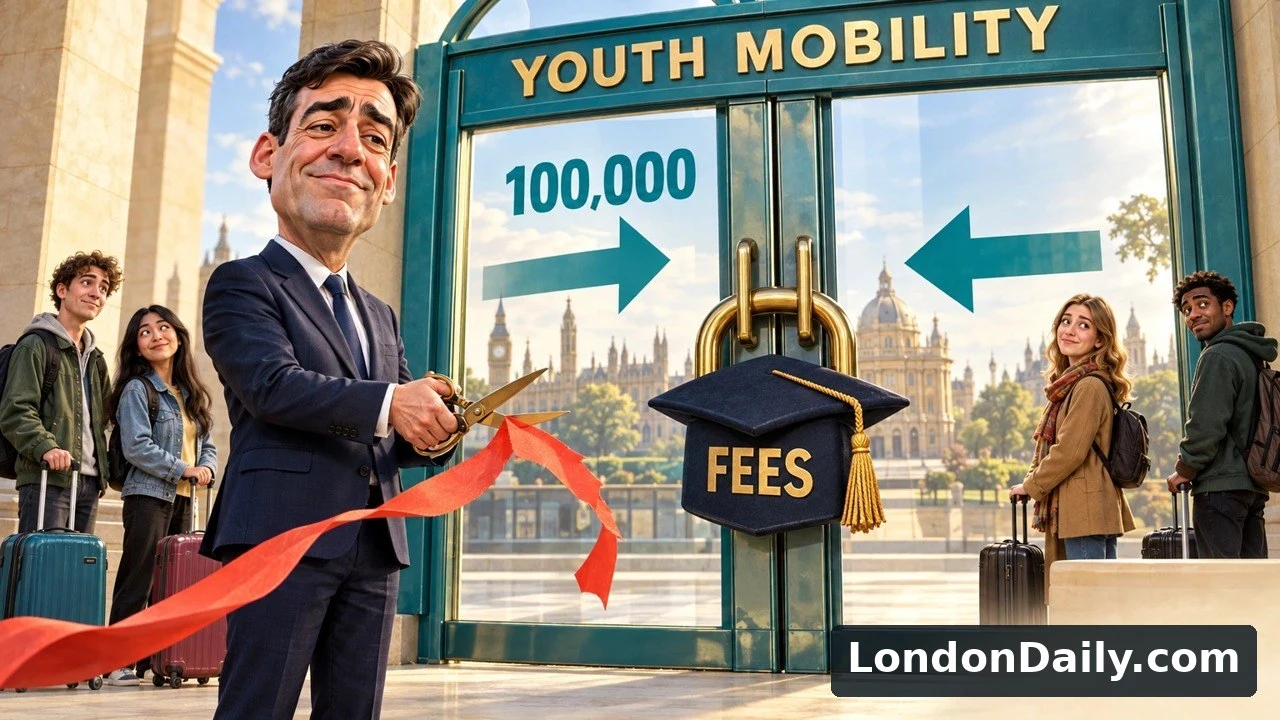
Prime Minister Andy Burnham has agreed to let 100,000 young Europeans live, work and study in Britain under a reciprocal EU deal, twice the upper limit originally proposed by UK negotiators.
The Youth Experience Scheme covers people aged 18 to 31 for stays of up to three years, with Britons offered equivalent opportunities across EU member states. Britain had sought a cap of between 30,000 and 50,000.
Burnham called the reset “a good day for Britain and a good day for Europe”, hailing agreements on food, youth mobility and carbon emissions. Yet an unresolved university fees dispute threatens implementation of the package.
The EU wants European students to pay the same tuition fees as British students rather than higher overseas charges. UK negotiators have resisted. Both sides agreed to seek a settlement within six months, but EU capitals warned late on Thursday that they would not implement the reset agreements until the dispute was resolved.
The joint statement commits both sides to endeavour to open the youth scheme no later than January 2030. Its full migration effects would therefore not be available before the next general election, which must take place by 2029.
The scheme also presents a domestic employment-policy tension. Almost one million young people in Britain are not in education, employment or training. Ministers have backed Alan Milburn’s reforms to reduce that proportion from 15 per cent to 5 per cent, alongside plans to reduce welfare reliance among under-25s. Whether the expanded scheme would undermine those ambitions is not established; reciprocal access also creates opportunities for Britons abroad.
A separate food agreement would align Britain with EU plant and animal health rules. The Government says cheaper imports and exports would lower supermarket bills, while the agreement is expected to add up to £5.1 billion annually to the UK economy. Both sides want it operating from 2028.
It would also ease trade between Britain and Northern Ireland across the post-Brexit Irish Sea border and restore EU pet passports for British travellers taking dogs, cats and ferrets abroad.
Those benefits come with a constraint: Britain would change its laws to match EU rules without a binding say over their drafting. The agreement envisages a role in “shaping” regulation, but influence is not decision-making power. Switzerland, Iceland and Liechtenstein already have non-binding input into incoming rules. Britain’s market of 60 million also sits alongside a single market of 460 million consumers.
The practical bargain is easier trade in exchange for less regulatory independence. Whether it takes effect still depends on settling who pays what at British universities.








Join the conversation