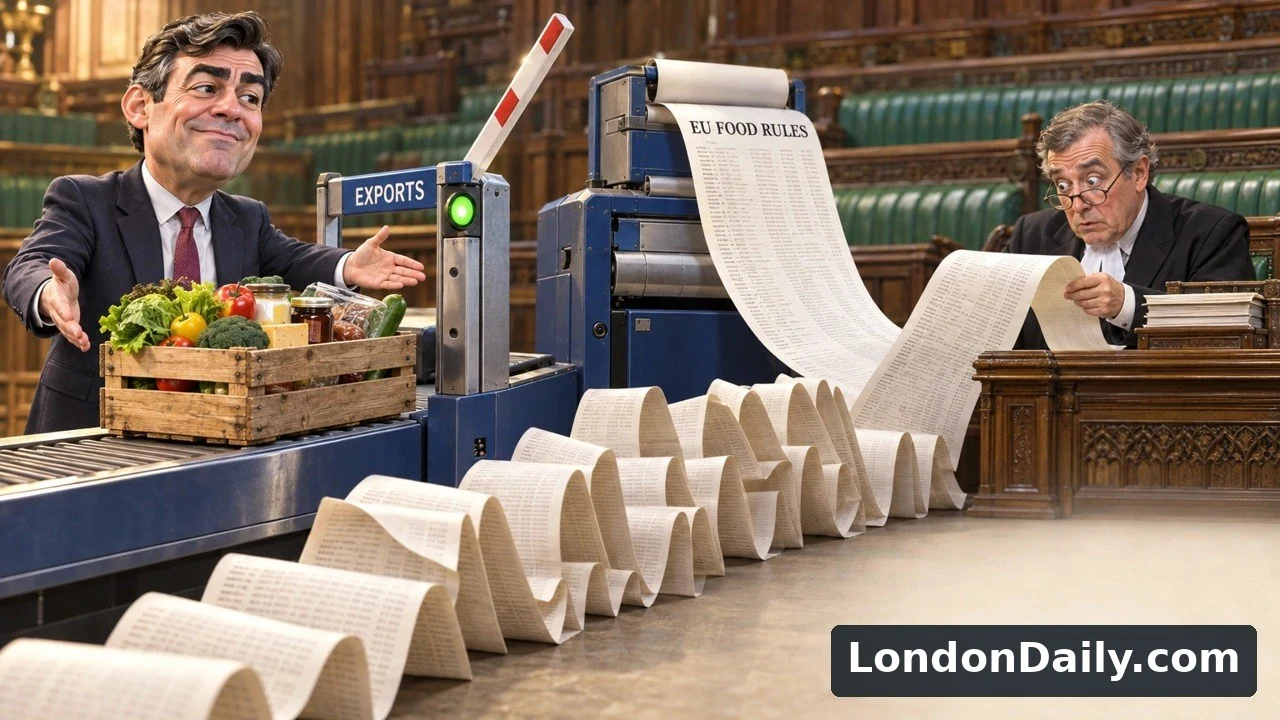
Andy Burnham has agreed to align Britain with changing European Union food rules to ease export checks, prompting criticism that his UK–EU agreement sacrifices parliamentary control for limited economic gains.
The package covers food and drink, the EU carbon market and youth mobility. Burnham called it a “landmark deal” and said it would add 0.5 per cent to GDP by 2040. That is a projection, not a benefit already secured.
The central dispute concerns “dynamic alignment”: following changes to Brussels rules in the sectors covered. A Lords committee has warned that this could generate at least 780 pieces of EU law a year for Parliament to approve. Critics argue that the obligations would reach food manufacturers that do not export to the EU, while threatening Britain’s approach to precision-bred crops. Their objection is that easier market access comes at the expense of freedom to regulate differently.
Youth mobility provides a more direct reciprocal benefit. Up to 100,000 young EU citizens would be allowed to live and work in Britain for up to three years, with the same number of Britons permitted into the EU. “This deal is for you,” Burnham said of young people. Opponents question whether additional competition for jobs would help youth unemployment; reciprocal access alone does not establish its eventual employment effects.
Critics also portray the agreement as an attempt to recover pro-EU voters from the Greens and Liberal Democrats and divert attention from domestic policy. They accuse Burnham of failing to tackle taxation, welfare spending and debt or adequately fund defence. Those are political judgements, not evidence establishing his motive for the agreement.
The broader argument concerns possible EU membership. Brexiteer Sir Bernard Jenkin describes the bloc as declining, citing a fall in its current single-market countries’ share of global GDP from around 30 per cent when Britain joined the trading area to almost half that level. He says British goods exports to the EU account for under 6 per cent of UK GDP. Neither measure, by itself, establishes the agreement’s net economic effect.
Last-minute EU demands over European students’ tuition fees threatened the negotiations. European Council president Antonio Costa also warned that Britain could not choose its membership terms selectively.
The Stay Out campaign, run by Vote Leave veterans, claims current EU rules would require gross British contributions of £39 billion annually, or £750 million weekly. Critics additionally warn about the euro, immigration and losing a Thatcher-style rebate. These concern hypothetical accession terms, not obligations established by this agreement: closer sectoral alignment and renewed membership remain distinct decisions.








Join the conversation