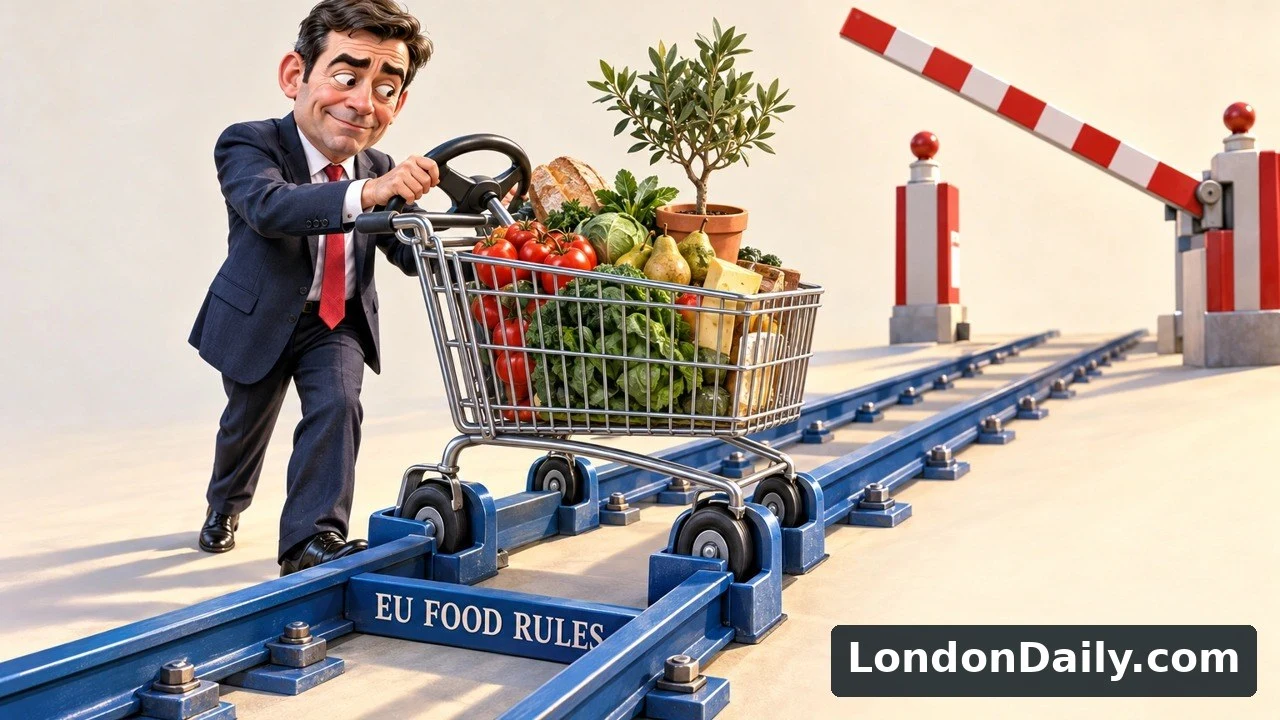
Prime Minister Andy Burnham has agreed a package with the European Union that would align Britain with EU food and plant rules to remove trade checks, alongside reciprocal youth work opportunities and closer co-operation on emissions trading and Channel crossings.
Announced at Friday’s summit in Brussels, the agreement exchanges greater regulatory alignment for easier trade. Ministers predict substantial economic gains; opposition parties argue that Britain is surrendering control over rules it cannot determine.
From March 2028, Britain would align with EU sanitary and phytosanitary standards governing goods including food and plants. The Government says removing certificates and border checks could add up to £5.1 billion annually to the economy. Burnham said the agreement offered a prospect of lower weekly shopping bills, rather than a guaranteed reduction.
Linking emissions trading systems would protect British exporters from an EU carbon tax, with officials claiming a potential £3.8 billion annual economic boost. These figures are forecasts, not benefits already realised.
The youth experience scheme could allow 100,000 young Europeans to work temporarily in Britain, with reciprocal opportunities for Britons on the continent. Burnham said Brexit had restricted young people’s opportunities. European Commission president Ursula von der Leyen called the agreement a “turning point” and described young participants as “the best ambassadors for our friendship”.
Britain will also participate in the EU’s action plan against illegal small boat crossings in the English Channel. Burnham said this would help address legitimate concerns about illegal immigration, calling it a “very significant step forward”.
Reform UK leader Nigel Farage acknowledged that agricultural alignment would make exporting “a little bit easier”, but argued that good trading relations did not require political union. Accusing Burnham of “betrayal”, he said the deal breached Labour’s commitment not to rejoin the single market and moved Britain incrementally towards renewed membership.
Conservative shadow environment secretary Victoria Atkins argued that farmers would face rules over which Britain had “no say, no vote, and no veto”, benefiting subsidised foreign competitors at taxpayers’ expense.
Burnham plans a national conversation about future EU relations, potentially including rejoining. A nearer dispute concerns university fees: EU states want their students charged the domestic undergraduate rate of £9,970 rather than up to £38,000 annually. Britain has resisted because of the financial impact on universities.
Negotiators have six months to resolve that issue. Brussels officials indicated that implementation could be affected without agreement; Britain insists the package is concluded, with commencement dates to appear in a joint statement and no tuition-fee condition attached.








Join the conversation