

Britons could be barred from EU entry on 1 January
Unrestricted travel to countries within the bloc will no longer automatically apply to UK residents from then.
This means entry into the EU would then be based on essential travel only.
Currently only countries with low coronavirus infection rates qualify for non-essential travel.
There are only eight countries with low Covid rates that are on the approved list for free travel and there are currently no plans to add the UK to that list.
Foreign Secretary Dominic Raab told the BBC's Today programme that Covid restrictions would depend on what the EU and its member states decide.
He added that "restrictions on travel, inevitably, is going to be something that's kept under review".
With talks about a trade deal between the UK and the EU still continuing, there is a possibility this could change.
Alternatively, individual member state countries could decide to override the EU rules and create a corridor with the UK.
'Cool heads'
At the moment, the UK is considered to have the same status by the EU as countries such as Norway and Switzerland, which are members of the European Free Trade Association, travel expert Simon Calder told the BBC.
Mr Calder said that many regions dependent on tourism, such as the Canary Islands, may well make an exemption for British tourists, "but there's no obligation to at the moment".
Paul Charles, chief executive of travel consultancy the PC Agency, agreed, saying: "Cool heads need to prevail at this politically difficult time as travel and tourism is such a key contributor to economic growth in Europe.
"I'm sure that individual countries who need UK tourism will be sensible and override any EU-bloc decision which prevents entry. It is so important now for countries to work together globally to create a consistent approach."
A spokesperson for airline EasyJet said: "There is no EU blanket law which requires individual states to limit entry from those arriving from outside the EU and so just as they do today, we expect individual European countries to continue to apply their own rules."
British Airways declined to comment.
Analysis:
By Simon Browning, BBC business reporter
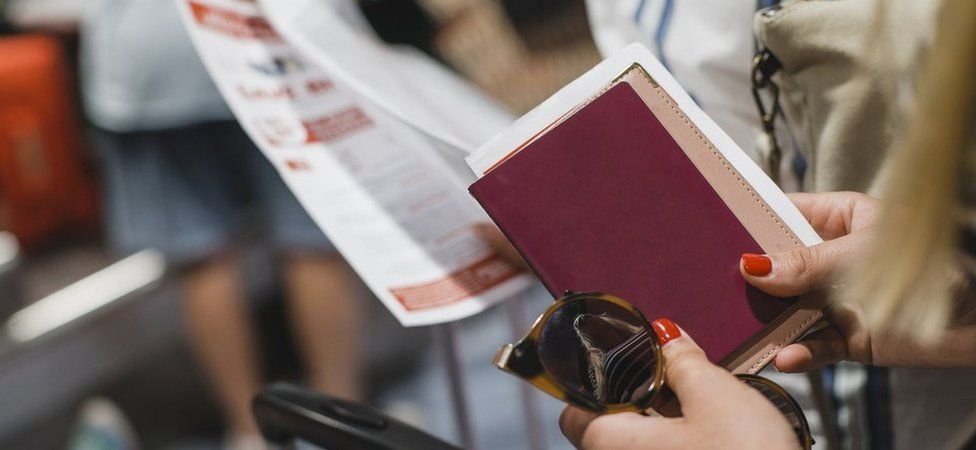
It might come as a big surprise that UK travellers could be barred from entering the EU after 31 December. Remember - Europe is our top holiday destination with more of us going to Spain than any other country.
But with infection rates still rising, countries have to do what they can to protect themselves and now we're out of the EU, we have to follow new rules.
Travel corridors, set up in the summer to help travellers bypass quarantine with countries with low infection rates, could come back.
They've operated between individual EU countries like Spain, France and Italy before, and could return so individual countries can welcome lucrative UK holidaymakers to spend their pounds in hotels, bars and restaurants.
But for now, yes, we could be barred. However, this scenario could also be negotiated away as part of the talks that go on until Sunday.
'Hugely important'
A spokesman for ABTA, the travel industry trade body, said: "The EU has sought to adopt a common approach to travel restrictions, but this is only a recommendation and individual countries are able to implement their own measures, including options like travel corridors and testing."
"It is too early to say what restrictions might be in place on 1 January given the uncertain nature of the pandemic, but we know that UK travellers are hugely important to a number of EU destinations, including some winter sun favourites like the Canary Islands and Madeira."
A spokesman for Airlines UK said: "We expect EU member states that gain enormously from the tourism and air travel from the UK, and the billions of pounds it generates, to continue to apply their own rules, in order to provide certainty to consumers and families looking to travel to the EU from January onwards."
Norway, which is part of the EU travel arrangement, said British citizens who do not live in the country will be barred from entering the country from 1 January, the Financial Times newspaper reported.