Britain could not return to the EU’s single market while rejecting free movement of people, Michel Barnier has warned, setting out the conditions he believes would govern deeper integration ahead of an EU–UK summit in Brussels.
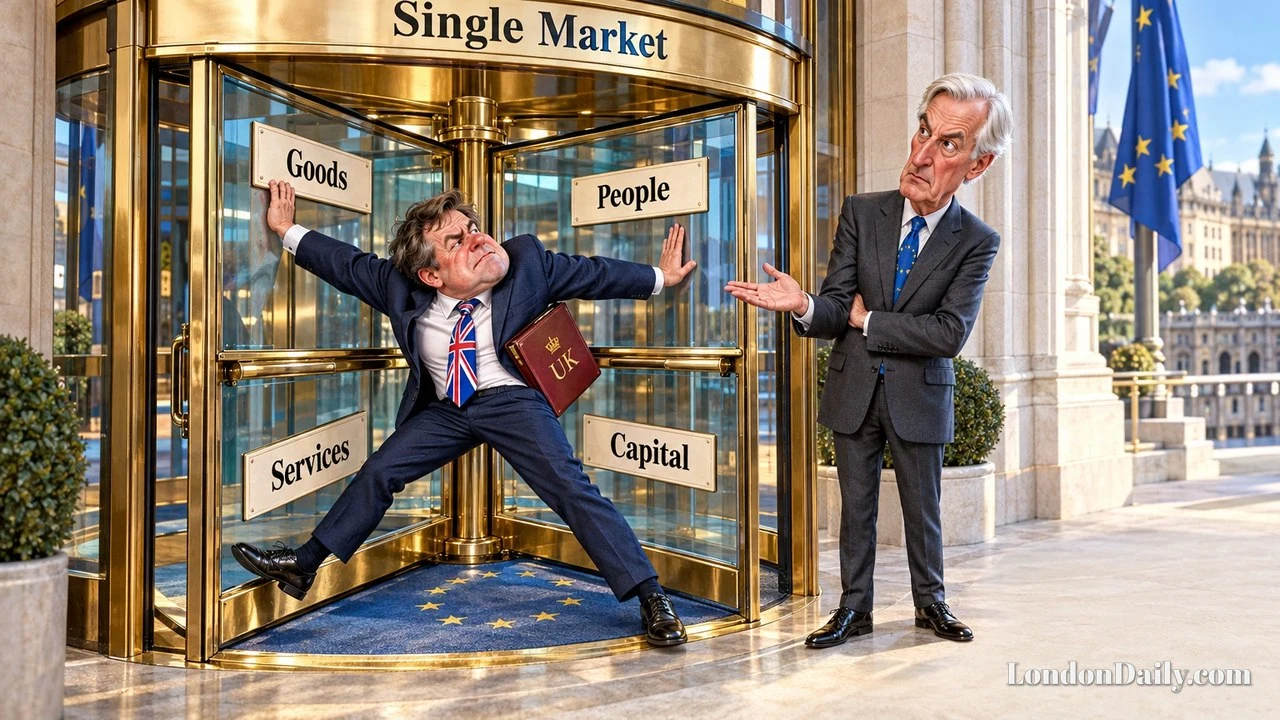
The former EU chief Brexit negotiator said member states would not allow Britain to select only the arrangements it wanted. Single market membership would require acceptance of all four freedoms: the movement of goods, services, capital and people.
“There will be no possibility to have one freedom and not the other. The four freedoms are clearly the four conditions to be inside a single market,” he said.
Barnier, who led the EU’s Brexit negotiations between 2016 and 2021 and briefly served as French prime minister in 2024, also said the “door is open” for Britain to rejoin the bloc.
The summit on 20 November has a more limited agenda than membership. Talks will focus on reducing post-Brexit barriers affecting food and farming, closer co-operation on emissions trading, and arrangements allowing young people to work, live and study more easily in Britain and the EU.
That distinction matters: negotiations over specific barriers are not the same as seeking full single market membership. Barnier’s warning concerns the rules Britain would have to accept if it pursued that deeper relationship; the summit’s outcome remains unresolved.
The Prime Minister has suggested that options including rejoining the EU could be put to the public in future, while ruling out major changes before an election.
A separate warning concerns the financial terms of any return. Former Irish premier Leo Varadkar said Britain would be unlikely to regain its historical £5bn annual budget rebate, negotiated by Margaret Thatcher in the 1980s.
Varadkar, who helped secure the 2019 Brexit agreement with Boris Johnson, argued that contributions followed a formula based on gross domestic product and other direct elements, making a renewed discount difficult to justify.
His assessment is not an agreed condition of readmission. It nevertheless identifies a separate unresolved issue: whether any future return would offer Britain the terms it previously enjoyed.








Join the conversation