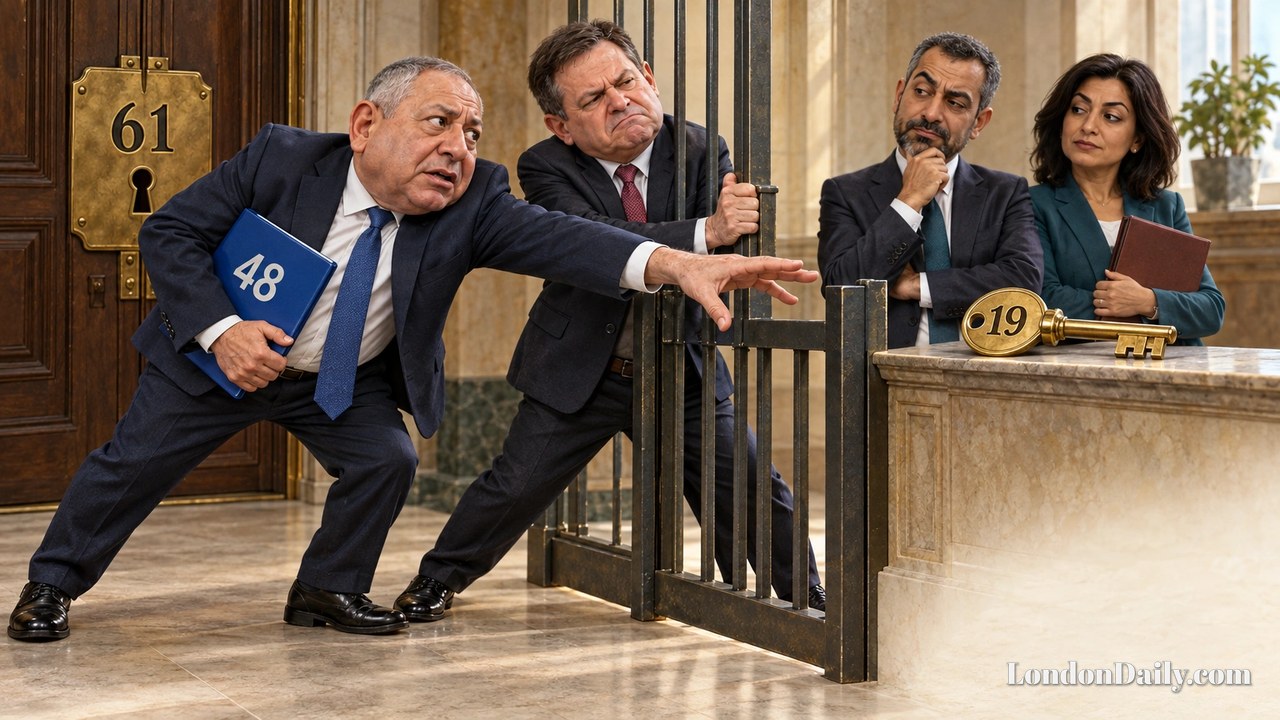
Israel’s Arab parties could determine whether Benjamin Netanyahu remains in power after an election left both main Jewish blocs short of a majority. An Arab-rights advocate expects them to recommend former army chief Gadi Eisenkot as prime minister, but agreement on a government remains uncertain.
Friday’s count gave Netanyahu’s bloc 53 seats, Eisenkot’s opposition bloc 48, and the Joint List and Ra’am 19 between them. A majority requires 61 seats in the 120-member Knesset.
Jafar Farah, director of the Mossawa Centre, expects both Arab parties to recommend Eisenkot to President Isaac Herzog, although Balad’s three representatives might withhold support. This is his assessment, not a confirmed joint decision. Ra’am has indicated willingness to join the opposition; Joint List leader Yousef Jabareen has expressed readiness to help remove Netanyahu.
Eisenkot says he would represent all Israelis. His conditions for cooperation include recognising Israel as Jewish, democratic, liberal and committed to equality; upholding its Declaration of Independence; military, national or civilian service for all citizens; and recognising Hamas as a terrorist organisation whose military capabilities and governing power in Gaza must be destroyed.
Farah argues that these conditions are designed to embarrass Arab parties, noting existing legal requirements concerning Israel’s Jewish character, its declaration and support for Hamas. He wants negotiations on equality and practical provision for civilian service, saying Arab organisations receive only 2 per cent of the relevant subsidies. Several opposition figures oppose governing with Arab parties, and Farah doubts a coalition can be secured.
Among more than a dozen Arab-Israeli voters interviewed in Haifa and Acre on Friday, all favoured cooperation with the Jewish opposition. Most described daily discrimination, prioritising violent crime, infrastructure and building rights. These interviews do not establish wider opinion.
Rami, a 38-year-old medical engineer who voted for Naftali Bennett, criticised both Arab parties’ reluctance to support the Israeli left and the right’s refusal to engage them. Mohammed, a 42-year-old boat skipper who abstained, argued that elections could not overcome discrimination, despite favouring cooperation.
Standing Together, a Jewish-Arab grassroots movement, announced Saturday-night rallies in five cities demanding a partnership government. Netanyahu and Likud, meanwhile, have portrayed Arab parties as anti-Israeli radicals and alleged widespread electoral fraud. The Central Elections Committee has so far rejected those allegations.
Other possibilities include a Jewish national-unity government, opposition defections to Netanyahu or another election. Opposition parties campaigned on removing him, complicating any agreement. Farah suggested an opposition minority government with informal Arab support might last until Netanyahu’s corruption trial ends, perhaps in spring; his further scenario of a Jewish national government depended on a possible conviction in 2027. Neither outcome is established.








Join the conversation