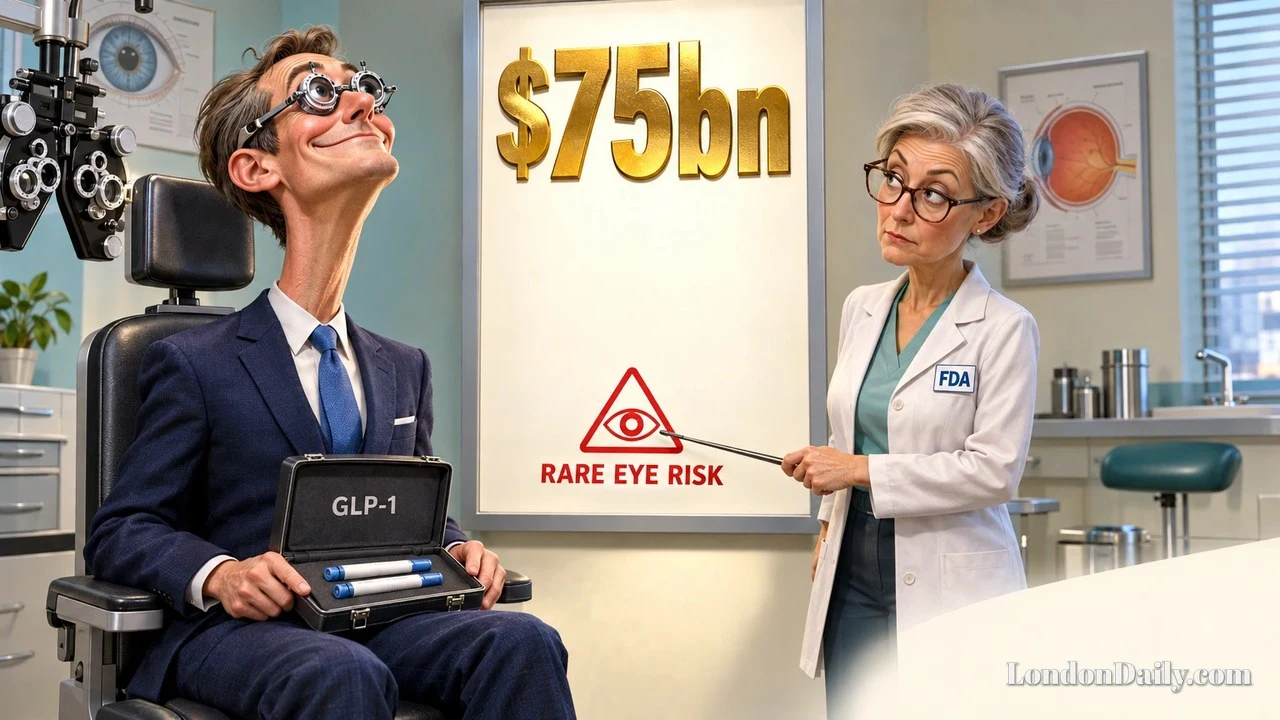
The US Food and Drug Administration says blockbuster diabetes and weight-loss drugs may increase the risk of a rare eye condition that can cause permanent vision loss. It now wants drug makers to add a warning to their medicine labels.
The concern comes as millions of people have begun taking these medicines over the past few years. What exactly do the latest findings say? How have the manufacturers responded? And what does it mean for people taking the jab?
Ozempic, Wegovy, Mounjaro, Zepbound: these names are hard to miss these days. They are all GLP-1 drugs. Some people take them to manage diabetes; others use them to lose weight. Together, they have become a massive global business.
In the US alone, around one in nine adults say they use GLP-1 drugs for weight loss. Globally, sales of these medicines crossed $75 billion in 2025. But behind this booming business is a growing safety concern.
So what exactly is this eye condition?
It is called NAION. Think of it as a stroke affecting the nerve at the back of your eye. This nerve carries what you see to your brain and needs a steady supply of blood to do its job.
With this condition, that blood supply suddenly drops, and your vision can suffer. It usually affects one eye, but the concerning part is that the damage can be permanent. There is no proven treatment that can reliably restore the lost vision.
Why are these medicines being linked to the condition?
It began with a study in 2024. Researchers found that people with diabetes who were prescribed one of these medicines were four times as likely to develop the eye condition. That raised a red flag.
The FDA investigated and found reports of the condition among people taking different GLP-1 drugs.
How risky is it? The FDA examined 126 clinical trials involving more than 130,000 people. It found around six cases for every 100,000 patients.
The risk, then, is very low. But because the consequences are serious, the FDA wants people to be warned.
What do the manufacturers say?
Novo Nordisk says current research has not established a direct link between its drugs and the eye condition. Another manufacturer, Eli Lilly, says it is reviewing the FDA’s warning and will respond to the agency.
Who needs to be extra careful? People with diabetes or high blood pressure; those with sleep apnoea, kidney disease or anaemia; and smokers. These are all known risk factors for the condition.
If you are taking one of these medicines, there is one thing you should watch out for: a sudden change in your eyesight. If you suddenly cannot see properly through one eye, or notice blurred vision or dark spots, do not ignore it. Get medical help immediately.
Millions of people are using these medicines, and billions of dollars are being made from them. But the bigger the business gets, the more important it is for people to know what they are signing up for.








Join the conversation