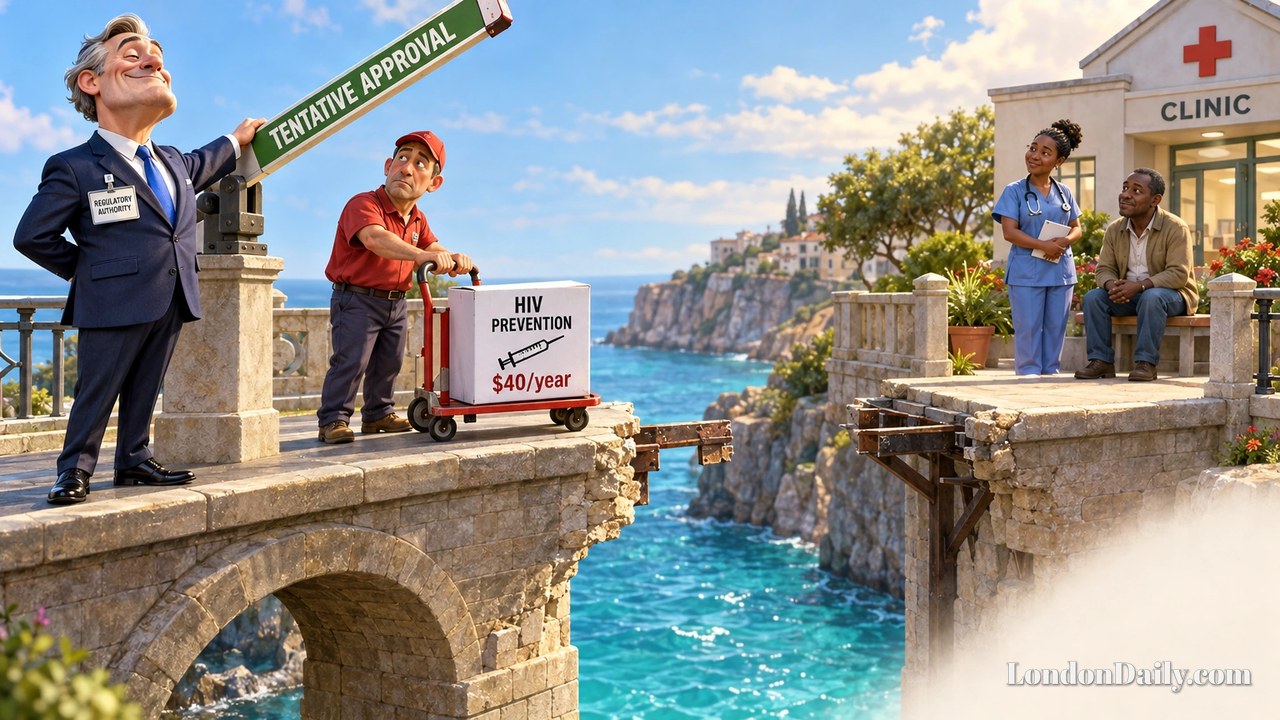
A twice-yearly injection offering near-complete protection against HIV has moved closer to reaching 120 low- and middle-income countries at $40 per person annually, after US regulators granted tentative approval to a generic version of lenacapavir.
Developed by India’s Dr. Reddy’s, the generic cannot be sold in the United States while Gilead’s original remains patent-protected. Gilead’s Yeztugo has a US annual list price of $28,218 before insurance contributions. The company says that is comparable with some other preventive treatments.
Tentative approval means the generic meets the Food and Drug Administration’s safety, efficacy and quality requirements, but patent protection prevents US marketing. International purchasers and some national regulators can rely on that assessment, potentially accelerating procurement and local approval.
The $40 price, announced in September 2025, matches the cost of daily HIV-prevention tablets in the eligible countries. The agreement was brokered by the Clinton Health Access Initiative, South Africa’s Wits RHI and Unitaid.
Two large studies involving people at high risk recorded almost no new infections among injection recipients. Unlike daily tablets, whose protection depends on consistent use, lenacapavir requires dosing only twice a year.
Testing remains essential: patients must be checked for HIV before starting and before every injection. Resistant strains were identified in people who received the drug while unknowingly carrying HIV. Common side-effects include injection-site reactions, headaches and nausea.
Gilead received US approval for HIV prevention in June 2025. Demand in poorer countries has since exceeded supply, although Unitaid says more than 125,000 people across 10 African countries had begun receiving its injection before the generic’s approval.
In late 2024, before that prevention approval, Gilead granted six manufacturers royalty-free licences covering 120 countries across sub-Saharan Africa, Asia and Latin America. The arrangement continues roughly two decades of voluntary HIV-drug licensing. Campaigners nevertheless criticised its geographical exclusions, including countries where trials took place. Dr. Reddy’s is the first licensee to secure tentative FDA approval.
Project partners expect deliveries to some locations within weeks, with initial shipments to several low-income countries by year’s end; Zambia could be among the first. Countries requiring local approval may take longer. Dr. Reddy’s expects a broader launch in eligible countries in 2027.
Unitaid’s Carmen Pérez Casas says access has followed the original medicine in just over a year, rather than the decade or more poorer countries have often waited. But approval is not delivery: Clinton Health Access Initiative HIV programme head Caroline Amole says funding and distribution must now follow if affordable prevention is to reach the 20 million people worldwide she says need it.








Join the conversation