0:00
0:00
Inside the Greenland Annexation Scare: How a NATO Ally Dispute Turned Into a Global Stress Test
A rapid escalation—from force talk and tariff threats to a sudden Davos climbdown—exposed how fragile transatlantic trust becomes under coercive bargaining.
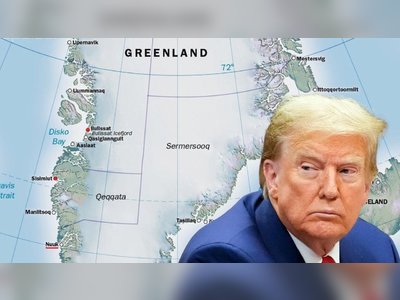
A sharp transatlantic crisis erupted after the U.S., under the second Trump administration, repeatedly pressed for Greenland—an autonomous territory of Denmark—culminating in early January 2026 with rhetoric that included refusing to rule out military force and threatening broad tariffs on European goods.
Denmark and Greenland publicly rejected any takeover, European leaders rallied around sovereignty and territorial integrity, and the episode quickly became a credibility test for NATO’s internal logic: what happens when the leading security guarantor appears to threaten a fellow member’s realm.
The confrontation spilled into defense posture, trade signaling, and public opinion, with reports of intensified influence operations and heightened alerting in Greenlandic society.
Then, on 21 January 2026 at Davos, Trump reversed course—pledging no military force and dropping tariff threats—framing it as a “framework” conversation around Arctic security and cooperation, while Danish and Greenlandic leaders emphasized that sovereignty is not negotiable and that no deal altering status had been reached.
The net effect was less a “resolution” than a revealing stress test: coercion can move headlines fast, but alliances run on trust, legal commitments, and the consent of the people who actually live on the territory.
Denmark and Greenland publicly rejected any takeover, European leaders rallied around sovereignty and territorial integrity, and the episode quickly became a credibility test for NATO’s internal logic: what happens when the leading security guarantor appears to threaten a fellow member’s realm.
The confrontation spilled into defense posture, trade signaling, and public opinion, with reports of intensified influence operations and heightened alerting in Greenlandic society.
Then, on 21 January 2026 at Davos, Trump reversed course—pledging no military force and dropping tariff threats—framing it as a “framework” conversation around Arctic security and cooperation, while Danish and Greenlandic leaders emphasized that sovereignty is not negotiable and that no deal altering status had been reached.
The net effect was less a “resolution” than a revealing stress test: coercion can move headlines fast, but alliances run on trust, legal commitments, and the consent of the people who actually live on the territory.