0:00
0:00
Buying an Ally’s Territory: Strategic Genius or Geopolitical Breakdown?
Trump’s Greenland obsession ignites a ferocious clash between raw power politics and the survival of the Western alliance system.
What began as an eyebrow-raising remark has hardened into one of the most destabilizing geopolitical confrontations in years.
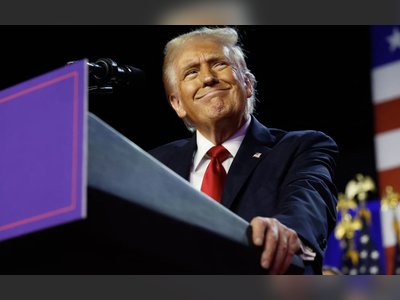
President Donald Trump’s insistence that the United States must acquire Greenland—by pressure, leverage, or outright coercion—has pushed a frozen island into the center of global politics.
Publicly framed as a matter of national security, the push is entangled with rare minerals, Arctic shipping lanes, and the accelerating rivalry with China and Russia.
Privately, it has exposed something deeper: a collision between transactional power politics and the fragile architecture of alliances that has underpinned Western stability for decades.
Greenland’s strategic value is undeniable.
It sits astride critical Arctic routes, hosts early-warning military systems, and overlays vast but difficult-to-extract mineral reserves essential to modern technology.
As climate change melts ice and opens new passages, the island’s importance will only grow.
The United States already operates a major base there under existing agreements, yet Trump argues that anything short of full ownership leaves America vulnerable.
Europe sees the matter very differently.
For NATO allies, the suggestion that Washington might coerce a partner state into surrendering territory crosses a line that threatens the alliance itself.
Greenland’s own leaders insist the island is not for sale and warn that even economic pressure could destabilize daily life for a population of just 57,000 people.
The dispute has escalated into tariff threats, diplomatic humiliation, and open speculation about whether military force could ever be ruled out.
At stake is more than one island.
The Greenland controversy asks whether the future of global order will be governed by contracts and consent, or by leverage and intimidation.
It forces allies and adversaries alike to reconsider whether power today is best exercised quietly through systems—or loudly through spectacle.
President Donald Trump’s insistence that the United States must acquire Greenland—by pressure, leverage, or outright coercion—has pushed a frozen island into the center of global politics.
Publicly framed as a matter of national security, the push is entangled with rare minerals, Arctic shipping lanes, and the accelerating rivalry with China and Russia.
Privately, it has exposed something deeper: a collision between transactional power politics and the fragile architecture of alliances that has underpinned Western stability for decades.
Greenland’s strategic value is undeniable.
It sits astride critical Arctic routes, hosts early-warning military systems, and overlays vast but difficult-to-extract mineral reserves essential to modern technology.
As climate change melts ice and opens new passages, the island’s importance will only grow.
The United States already operates a major base there under existing agreements, yet Trump argues that anything short of full ownership leaves America vulnerable.
Europe sees the matter very differently.
For NATO allies, the suggestion that Washington might coerce a partner state into surrendering territory crosses a line that threatens the alliance itself.
Greenland’s own leaders insist the island is not for sale and warn that even economic pressure could destabilize daily life for a population of just 57,000 people.
The dispute has escalated into tariff threats, diplomatic humiliation, and open speculation about whether military force could ever be ruled out.
At stake is more than one island.
The Greenland controversy asks whether the future of global order will be governed by contracts and consent, or by leverage and intimidation.
It forces allies and adversaries alike to reconsider whether power today is best exercised quietly through systems—or loudly through spectacle.