London Daily

Focus on the big picture.
Thursday, Apr 30, 2026

World military spending hits all-time high, tops $2 trillion

World military spending hits all-time high, tops $2 trillion

The US, China, India, UK and Russia were the top five defence spenders, according to new data by defence think tank SIPRI.

The global military expenditure has reached an all-time high, passing $2 trillion in 2021, according to a report by a leading defence think-tank based in Sweden, as spending increased for the seventh consecutive year.

The United States, China, India, the United Kingdom and Russia were the top five defence spenders, together accounting for 62 percent of the global expenditure, according to new data published on Monday by the Stockholm International Peace Research Institute (SIPRI).

“In 2021 military spending rose for the seventh consecutive time to reach $2.1 trillion. That is the highest figure we have ever had,” Diego Lopes da Silva, senior researcher at SIPRI, told AFP news agency.

Despite the economic fallout of the global COVID pandemic, countries around the world increased their arsenals, with global military spending rising by 0.7 percent last year, according to SIPRI.

Russia, which invaded Ukraine on February 24, saw its spending grow by 2.9 percent – the third year of consecutive growth – to $65.9bn.
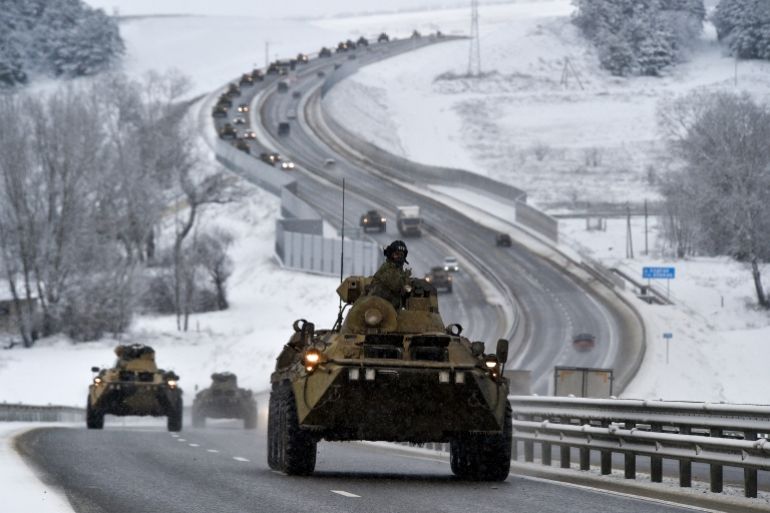
Russia, which invaded Ukraine on February 24, saw its spending grow by 2.9 percent


Defence spending accounted for 4.1 percent of Russia’s gross domestic product (GDP), “much higher than the world average”, and made Moscow the fifth largest spender in the world, Lopes da Silva said.

In 2014, when Russia annexed Crimea, the country was also targeted with sanctions at the same time as energy prices fell, making it difficult to gauge how effective sanctions were on their own.

On the other side, Ukraine’s military spending has risen by 72 percent since the annexation of Crimea. While spending declined by more than eight percent in 2021 to $5.9bn, it still accounted for 3.2 percent of Ukraine’s GDP.

NATO countries step up spending


As tensions have increased in Europe, more NATO countries have stepped up spending.

Eight member countries last year reached the targeted two percent of GDP for spending, one fewer than the year before but up from only two in 2014, SIPRI said.

Lopes da Silva said he expected spending in Europe to continue to grow.

The US, which far outspent any other nation with $801bn, actually went against the global trend and decreased its spending by 1.4 percent in 2021.


Over the past decade, US spending on research and development has risen by 24 percent while arms procurement has gone down by 6.4 percent.

While both decreased in 2021, the drop in research was not as pronounced, highlighting the country’s focus “on next-generation technologies”.

“The US government has repeatedly stressed the need to preserve the US military’s technological edge over strategic competitors,” Alexandra Marksteiner, another researcher at SIPRI, said in a statement.

China, the world’s second largest military spender at an estimated $293bn, boosted its expenditure by 4.7 percent, marking the 27th straight year of increased spending.

The country’s military buildup has in turn caused its regional neighbours to beef up their military budgets, with Japan adding $7bn, an increase of 7.3 percent – the highest annual increase since 1972.

Australia also spent four percent more on its military, reaching $31.8bn in 2021.

India, the world’s third largest spender at $76.6bn, also increased funding in 2021, but by a more modest 0.9 percent.

The UK took the number four spot, with a three percent increase in military spending to $68.4bn, replacing Saudi Arabia which instead decreased spending by 17 percent to an estimated $55.6bn.


Newsletter

Related Articles

0:00
0:00
Close
The Met Gala Meets the Age of Billionaire Backlash
Russian Oligarch’s Superyacht Crosses Hormuz via Iran-Controlled Route
Gunfire Disrupts White House Correspondents’ Dinner as Trump Is Evacuated
A Leak, a King, and a Fracturing Alliance
Inside the Gates Foundation Turmoil: Layoffs, Scrutiny, and the Cost of Reputational Risk
UK Biobank Breach Exposes Health Data of 500,000, Listed for Sale on Chinese Platform
KPMG Cuts Around 10% of US Audit Partners After Failed Exit Push
French Police Probe Suspected Weather-Data Tampering After Unusual Polymarket Bets on Paris Temperatures
CATL Unveils Revolutionary EV Battery Tech: 1000 km Range and 7-Minute Charging Ahead of Beijing Auto Show
Crypto Scammers Capitalize on Maritime Chaos Near the Strait of Hormuz: A Rising Threat to Shipping Companies
Changi Airport: How Singapore Engineered the World’s Most Efficient Travel Experience
Power Dynamics: Apple’s Leadership Shakeup, Geopolitical Risks in the Strait of Hormuz, and Europe's Energy Strategy Amidst Global Challenges
Apple's Leadership Transition: Can New CEO John Ternus Navigate AI Challenges and Geopolitical Pressures?
Italy’s €100K Tax Gambit: Europe’s Soft Power Tax Haven
News Roundup
Microsoft lost 2.5 millions users (French government) to Linux
Privacy Problems in Microsoft Windows OS
News roundup
Péter András Magyar and the Strategic Reset of Hungary
Hungary After the Landslide — A Strategic Reset in Europe
Meghan Markle Plans Exclusive Women-Focused Retreat During Australia Visit
Starmer and Trump Hold Strategic Talks on Securing Strait of Hormuz Amid Rising Tensions
Unofficial Australia Visit by Prince Harry and Meghan Expected to Stir Tensions with Royal Circles
Pipeline Attack Cuts Significant Share of Saudi Arabia’s Oil Export Capacity
UK Stocks Rise on Ceasefire Momentum and Renewed Focus on Diplomacy
UK to Hold Further Strategic Talks on Strait of Hormuz Security
Starmer Voices Frustration as Global Tensions Drive Up UK Energy Costs
UK Students Voice Concern Over Proposal for Automatic Military Draft Registration
Rising Volatility Drives Uncertainty in UK Fuel and Petrol Prices
UK Moves to Deploy ‘Skyhammer’ Anti-Drone System to Strengthen Airspace Defense
New Analysis Explores UK Budget Mechanics in ‘Behind the Blue’ Feature
Man Arrested After Four Die in Channel Crossing Tragedy
UK Tightens Immigration Framework with New Sponsor Rules and Fee Increases
UK Foreign Secretary Highlights Impact of Intensified Strikes in Lebanon
UK Urges Inclusion of Lebanon in US-Iran Ceasefire Framework
UK Stocks Ease as Ceasefire Doubts in Middle East Weigh on Investor Confidence
UK Reassesses Cloud Strategy Amid Criticism Over Limited Support Measures
UK Calls for Full and Toll-Free Access Through Strait of Hormuz Amid Rising Tensions
Starmer Signals Strategic Shift for Britain Amid Escalating Iran-Linked Tensions
UK Issues Firm Warning to Russia Over Covert Underwater Military Activity
OpenAI Halts Stargate UK Project, Casting Uncertainty Over Britain’s AI Expansion Plans
Starmer Voices Frustration Over Global Pressures Driving UK Energy Costs Higher
UK Deploys Military Assets to Protect Undersea Cables From Suspected Russian Threat
Canada Aligns With US, UK and Australia as Europe Prepares Major Digital Border Overhaul
Meghan Markle’s Planned Australia Appearance Sparks Fresh Speculation
Starmer Warns Sustained Effort Needed to Ensure US–Iran Ceasefire Holds
UK to Partner with Shipping Industry to Rebuild Confidence in Strait of Hormuz, Cooper Says
UK Interest Rate Expectations Ease Following US–Iran Ceasefire Agreement
Starmer Signals Major Effort Needed to Fully Reopen Strait of Hormuz During Gulf Visit
UK Fuel Prices Face Ongoing Volatility Amid Global Pressures and Domestic Factors
×