London Daily

Focus on the big picture.
Thursday, Jul 23, 2026

World Bank warns global economy faces grim outlook

World Bank warns global economy faces grim outlook

The bank predicts a "pronounced slowdown", with global economic growth falling to 4.1% this year

The global economy faces a "grim outlook", World Bank president David Malpass has warned, as the aftershocks of the pandemic continue to weigh on growth - especially in poor countries.

His organisation's latest forecast predicts global growth will slow to 4.1% this year from 5.5% in 2021.

It attributed the slowdown to virus threats, government aid unwinding and an initial rebound in demand fading.

But Mr Malpass said his greatest worry was widening global inequality.

"The big drag is the inequality that's built into the system," he told the BBC, noting that poorer countries were especially vulnerable to economic damage from efforts to fight inflation.

"The outlook for the weaker countries is still to fall further and further behind. That causes insecurity."

By 2023, economic activity in all advanced economies, such as the US, Euro area and Japan, is likely to have recovered from the hit it took during the pandemic, the bank said.

But output in developing and emerging countries is expected to remain 4% lower than it was before Covid struck.


Mr Malpass blamed stimulus programmes in the richest countries for worsening the divide by driving global inflation. While officials in many countries, including the US, are now expected to raise interest rates to try to rein in price increases, Mr Malpass warned higher borrowing costs could hurt economic activity - especially in weaker economies.

"The problem with rate hikes is it hurts people that need floating rate money... and that's usually new businesses, women-owned businesses, developing country businesses," Mr Malpass said.

Separately, the World Economic Forum (WEF) warned that divergent economic recoveries were making it harder to collaborate on global challenges such as climate change.

"Widening disparities within and between countries will not only make it more difficult to control Covid-19 and its variants, but will also risk stalling, if not reversing, joint action against shared threats that the world cannot afford to overlook," the WEF said in its annual global risks report on Tuesday.

The World Bank's Global Economic Prospects report said that in 2021 the world's economy bounced back from the pandemic with the strongest post-recession expansion in 80 years.

But the gains are expected to slow this year, as virus variants and rapidly rising prices for items such as food and energy weigh on households. Globally, inflation is at its highest rate since 2008, the report says.

The bank, which lends to countries around the world, also warned that supply chain bottlenecks and the unwinding of stimulus programmes posed risks.

The slowdown in the second half of 2021 was already larger than the bank had expected in its June forecast due to the spread of the Omicron and Delta Covid variants. It expects a "pronounced slowdown" this year, and predicts global growth will decelerate further in 2023, to 3.2%.

"The reality is that Covid and the shutdowns are still taking a huge toll and that's especially true on people in poorer countries," Mr Malpass said. "Just a grim outlook."
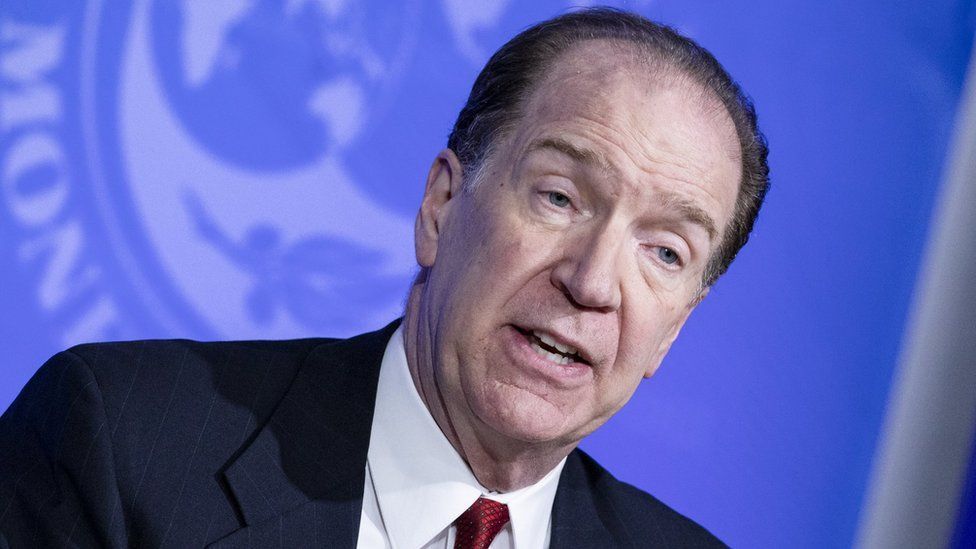
David Malpass warned rate rises could hit growth in weaker economies


Driving the global slowdown are China, where the rate of growth is expected to drop to 5.1% from 8% last year, and the US, which is forecast to expand by 3.7% this year compared with 5.6% in 2021. In the eurozone, expansion will slow to 4.2% this year from 5.2%, the bank predicts.

India presents a bright spot, with the growth rate expected to rise from 8.3% to 8.7% this year.

But many emerging markets continue to struggle with additional challenges, such as lower vaccination rates.

In Latin America and the Caribbean, for instance, growth is expected to slow to 2.6% in 2022, from 6.7% last year.

Newsletter

Related Articles

0:00
0:00
Close
UK Government Reviews Long-Term Balance Between Cost Relief, Industry Support, and Public Investment Priorities
BBC Could Receive Permanent Royal Charter Under Government Proposal
Northern Ireland Proposes End to Severe Weather Exemptions for Electricity Compensation Rules
Andy Burnham Holds Talks With UK Devolved Leaders on Regional Cooperation and Devolution
House of Lords Launches Inquiry Into Risks Facing UK Democratic Institutions
ScottishPower Renewables Plans Major Rebuild of Whitelee Wind Farm With Fewer Larger Turbines
UK and Italy Leaders Discuss Global Combat Air Programme and Future European Cooperation
UK Government Announces Six Hundred Million Pound Aerospace Investment Package at Farnborough Airshow
European Union Approves UK Participation in Ninety Billion Euro Ukraine Support Loan Framework
Rolls-Royce Warns UK Government Over Jet Engine Funding Decision and Future Manufacturing Plans
UK Inflation Falls to Two Point Six Percent in June as Fuel and Food Prices Ease
Andy Burnham Begins Premiership With Two Pound England Bus Fare Cap and Electricity Tax Cut Plan
YouGov Poll Shows Tight Competition Among UK Political Parties
Space Technology Investment Expands Through UK-US Cooperation at Farnborough Airshow
UK Opens Final India Young Professionals Scheme Ballot for Three Thousand Applicants
United Kingdom Approved for Ukraine Financial Support Initiative With EU Partners
UK and Ireland Leaders Discuss Security, Energy and Regional Cooperation
British Heart Foundation Identifies Ten UK Areas With Severe Shortages of Defibrillators
Former Southern Water Executives Charged Over Alleged Water Test Manipulation Scheme
IMF Warns UK Economic Growth Will Slow to One Percent in 2026
UK Inflation Falls to Two Point Six Percent in June as Food and Energy Costs Ease
United Kingdom Joins European Union Loan Mechanism to Support Ukraine’s Defense Needs
Prime Minister Andy Burnham Introduces Two-Pound Bus Fare Cap and Energy Tax Relief Measures Across England
Northern Ireland Secures Additional Infrastructure Funding From UK Treasury
Wales Approves Port Investment Plans to Support Green Energy Supply Chains
UK Financial Regulator Simplifies Stock Market Rules to Attract More Listings
UK Reports Decline in Small Boat Crossings Across the English Channel
UK Government Creates Emergency Support Fund for Financially Pressured Universities
Scottish Government Launches Economic Strategy Focused on Innovation and Renewable Industries
UK Expands Sustainable Farming Incentives to Support Environmental Measures
UK Government Introduces New Neighbourhood Policing Standards Across England and Wales
UK Competition Regulator Opens Review of Artificial Intelligence Foundation Models
UK Deepens Indo-Pacific Security Cooperation After Talks With Singapore and Japan
UK Announces Rail Modernisation Plan for Northern England With New Infrastructure Funding
UK Government Updates Housing Planning Rules to Accelerate Residential Construction
UK Approves Major North Sea Offshore Wind Project to Support Clean Power Goals
UK Health Service Begins Major Digital Upgrade to Cut Hospital Waiting Times
Bank of England Holds Interest Rates Steady as UK Inflation Pressures Remain Persistent
UK Universities and Industry Expand Space and Defense Research Partnerships
House of Lords Approves Social Housing Bill Amendments on Shared Ownership Rights
House of Lords Advances Civil Aviation Bill With New Passenger Protection Measures
UK Government Suspends Tariffs on Fertilizer and Food Imports to Reduce Costs
Russell Group Universities Support New UK Business Department Focused on Innovation
UK Parliament Opens Inquiry Into Transport Barriers Facing Young Jobseekers
Home Builders Federation Calls for Lower Costs as New UK Government Sets Housing Priorities
Andy Burnham Meets UK Devolved Leaders to Strengthen Regional Cooperation
Andy Burnham Holds First International Calls With Trump, Macron, and Zelenskyy
Andy Burnham Reshuffles Cabinet With John Healey Appointed Chancellor of the Exchequer
Andy Burnham Government Removes VAT From Electricity Bills to Cut Household Costs
Andy Burnham Becomes United Kingdom Prime Minister After Sir Keir Starmer Resigns
×