London Daily

Focus on the big picture.
Friday, Apr 03, 2026

Windsor Framework's value to economy unlikely to be notable but may lift Brexit malaise

Windsor Framework's value to economy unlikely to be notable but may lift Brexit malaise

Sky's economics & data editor Ed Conway writes that while the Northern Ireland Protocol's replacement could lift sentiment, the impact - on paper at least - is likely to be small.

How much of a difference might the Windsor Framework make to the UK economy?

The answer, as with so many other economic questions, rather depends on how you look at it.

Let's begin with the basics.

This deal will not change the formal trade relationship between the UK and the EU.

All those post-Brexit issues with frictions and customs checks stay as they are, at least for goods passing between the EU and the rest of the UK.

Mostly, this deal is aimed at improving the flow of goods across the Irish Sea, while also preventing the erection of a border on the island of Ireland. And here, there are certainly some areas where the friction is all too evident.

That might not be altogether obvious from overall trade figures, which still show a gradual increase in sales passing across the Irish Sea to Northern Ireland. But since the imposition of EU rules on trade between Northern Ireland and the rest of the UK, there has been a sharp fall in food imports.

One way of seeing this is by drilling down into the data and looking at how much in the way of food and vegetables Northern Ireland gets these days from the Republic of Ireland (as opposed to the rest of the UK). And indeed: after the end of the transition period the food and veg imports from Ireland more than doubled - a massive shift.
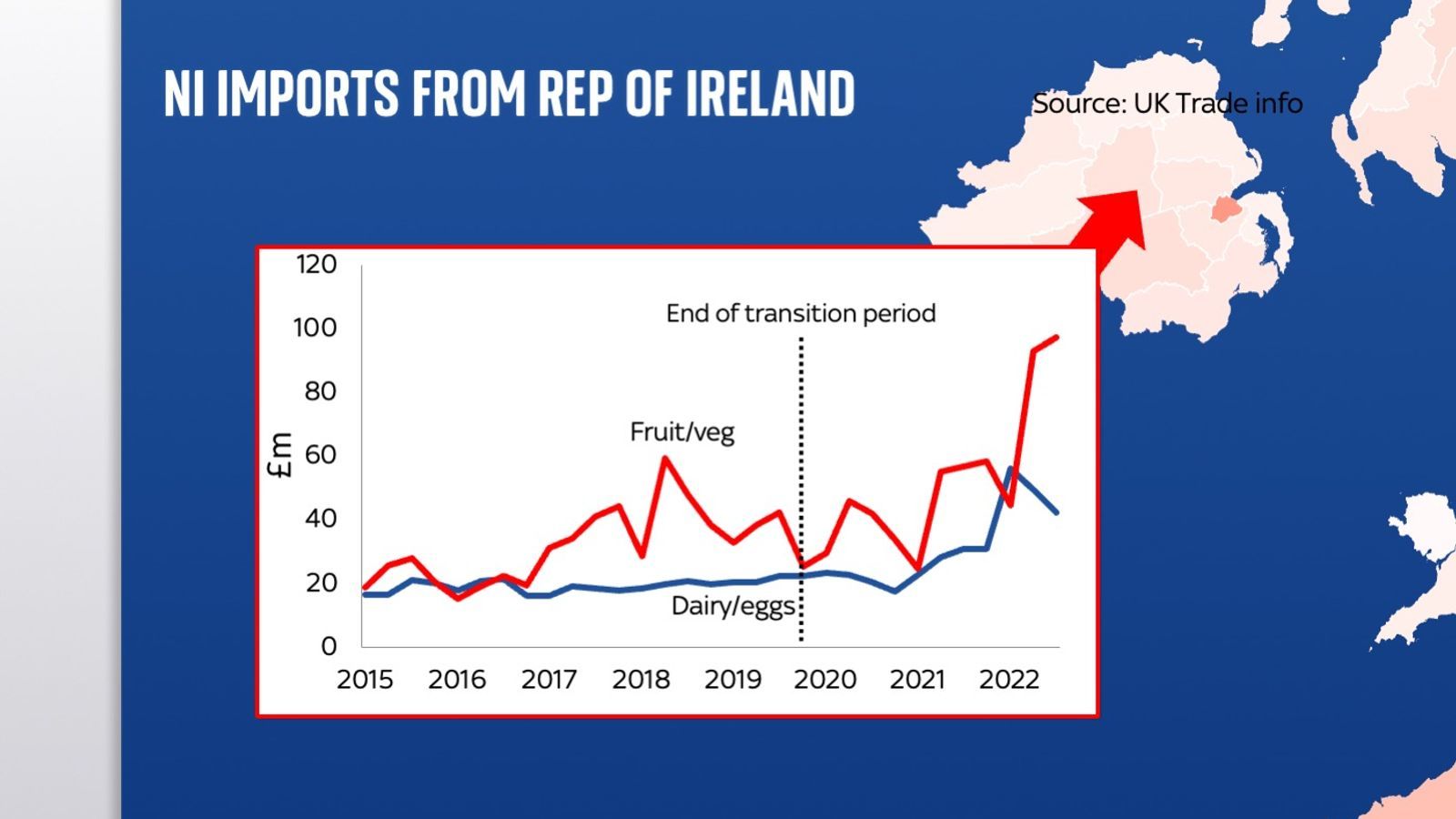

If the Windsor Framework does as intended, it should unblock these UK flows, meaning Northern Ireland can once again rely on free (or freer) transit of most goods from the rest of the UK.

That could help boost economic growth and possibly investment too. As the PM said on Tuesday, Northern Ireland will benefit from being part of two economic zones at once, the UK and European single market.

Leaving aside the obvious rejoinder that that was precisely Britain's situation pre-Brexit, this could encourage businesses to pump more cash into Belfast and beyond.

Will this make much difference to Britain's wider economic fortunes? Not necessarily, or if it does it might not be especially noticeable.
Why? Because Northern Ireland accounts for just 2.2% of UK gross value added (London is 24%). Even a big boost in that part of the UK won't necessarily be evident from overall UK GDP.

That being said, the real question is whether this agreement - the most conciliatory yet since 2016 - will be seen as a step shift.

Will it persuade international investors that the era of instability in Britain's trade relations is now at an end? If so that could well persuade people to reallocate their cash to this country.

Guessing at the overall impact of that is a mug's game. Indeed, even the size of the economic hole made by Brexit is a hard thing to work out. The Bank of England and Office for Budget Responsibility reckon it might amount to 3-4% of GDP - a big number, and even if you subscribe to these numbers there are also questions about how much of the pain has already been inflicted.
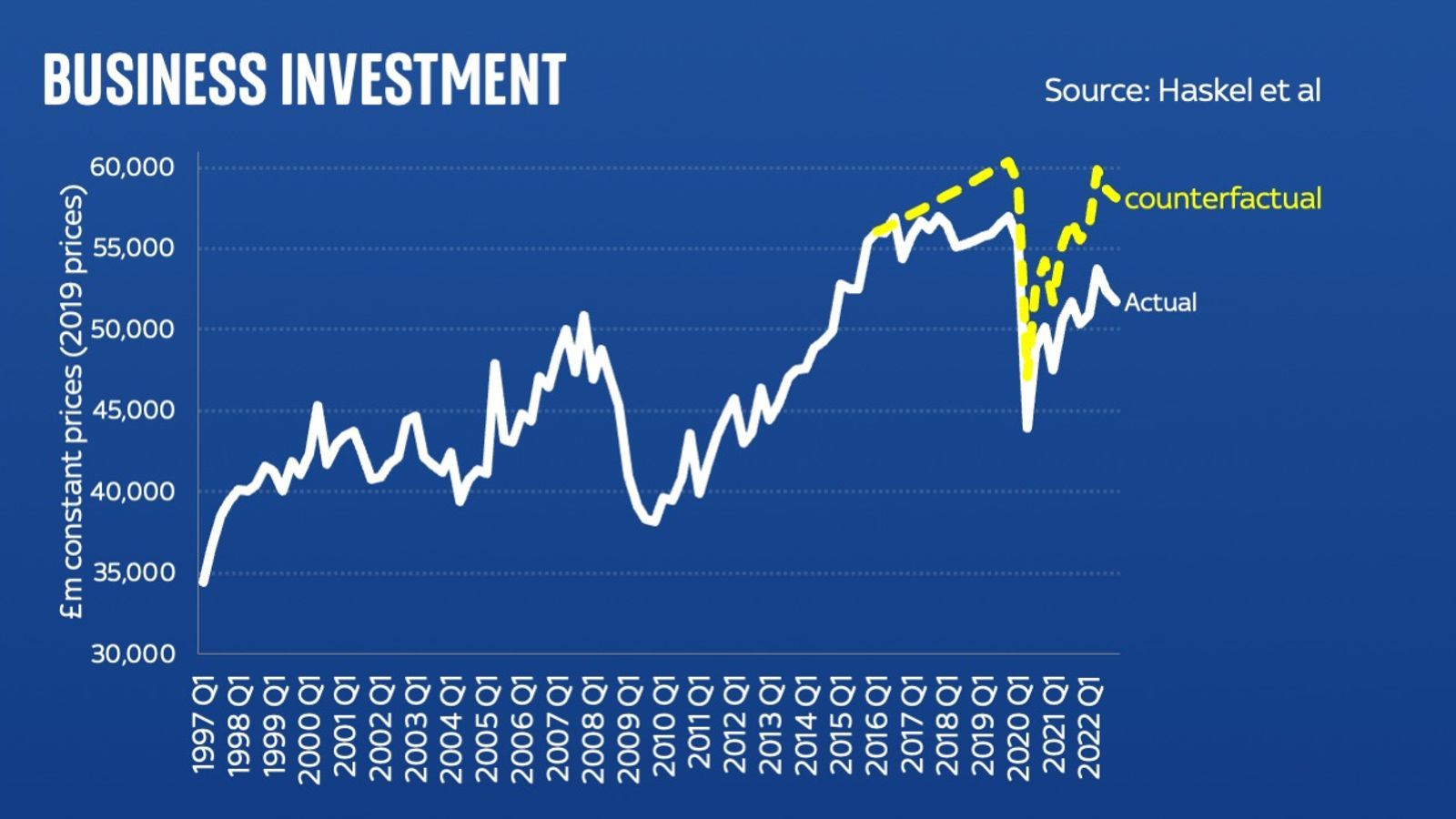

One Bank of England policymaker, Jonathan Haskel, has a more conservative estimate: based on what's happened to business investment numbers, he thinks the UK may be around 1.3% less well off than it would otherwise have been.

That might sound trivial, but it equates to around £1,000 per household.

It seems unlikely that the Windsor Framework could make all that much difference to that figure - Britain still went for a hard Brexit and this will not change it - but some suspect there is a chance that this is the turning of the tide.

Newsletter

Related Articles

0:00
0:00
Close
Trump’s Strategic Pressure on UK Seen as Push for Stronger Alignment and Fairer Terms
UK Focuses on Trade Finance to Secure Critical Materials for Defence and Energy Sectors
Majority of UK Businesses Hit by Middle East Conflict While Confidence Holds Firm
UK Royal Navy Faces Renewed Scrutiny as Debate Intensifies Over Capability and Readiness
Reform UK Faces Mounting Distractions as Policy Agenda Struggles to Gain Traction
Investigation Launched Into Northern Cyprus IVF Clinics After UK Families Receive Incorrect Sperm
International Meeting Issues Unified Call to Safeguard Navigation Through Strait of Hormuz
Potential Strait of Hormuz Closure Raises Concerns Over UK Food and Medicine Supply Chains
UK Leads Coalition of Over Forty Nations Urging Iran to Reopen Strait of Hormuz
UK Secures Tariff-Free Access for Medicines in Landmark US Pharma Trade Agreement
King Charles III Invited to Address Joint Session of U.S. Congress in Rare Diplomatic Honor
Debate Grows Over Whether Expanded North Sea Drilling Can Reduce UK Energy Bills
UK Faces Heightened Risk of Jet Fuel Shortages, Airline Chief Warns
UK Ends Police Investigations into Lawful Social Media Posts After Review Finds Overreach
Abramovich Moves to Establish Charity for Frozen Chelsea Sale Proceeds Amid UK Dispute
Starmer Reaffirms NATO Commitment While Responding to Trump’s Strategic Critique
UK Aid Reductions Raise Fears of Severe Human Impact Across Parts of Africa
UK Signals Renewed Push for EU Cooperation as Iran Conflict Reshapes Security Landscape
Bank of England Signals Caution as Bailey Advises Markets Against Expecting Rate Hikes
UK to Convene Global Coalition to Restore Shipping Through Strait of Hormuz
Trump Signals Possible NATO Reassessment, Emphasizes Stronger U.S. Strategic Autonomy
Australia Joins British-Led Efforts to Reopen Strait of Hormuz Amid Escalating Tensions
King Charles Plans US State Visit as UK Strengthens Ties with Trump Leadership
UK Regulator Launches Investigation Into Microsoft’s Business Software Practices
Kanye West Set for High-Profile Return to UK Stage at Wireless Festival
Trump Presses Europe to Strengthen Commitment as Iran Conflict Escalates
UK to Deploy Additional Troops to Middle East Amid Rising Regional Tensions
UK Authorities Face Claims of Heavy-Handed Measures in Monitoring Released Pro-Palestine Activists
Trump Calls on UK to Secure Its Own Energy as Iran Conflict Intensifies
Nigel Farage Declines Invitation to UK Conservative Conference Led by Liz Truss
Trump Warns Allies to Take Responsibility as Rift Deepens with UK and France Over Iran Conflict
How Britain’s Prime Minister Controls U.S. Bomber Access in Escalating Iran Conflict
Trump Urges Allies to Secure Their Own Oil Supplies as Hormuz Crisis Disrupts Global Energy
Russia Expels British Diplomat as UK Pushes Back Against Pressure
White House App Faces Scrutiny After Claims of Continuous User Location Tracking
BBC Faces Scrutiny Over Allegations of Paid Content Linked to Saudi Arabia
UK-France Coastal Patrol Agreement Nears Breakdown Amid Migration Pressures
UK Police Detain Pro-Palestine Activist Again Weeks After Bail Release
FTSE 100 Advances as Energy and Mining Shares Gain Amid Middle East Tensions
Eli Lilly Seeks UK Pricing Deal to Unlock Renewed Pharmaceutical Investment
Three Arrested in UK After Massive Cocaine Haul Discovered Hidden in Banana Shipment
UK Fuel Prices Poised for Further Surge Amid Global Energy Pressures
Apple Subsidiary Penalized by UK Authorities for Breach of Moscow Sanctions
Western Allies Intensify Coordinated Sanctions Strategy Against Russia
UK Lawmakers Face Criticism Over Renewed Push for Social Media Restrictions
Starmer Signals UK Crackdown on Addictive Social Media Features
Rising Costs Push One in Five UK Hospitality Businesses to the Brink of Closure
Man Arrested on Suspicion of Attempted Murder After Car Strikes Pedestrians in UK, Injuring Seven
Escalating Conflict Involving Iran Tightens Fiscal Pressures and Highlights UK Economic Vulnerabilities
UK Moves to Confront Russian ‘Shadow Fleet’ Operating in Its Waters
×