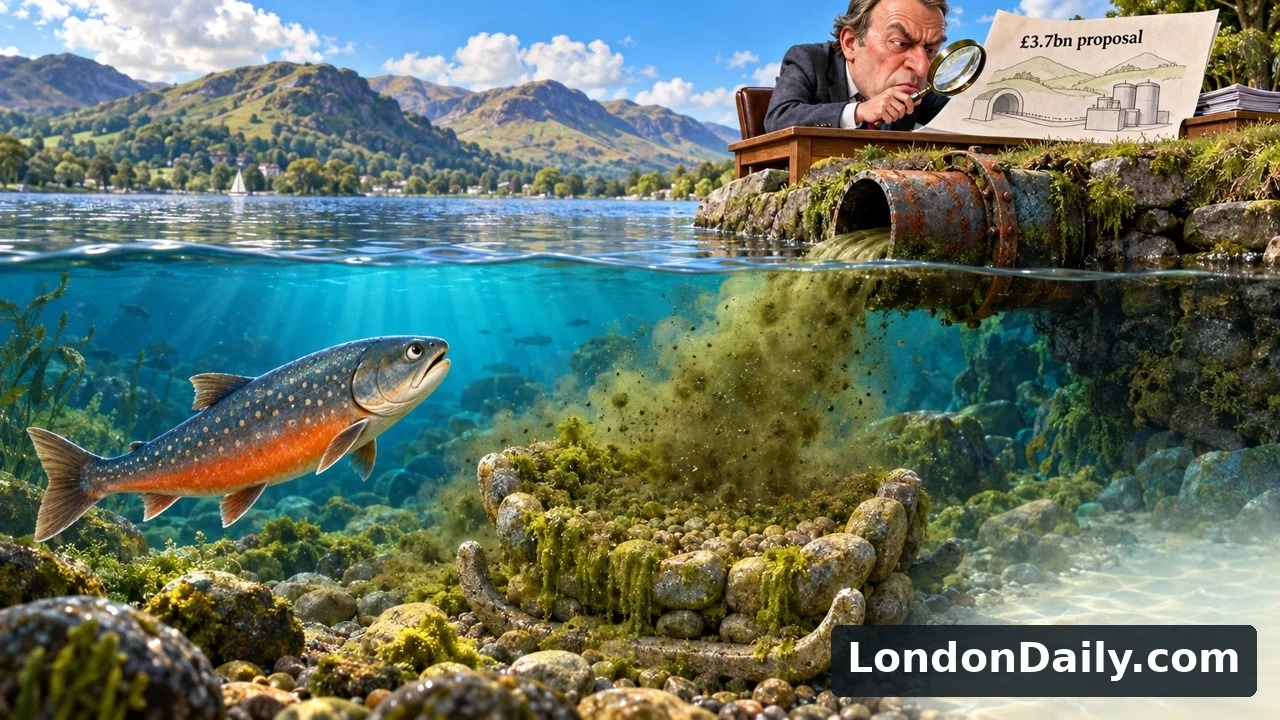
Arctic charr that have lived in Windermere for 10,000 years face extinction in the lake without urgent action, researchers warn, as sewage pollution and agricultural runoff damage their breeding grounds.
The Freshwater Biological Association (FBA) found no charr at historic spring spawning sites or in the south basin of England’s largest lake. Surveys in 2025 recorded fewer detections and weaker signals of environmental DNA, genetic material left in the water, than in 2017. These findings show serious decline, although the fish remain present in Windermere.
The lake’s charr are genetically distinct from those in neighbouring lakes. They comprise four populations which breed at different times and places and do not interbreed. Their loss would erase that distinctive inheritance, alongside a fishery once central to local life and the Lake District’s World Heritage cultural heritage.
Researchers found markedly more algae and silt on spawning grounds than in 2017. Nutrients from sewage treatment works, poorly managed private sewer systems and agricultural runoff encourage algae, degrading the clean stone and gravel needed for eggs. Invasive ruffe and roach, and warming water caused by climate change, add pressure.
The research, undertaken through the Natural England-funded Lake District Charr Recovery and Management partnership, identifies cutting pollution and restoring spawning habitat as priorities. Project lead Dr Louise Lavictoire said there was a risk of losing charr from Windermere completely.
Save Windermere founder Matt Staniek is urging Andy Burnham and the Government to act, blaming decades of government inaction and inadequate regulation. He warned some populations might already be beyond saving.
Staniek wants ministers to expedite a £3.7 billion scheme featuring a sewage tunnel, a new treatment works and sewer connections for thousands of people. The Only Rainwater In Windermere coalition behind it includes United Utilities, the Environment Agency, Lake District National Park Authority, Love Windermere, Save Windermere and Westmorland and Furness Council. He also proposes protected “ark” populations to conserve genetics and mechanical cleaning of breeding sites.
Comedian Paul Whitehouse is joining Staniek to unveil a 1.3-metre ice sculpture depicting the Prime Minister outside No 10 North in Manchester. Campaigners have also released a film about the fishery’s near-disappearance. Whitehouse said: “It’s a crime that the charr could be lost on our watch. This Government needs to act now.”
Defra said the Government was reducing sewage discharges, deploying 33 additional Environment Agency specialists regionally, increasing inspections and giving residents more influence through regional water councils.
Officials nevertheless want alternatives tested, including measures addressing every pollution source, and independent assessment of costs, benefits, household bill impacts, environmental effects and deliverability. The proposed infrastructure remains subject to that scrutiny.








Join the conversation